- Today
- Holidays
- Birthdays
- Reminders
- Cities
- Atlanta
- Austin
- Baltimore
- Berwyn
- Beverly Hills
- Birmingham
- Boston
- Brooklyn
- Buffalo
- Charlotte
- Chicago
- Cincinnati
- Cleveland
- Columbus
- Dallas
- Denver
- Detroit
- Fort Worth
- Houston
- Indianapolis
- Knoxville
- Las Vegas
- Los Angeles
- Louisville
- Madison
- Memphis
- Miami
- Milwaukee
- Minneapolis
- Nashville
- New Orleans
- New York
- Omaha
- Orlando
- Philadelphia
- Phoenix
- Pittsburgh
- Portland
- Raleigh
- Richmond
- Rutherford
- Sacramento
- Salt Lake City
- San Antonio
- San Diego
- San Francisco
- San Jose
- Seattle
- Tampa
- Tucson
- Washington
New Materials Shift Crystal Structure with Humidity
Researchers create peptide-based solids that can reversibly reorganize their internal structure and dramatically change properties in response to environmental cues.
Mar. 12, 2026 at 2:35am
Got story updates? Submit your updates here. ›
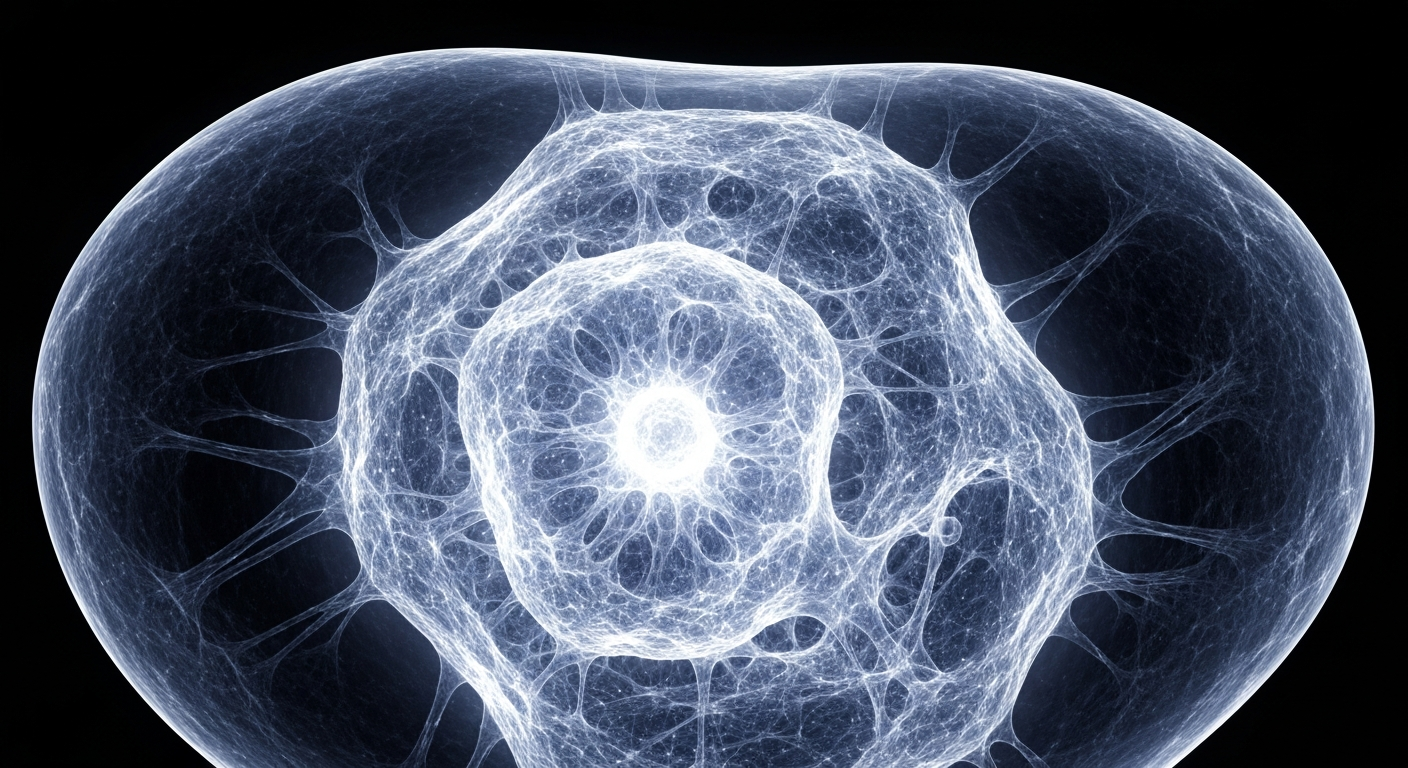
A new study led by researchers at the Advanced Science Research Center (ASRC) at the CUNY Graduate Center has demonstrated solid materials that can reversibly reorganize their internal structure and dramatically change their properties in response to small environmental cues such as humidity. The team created peptide-based crystalline solids that can switch among several entirely different architectures while remaining intact and mechanically robust, with the transformation triggered by changing humidity.
Why it matters
This research bridges a critical gap between static synthetic solids and dynamic biological matter, showing that even minimal, biologically inspired building blocks can yield solid materials with unprecedented adaptability. This could lead to the development of advanced materials with tunable properties that can adapt to their environment, with potential applications in various fields.
The details
The researchers used amino acids, the building blocks of proteins, to create these dynamic solids. By repurposing amino acids as a versatile chemical toolbox, they were able to capture the adaptability seen in living systems while working within a simpler, more robust, and well-controlled synthetic platform. The team introduced peptide-based solids that can reversibly switch among multiple topologically distinct crystalline structures, demonstrating the first rapid, solid-state conversion from a layered, soft van der Waals structure to a very stiff, hexagonally packed architecture, driven by humidity changes.
- The study was published in the journal Matter (Cell Press) on March 11, 2026.
The players
Xi Chen
The study's principal investigator and a faculty member with CUNY ASRC's Nanoscience Initiative and City College of New York's Chemical Engineering department.
Rein Ulijn
The study's co-principal investigator, founding director of CUNY ASRC Nanoscience Initiative, and Distinguished Professor of Chemistry at Hunter College.
Vignesh Athiyarath
The first author of this work.
Advanced Science Research Center (ASRC) at the CUNY Graduate Center
A world-leading center of scientific excellence that elevates STEM inquiry and education at CUNY and beyond.
What they’re saying
“Nature shows us that stability and adaptability don't have to be opposites. Proteins are generally quite stable, yet they can adapt their shape and motions to local environmental conditions to perform specific functions. Our goal was to bring that same principle into solid-state materials.”
— Xi Chen, Principal Investigator
“Short peptides give us access to stripped-down versions of protein behavior. They're simple enough to design systematically, but still rich enough to encode sometimes surprisingly complex and dynamic behavior. What is especially exciting here is that we could achieve dynamic reconfiguration in the solid state, so without the presence of liquid water, something that is hard to achieve with proteins.”
— Rein Ulijn, Co-Principal Investigator
“These are not small tweaks or gentle breathing motions. The material completely reorganizes how its molecules are packed. That kind of transformation has been extremely rare in solid-state systems.”
— Vignesh Athiyarath, First Author
What’s next
The researchers plan to further explore the potential applications of these dynamic peptide-based solids, including their use in responsive and adaptive materials, sensors, and energy storage devices.
The takeaway
This research demonstrates that even simple, biologically inspired building blocks can be used to create solid materials with unprecedented adaptability, challenging the traditional view that stability and adaptability are mutually exclusive in synthetic materials. These findings could lead to the development of a new generation of smart, responsive materials that can dynamically adjust their properties in response to environmental changes.
New York top stories


New York events

Apr. 7, 2026
Hamilton
Apr. 7, 2026
The Banksy Museum New York!
Apr. 7, 2026
Robert Plant w/ Saving Grace