- Today
- Holidays
- Birthdays
- Reminders
- Cities
- Atlanta
- Austin
- Baltimore
- Berwyn
- Beverly Hills
- Birmingham
- Boston
- Brooklyn
- Buffalo
- Charlotte
- Chicago
- Cincinnati
- Cleveland
- Columbus
- Dallas
- Denver
- Detroit
- Fort Worth
- Houston
- Indianapolis
- Knoxville
- Las Vegas
- Los Angeles
- Louisville
- Madison
- Memphis
- Miami
- Milwaukee
- Minneapolis
- Nashville
- New Orleans
- New York
- Omaha
- Orlando
- Philadelphia
- Phoenix
- Pittsburgh
- Portland
- Raleigh
- Richmond
- Rutherford
- Sacramento
- Salt Lake City
- San Antonio
- San Diego
- San Francisco
- San Jose
- Seattle
- Tampa
- Tucson
- Washington
Mount Sinai Today
By the People, for the People
AI Model Predicts CPAP Impact on Heart Risk in Sleep Apnea
Mount Sinai researchers develop machine learning tool to personalize sleep apnea treatment and reduce cardiovascular disease risk
Apr. 10, 2026 at 2:12am
Got story updates? Submit your updates here. ›
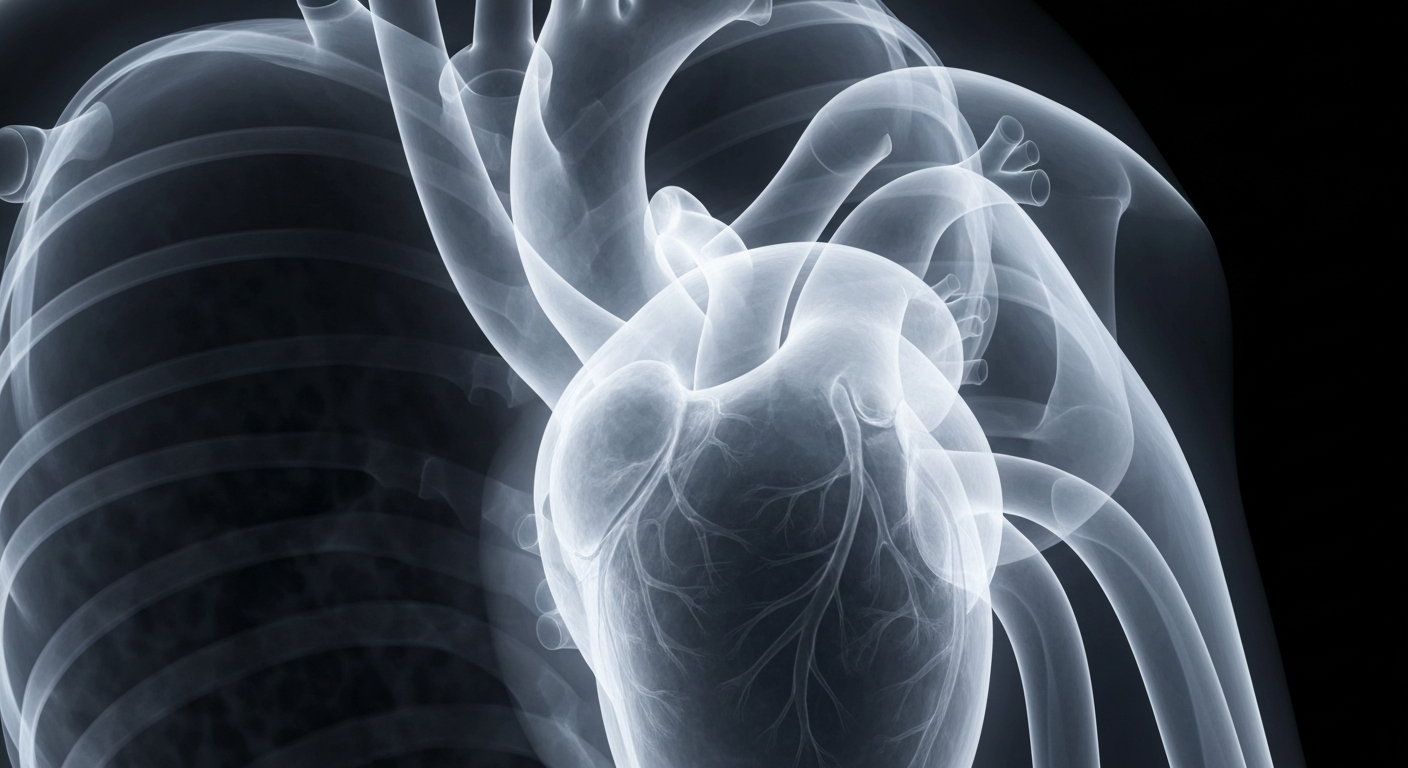 An AI-powered X-ray analysis model aims to personalize sleep apnea treatment and reduce heart disease risk.Mount Sinai Today
Researchers at Mount Sinai have created an analytic tool using machine learning that can predict cardiovascular disease risk in millions of patients with obstructive sleep apnea, a serious sleep disorder. The study is the first to provide estimates of whether continuous positive airway pressure (CPAP) therapy, the most effective treatment for sleep apnea, will increase or decrease an individual's cardiovascular risk.
Why it matters
Obstructive sleep apnea affects an estimated 25 million people in the U.S. and is associated with elevated risks for cardiovascular disease, including stroke and heart disease. However, prior large studies have not shown that CPAP lowers risks for cardiovascular disease in patients. This new AI model represents a significant advancement in personalized medicine, moving away from a one-size-fits-all strategy and helping clinicians make informed decisions about CPAP treatment recommendations.
The details
The Mount Sinai researchers used a machine learning algorithm to create an analysis model that predicts how CPAP could affect an individual's cardiovascular health, estimating each patient's likeliness of benefit or harm from the therapy based on their sleep and health information. They analyzed data from the Sleep Apnea Cardiovascular Endpoints (SAVE) trial, the largest clinical cohort evaluating CPAP for cardiovascular disease prevention. The model identified a subgroup expected to have improved cardiovascular risk with CPAP treatment, as well as a subgroup predicted to be harmed by the therapy.
- The study was recently published in Communications Medicine.
The players
Neomi A. Shah
Co-corresponding author, Professor of Medicine (Pulmonary, Critical Care and Sleep Medicine), and Artificial Intelligence and Human Health, and Associate Chief for Academic Affairs in the Division of Pulmonary, Critical Care and Sleep Medicine at the Icahn School of Medicine at Mount Sinai.
Oren Cohen
Co-primary author, Assistant Professor of Medicine (Pulmonary, Critical Care and Sleep Medicine) at the Icahn School of Medicine.
Mayte Suarez-Farinas
Co-corresponding author, Co-Director for the Division of Biostatistics and Data Science, and Professor of Population Health Science and Policy, and Artificial Intelligence and Human Health, at the Icahn School of Medicine.
Mount Sinai Health System
One of the largest academic medical systems in the New York metro area, with 48,000 employees working across eight hospitals, more than 400 outpatient practices, more than 600 research and clinical labs, a school of nursing, and a leading school of medicine and graduate education.
Sleep Apnea Cardiovascular Endpoints (SAVE) trial
The largest clinical cohort evaluating CPAP for cardiovascular disease prevention with more than 2,600 participants from 89 sites in seven countries.
What they’re saying
“Our findings represent a significant advancement in personalized medicine, moving away from a one-size-fits-all strategy in the treatment of obstructive sleep apnea. This underscores the value of new data-driven approaches like our model to assist clinicians in making informed decisions about CPAP treatment recommendations, enhancing personalized care to meet the individual needs of every patient.”
— Neomi A. Shah, Professor of Medicine (Pulmonary, Critical Care and Sleep Medicine), and Artificial Intelligence and Human Health, and Associate Chief for Academic Affairs in the Division of Pulmonary, Critical Care and Sleep Medicine at the Icahn School of Medicine at Mount Sinai
“These results demonstrate the power of machine learning for prediction of treatment effects in an era of precision medicine; however, such models require careful validation to prove their utility in clinical practice.”
— Oren Cohen, Assistant Professor of Medicine (Pulmonary, Critical Care and Sleep Medicine) at the Icahn School of Medicine
“Artificial intelligence in medicine must move beyond pattern recognition to causal reasoning. By estimating individualized treatment effects over time using randomized clinical trial data, we move predictive AI toward decision-support tools grounded in causality and capable of informing real-world treatment decisions and improving outcomes.”
— Mayte Suarez-Farinas, Co-Director for the Division of Biostatistics and Data Science, and Professor of Population Health Science and Policy, and Artificial Intelligence and Human Health, at the Icahn School of Medicine
What’s next
The researchers noted that such AI models require careful validation to prove their utility in clinical practice.
The takeaway
This new AI model represents a significant advancement in personalized medicine for obstructive sleep apnea, moving away from a one-size-fits-all approach and helping clinicians make more informed, individualized treatment decisions to reduce cardiovascular disease risk in this vulnerable patient population.