- Today
- Holidays
- Birthdays
- Reminders
- Cities
- Atlanta
- Austin
- Baltimore
- Berwyn
- Beverly Hills
- Birmingham
- Boston
- Brooklyn
- Buffalo
- Charlotte
- Chicago
- Cincinnati
- Cleveland
- Columbus
- Dallas
- Denver
- Detroit
- Fort Worth
- Houston
- Indianapolis
- Knoxville
- Las Vegas
- Los Angeles
- Louisville
- Madison
- Memphis
- Miami
- Milwaukee
- Minneapolis
- Nashville
- New Orleans
- New York
- Omaha
- Orlando
- Philadelphia
- Phoenix
- Pittsburgh
- Portland
- Raleigh
- Richmond
- Rutherford
- Sacramento
- Salt Lake City
- San Antonio
- San Diego
- San Francisco
- San Jose
- Seattle
- Tampa
- Tucson
- Washington
Ithaca Today
By the People, for the People
Cornell Researchers Use Mirror-Equipped Robot to Foster Human Connection
MirrorBot helps strangers in waiting rooms make eye contact and start conversations.
Apr. 3, 2026 at 6:30am
Got story updates? Submit your updates here. ›
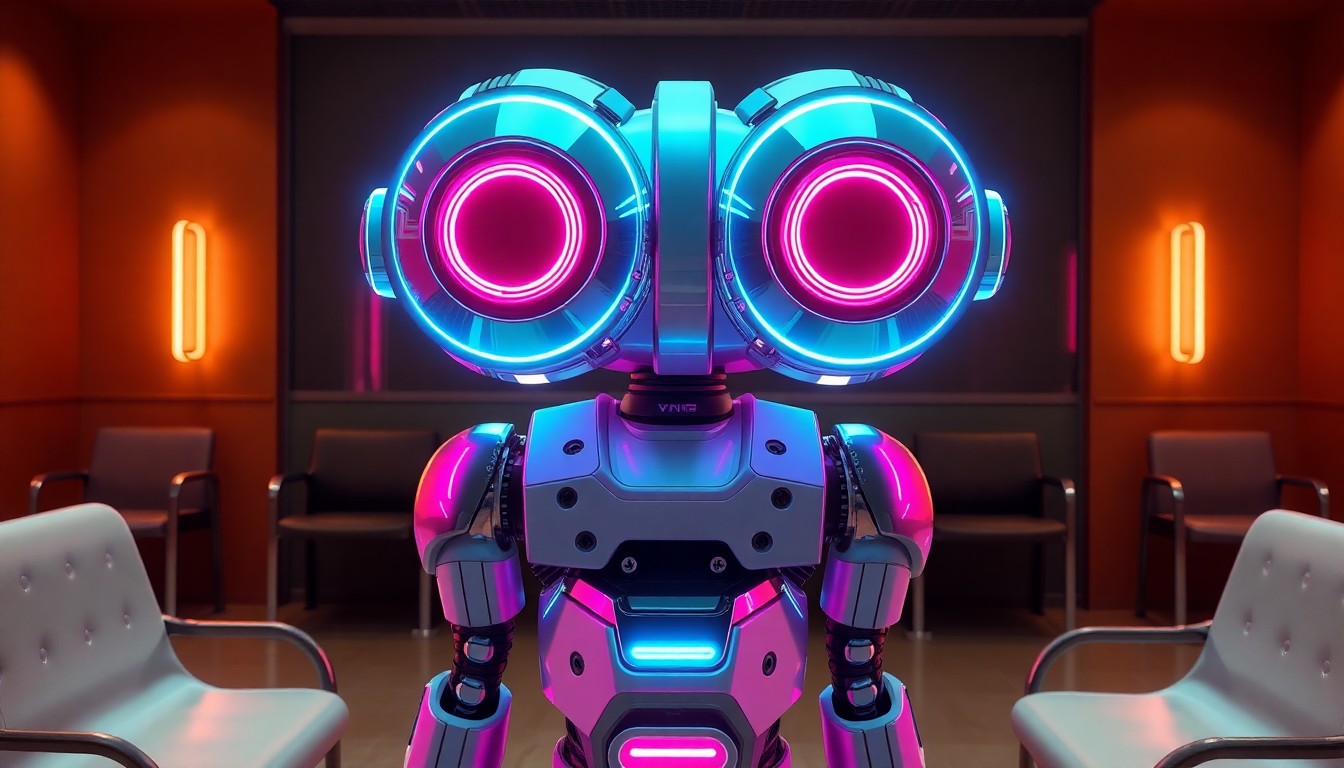 MirrorBot, a mirror-equipped robot developed by Cornell researchers, aims to foster human connection in everyday public spaces.Ithaca Today
Researchers at Cornell University's Architectural Robotics Lab have developed a 4-foot-tall robot called MirrorBot that uses dual mirrors to help strangers in waiting room settings make eye contact and start conversations. In a study, MirrorBot was found to be more effective than other devices at facilitating interpersonal connections between participants.
Why it matters
The researchers believe that while many forms of computing have pulled people apart, technology can also be used to bring people together. MirrorBot represents an effort to use robotics to foster human connection in everyday public spaces where people are often physically close but socially disconnected.
The details
The MirrorBot robot is covered in soft material and stands 4 feet tall. It has dual mirrors that allow each participant to see their own reflection in one mirror and the other person in the other mirror. In the study, pairs of participants were brought into a waiting room setting and observed as MirrorBot was introduced. The researchers found that 12 out of 16 groups reported that their first meaningful contact with the other person was through the mirrors, not face-to-face. Participants exhibited a range of behaviors, from trying to make sense of the robot together to using the mirrors to gauge the other person's receptiveness.
- The study involving MirrorBot took place in 2026.
The players
Keith Evan Green
The director of the Architectural Robotics Lab at Cornell University, who led the team that developed MirrorBot.
Serena Guo
The lead author of the paper on MirrorBot and a member of the Architectural Robotics Lab research team.
Architectural Robotics Lab
A research lab at Cornell University that focuses on using technology, including robotics, to foster human connection and interaction.
What they’re saying
“We weren't just trying to trigger conversations, but to support the very first moment of social connection, which is the eye contact.”
— Serena Guo, Lead author of the paper
“What have the most popular forms of computing done? Mostly pulled people apart, through social media, and contributed to a lot of mental health issues. And so we thought, maybe we can use computational things to bring people together.”
— Keith Evan Green, Director of the Architectural Robotics Lab
“I became interested in our everyday environments — everyday moments between strangers — when people are physically close but socially disconnected. We saw a lot of the scenarios in waiting rooms, in public parks and other shared environments, where everyone is on their phone. People may be physically together, but socially apart.”
— Serena Guo, Lead author of the paper
What’s next
The researchers plan to present their findings on MirrorBot at the Association for Computing Machinery Conference on Human Factors in Computing Systems (CHI '26) in Barcelona, Spain in April 2026.
The takeaway
MirrorBot represents a novel approach to using technology to foster human connection and interaction in everyday public spaces, where people are often physically close but socially disconnected. The robot's ability to facilitate eye contact and conversations between strangers suggests that robotics can be a powerful tool for bringing people together.
Ithaca top stories


Ithaca events

Apr. 10, 2026
Trisha Yearwood