- Today
- Holidays
- Birthdays
- Reminders
- Cities
- Atlanta
- Austin
- Baltimore
- Berwyn
- Beverly Hills
- Birmingham
- Boston
- Brooklyn
- Buffalo
- Charlotte
- Chicago
- Cincinnati
- Cleveland
- Columbus
- Dallas
- Denver
- Detroit
- Fort Worth
- Houston
- Indianapolis
- Knoxville
- Las Vegas
- Los Angeles
- Louisville
- Madison
- Memphis
- Miami
- Milwaukee
- Minneapolis
- Nashville
- New Orleans
- New York
- Omaha
- Orlando
- Philadelphia
- Phoenix
- Pittsburgh
- Portland
- Raleigh
- Richmond
- Rutherford
- Sacramento
- Salt Lake City
- San Antonio
- San Diego
- San Francisco
- San Jose
- Seattle
- Tampa
- Tucson
- Washington
Study: Hypertonic Saline and Furosemide Reduce Heart Failure Markers
Findings suggest combining diuretic and saline therapy may influence biomarkers and epigenetic signatures in acute heart failure.
Apr. 8, 2026 at 12:08am
Got story updates? Submit your updates here. ›
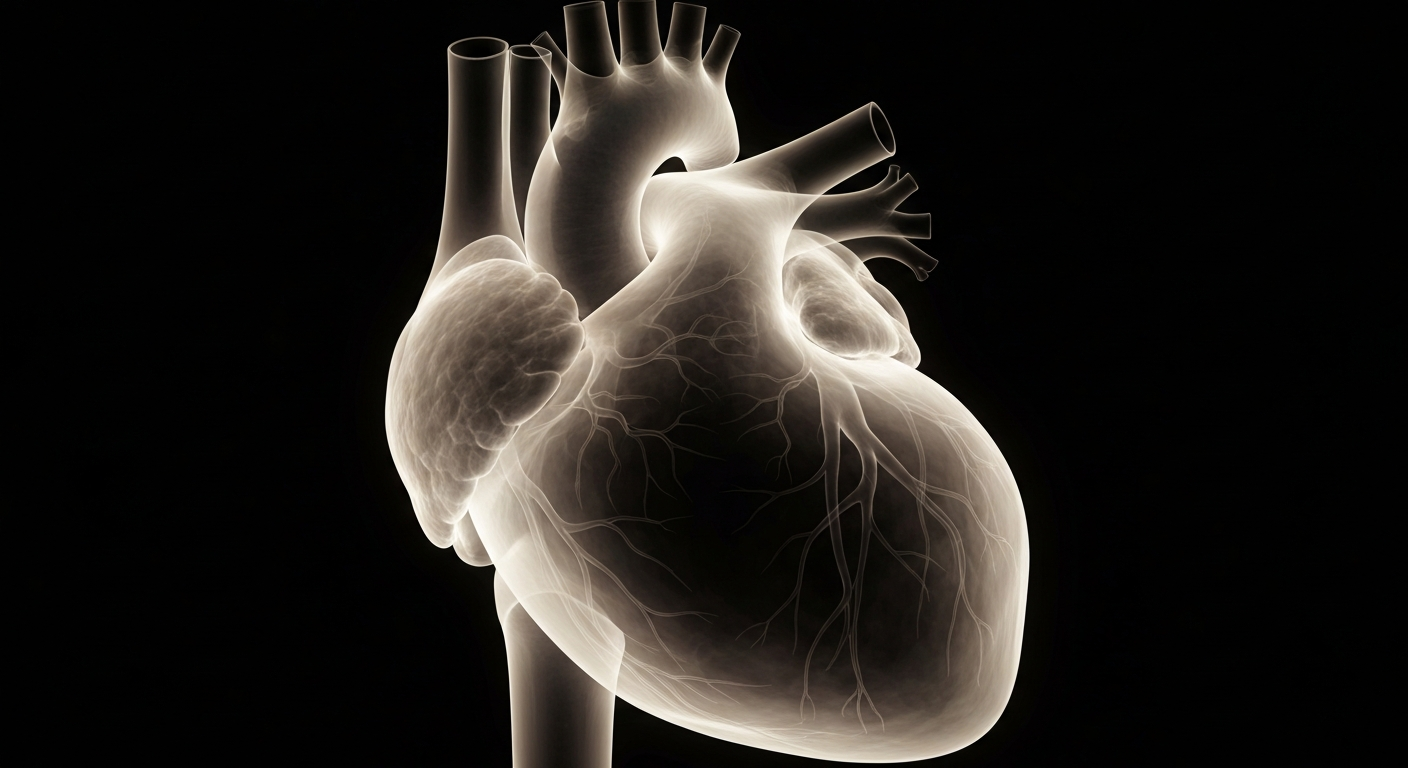 An X-ray view of a heart affected by acute decompensated heart failure, revealing the internal structures and potential impact of new treatment approaches.Buffalo Today
A new study published in Aging-US found that treating patients with acute decompensated heart failure using intravenous furosemide plus small-volume hypertonic saline solution (HSS) led to lower increases in inflammatory and remodeling biomarkers, including IL-6, hsTnT, sST2, galectin-3, and NT-proBNP, compared to furosemide alone. The intervention was also associated with reduced miR181b expression, suggesting it may influence epigenetic signatures involved in left ventricular dysfunction.
Why it matters
The study's findings indicate that combining loop diuretic therapy with small-volume hypertonic saline may have beneficial effects on circulating biomarkers and epigenetic mechanisms in acute heart failure, though further research is needed to confirm the durability of these changes and their impact on clinical outcomes.
The details
The randomized trial enrolled 200 subjects with acute decompensated heart failure due to reduced ejection fraction, randomly assigning 107 to receive intravenous furosemide plus HSS and 93 to furosemide alone. The authors found that patients treated with the combination therapy showed lower increases in inflammatory and remodeling biomarkers after saline load, as well as reduced expression of the miR181b epigenetic marker.
- The study was published on March 26, 2026 in the journal Aging-US.
- The randomized trial was conducted in 2025.
The players
Mario Daidone
First author of the study and researcher at University Hospital, Policlinico, Paolo Giaccone and the University of Palermo.
Antonino Tuttolomondo
Corresponding author of the study and researcher at University Hospital, Policlinico, Paolo Giaccone and University of Palermo.
University Hospital, Policlinico, Paolo Giaccone
The institution where the study was conducted.
University of Palermo
The university affiliated with the study's researchers.
What they’re saying
“Nevertheless, the possible effects of the i.v. furosemide + HSS treatment on natriuretic and inflammatory markers of heart failure deserve further confirmation, whereas the effects of this type of treatment on epigenetic signatures of pathologic mechanisms involved in the left ventricular dysfunction involved in AHF pathogenesis seem to be still not studied.”
— Antonino Tuttolomondo, Corresponding author
What’s next
Future studies will be needed to confirm the durability of the biomarker changes, define the optimal patient groups, and determine whether these molecular effects translate into improved clinical outcomes. Researchers also plan to further investigate how the saline strategy interacts with cardiac remodeling and miRNA regulation in larger and more diverse heart failure cohorts.
The takeaway
This study suggests that combining loop diuretic therapy with small-volume hypertonic saline may have beneficial effects on inflammatory and remodeling biomarkers, as well as epigenetic signatures, in patients with acute decompensated heart failure. However, additional research is required to fully understand the clinical implications of these findings.
Buffalo top stories


Buffalo events

Apr. 8, 2026
Buffalo Bisons vs. Syracuse Mets
Apr. 9, 2026
Jesus Christ Superstar
Apr. 9, 2026
Buffalo Bisons vs. Syracuse Mets