- Today
- Holidays
- Birthdays
- Reminders
- Cities
- Atlanta
- Austin
- Baltimore
- Berwyn
- Beverly Hills
- Birmingham
- Boston
- Brooklyn
- Buffalo
- Charlotte
- Chicago
- Cincinnati
- Cleveland
- Columbus
- Dallas
- Denver
- Detroit
- Fort Worth
- Houston
- Indianapolis
- Knoxville
- Las Vegas
- Los Angeles
- Louisville
- Madison
- Memphis
- Miami
- Milwaukee
- Minneapolis
- Nashville
- New Orleans
- New York
- Omaha
- Orlando
- Philadelphia
- Phoenix
- Pittsburgh
- Portland
- Raleigh
- Richmond
- Rutherford
- Sacramento
- Salt Lake City
- San Antonio
- San Diego
- San Francisco
- San Jose
- Seattle
- Tampa
- Tucson
- Washington
Rugby League's Super League Celebrates 30 Years of Innovation
Former player Iestyn Harris reflects on the league's evolution from a winter sport to a summer spectacle
Apr. 12, 2026 at 12:38pm
Got story updates? Submit your updates here. ›
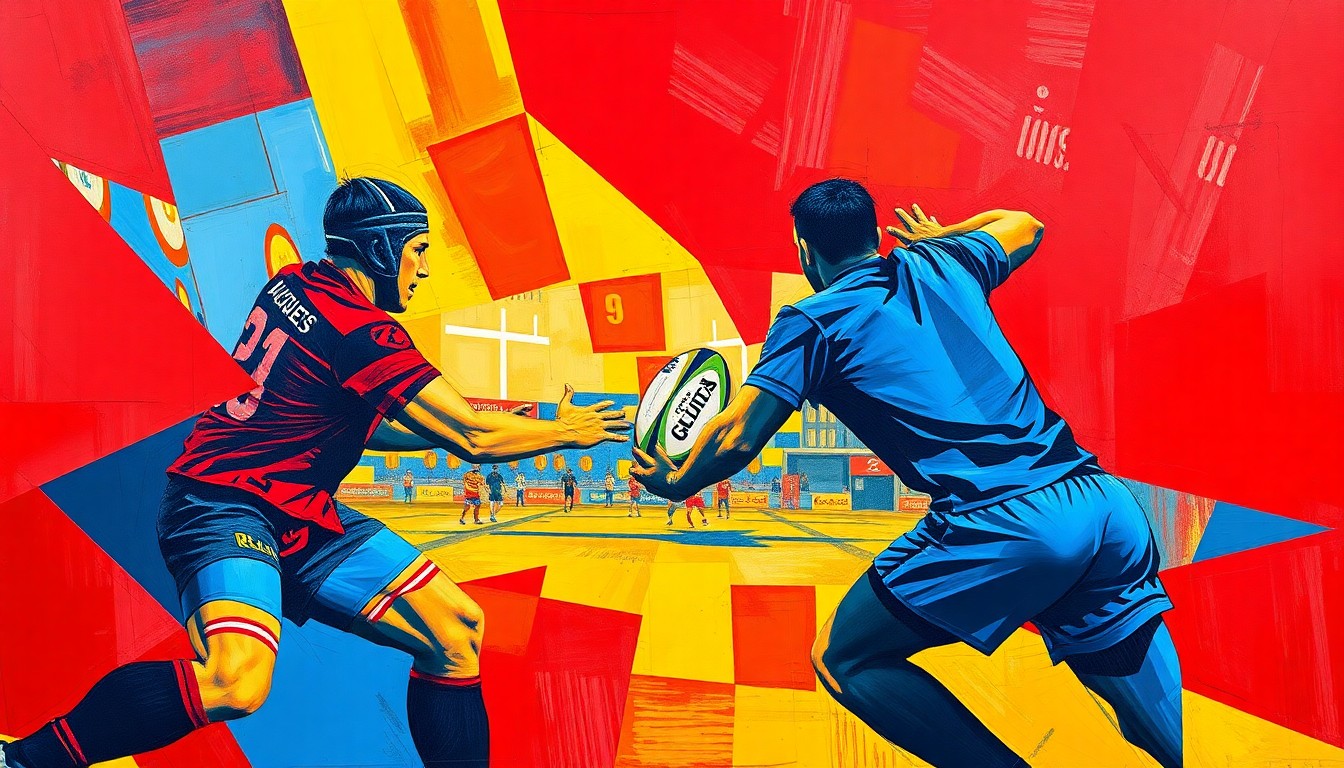 A cubist interpretation of the dynamic action and energy of a rugby league match, capturing the sport's evolution over the past 30 years.Las Vegas Today
Thirty years after the launch of Super League, rugby league finds itself at a crossroads. The shift to a summer schedule in the 1990s transformed the sport, demanding new levels of professionalism and athleticism from players. The Grand Final became a must-see annual event, while clubs developed distinct brands that could travel beyond their northern England heartlands, including experiments in Barcelona and Las Vegas. As the league eyes further global expansion, it must balance preserving its core identity with appealing to new audiences.
Why it matters
The story of Super League's first 30 years is a case study in how a sport can reinvent itself to stay relevant. The league's bold moves - switching to summer, embracing professionalism, developing a playoff culture, and exploring international markets - allowed rugby league to thrive. But as it looks to the future, the league must ensure that growth doesn't come at the expense of its unique identity and connection to its traditional fan base.
The details
When Super League launched in 1996, it flipped the rugby league calendar from a winter to summer schedule. This demanded a new level of professionalism from players, who went from juggling jobs to training full-time as a collective unit. The change also redefined the rhythm of the season and how fans experienced the game. The Grand Final, once just a league title decider, became an annual spectacle that crystallized the sport's narrative. Clubs also evolved, becoming brands with distinct personalities that could travel beyond their northern England roots, including experiments in Barcelona and Las Vegas.
- Super League launched in 1996, shifting the rugby league calendar from winter to summer.
- In the 1990s, the move to full-time professionalism transformed the sport's culture and athleticism.
- The Grand Final became an annual must-see event in the 1990s, replacing the traditional league title as the sport's pinnacle.
The players
Iestyn Harris
A former rugby league player who reflects on the transformation of the sport over the past 30 years.
What they’re saying
“Rugby league is not a museum piece; it's a living experiment in reinvention.”
— Iestyn Harris, Former rugby league player
“The next big move isn't just a business decision; it's a cultural one. The question is whether rugby league will use its momentum to become a truly global, emotionally resonant game or settle for being a regional powerhouse with occasional flashes of spectacle.”
— Iestyn Harris, Former rugby league player
What’s next
As the league eyes further global expansion, it must balance preserving its core identity with appealing to new audiences.
The takeaway
The story of Super League's first 30 years is a case study in how a sport can reinvent itself to stay relevant. The league's bold moves allowed it to thrive, but as it looks to the future, it must ensure that growth doesn't come at the expense of its unique identity and connection to its traditional fan base.