- Today
- Holidays
- Birthdays
- Reminders
- Cities
- Atlanta
- Austin
- Baltimore
- Berwyn
- Beverly Hills
- Birmingham
- Boston
- Brooklyn
- Buffalo
- Charlotte
- Chicago
- Cincinnati
- Cleveland
- Columbus
- Dallas
- Denver
- Detroit
- Fort Worth
- Houston
- Indianapolis
- Knoxville
- Las Vegas
- Los Angeles
- Louisville
- Madison
- Memphis
- Miami
- Milwaukee
- Minneapolis
- Nashville
- New Orleans
- New York
- Omaha
- Orlando
- Philadelphia
- Phoenix
- Pittsburgh
- Portland
- Raleigh
- Richmond
- Rutherford
- Sacramento
- Salt Lake City
- San Antonio
- San Diego
- San Francisco
- San Jose
- Seattle
- Tampa
- Tucson
- Washington
Nature's Glue: Mussels and Mistletoe Inspire Sustainable Materials
Researchers combine mussel adhesive and mistletoe cellulose to create a self-assembling, recyclable material
Apr. 10, 2026 at 7:27am
Got story updates? Submit your updates here. ›
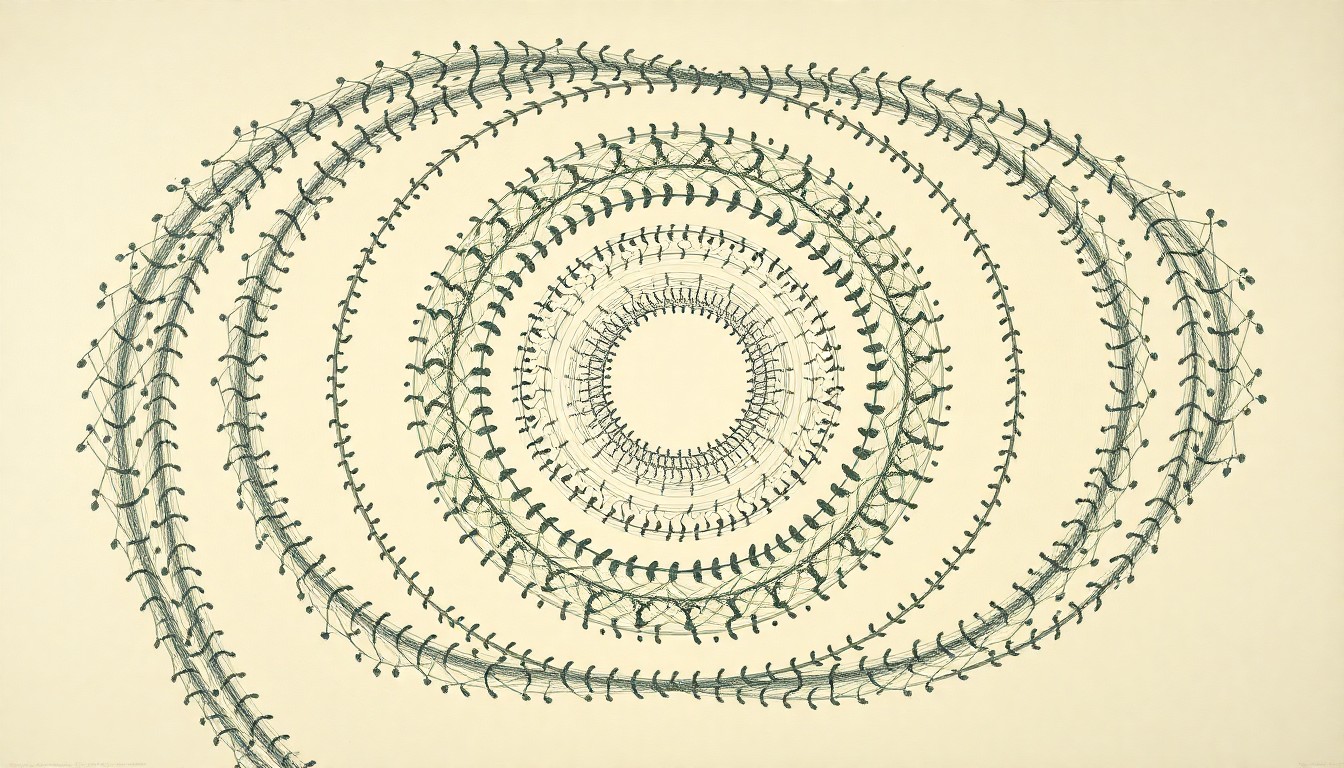 A conceptual illustration of the self-assembling, hierarchical structure of the mussel-mistletoe hybrid material, showcasing its potential for sustainable, recyclable applications.Manchester Today
Researchers at McGill University have developed a new sustainable material that combines the adhesive properties of mussels with the rigid, fibrous structure of mistletoe cellulose. The resulting hybrid material can self-assemble into complex, multi-scale architectures through a reversible, droplet-driven process, opening up possibilities for greener, more recyclable products across industries.
Why it matters
This research signals a shift in materials science towards imitating the organization rules of biological systems, rather than simply copying their components. The reversible, droplet-based processing allows the scaffolds to be dissolved and reassembled, enabling a potential circular-materials paradigm where products can be deconstructed and remade with minimal loss of performance. This aligns with environmental goals and could guide future industry standards.
The details
The core idea is to combine a protein-based adhesive strategy inspired by mussels with the rigid, fibrous structure of mistletoe cellulose. This allows the material to self-assemble into complex, multi-scale architectures through a reversible, droplet-driven process. The researchers note the material's non-toxicity to human cells, hinting at potential biomedical applications where scaffolds must be both biocompatible and structurally sophisticated. The scalable, reversible process could also redefine product lifecycles, enabling more sustainable manufacturing of construction, packaging, and consumer goods.
- The research was published in April 2026.
The players
McGill University
A public research university located in Montreal, Quebec, Canada, known for its research in various scientific fields.
What they’re saying
“The trick isn't just putting together two natural ingredients; it's enabling them to organize into complex, multi-scale architectures through a reversible, droplet-driven process.”
— Melvina Ondricka, Author
What’s next
The researchers plan to further explore the potential of this material in various applications, including biomedical and sustainable manufacturing.
The takeaway
This research showcases how imitating the organization rules of biological systems, rather than simply copying their components, can lead to the development of innovative and sustainable materials. The reversible, droplet-based processing holds promise for a circular-materials paradigm, where products can be deconstructed and remade with minimal waste.
Manchester top stories



Manchester events
Apr. 14, 2026
New Hampshire Fisher Cats vs. Chesapeake Baysox
Apr. 15, 2026
New Hampshire Fisher Cats vs. Chesapeake Baysox
Apr. 16, 2026
New Hampshire Fisher Cats vs. Chesapeake Baysox