- Today
- Holidays
- Birthdays
- Reminders
- Cities
- Atlanta
- Austin
- Baltimore
- Berwyn
- Beverly Hills
- Birmingham
- Boston
- Brooklyn
- Buffalo
- Charlotte
- Chicago
- Cincinnati
- Cleveland
- Columbus
- Dallas
- Denver
- Detroit
- Fort Worth
- Houston
- Indianapolis
- Knoxville
- Las Vegas
- Los Angeles
- Louisville
- Madison
- Memphis
- Miami
- Milwaukee
- Minneapolis
- Nashville
- New Orleans
- New York
- Omaha
- Orlando
- Philadelphia
- Phoenix
- Pittsburgh
- Portland
- Raleigh
- Richmond
- Rutherford
- Sacramento
- Salt Lake City
- San Antonio
- San Diego
- San Francisco
- San Jose
- Seattle
- Tampa
- Tucson
- Washington
Buffett Remains at Berkshire Hathaway After Stepping Down as CEO
Experts weigh in on navigating the unusual dynamic of a former boss now reporting to you
Apr. 6, 2026 at 5:51pm
Got story updates? Submit your updates here. ›
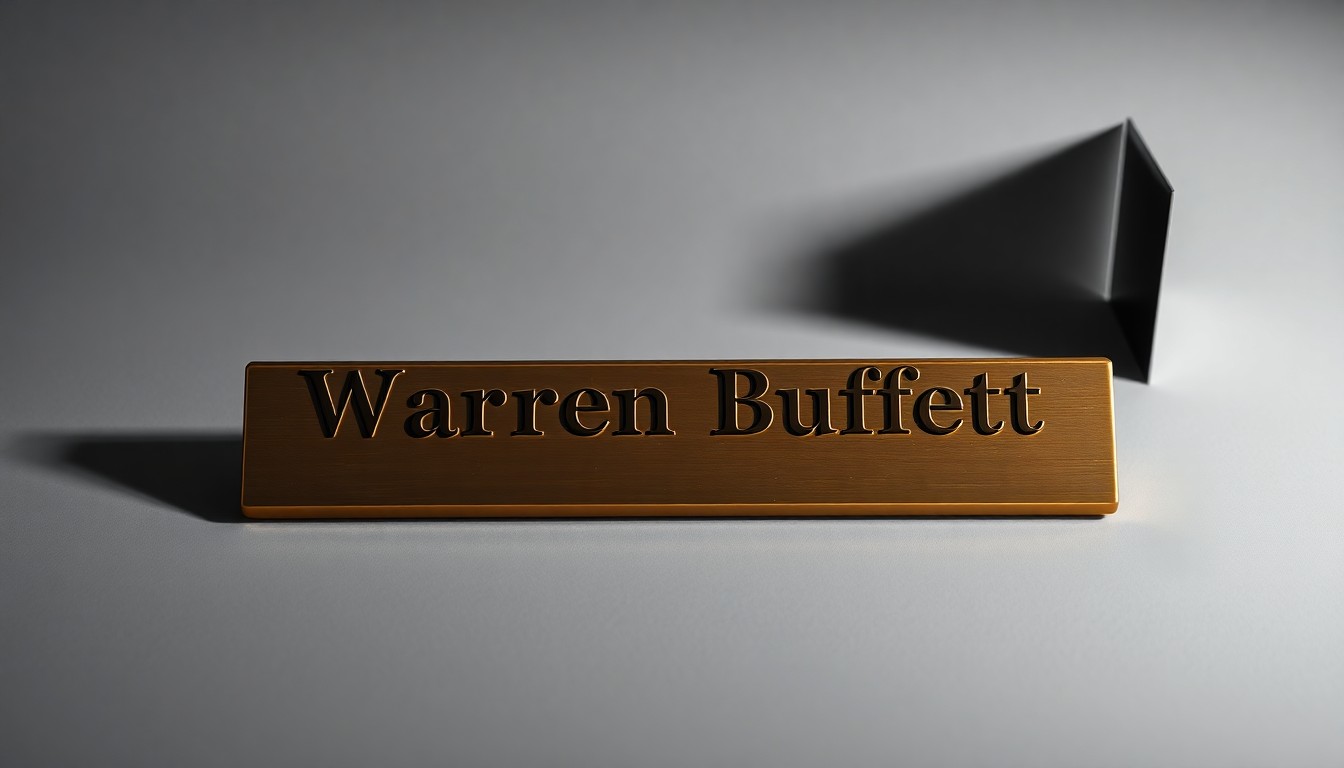 The desk nameplate of legendary investor Warren Buffett, who remains involved at Berkshire Hathaway after stepping down as CEO, symbolizes the unique power dynamics when a former boss becomes a direct report.Omaha Today
At age 95, Warren Buffett has stepped down as CEO of Berkshire Hathaway but continues to go into the office daily and remain involved in investment decisions, with his handpicked successor Greg Abel now in the top role. Experts say this unusual situation of a former leader having a 'second act' within the same company can present both challenges and advantages for the new CEO.
Why it matters
Buffett's continued presence at Berkshire Hathaway highlights the complex dynamics that can arise when a former company leader takes on a subordinate role. This scenario raises questions about power dynamics, decision-making authority, and how to establish credibility as the new leader.
The details
Despite stepping down as CEO on December 31, the 95-year-old Buffett still goes into the Berkshire Hathaway office daily and remains involved in investment decisions, with new CEO Greg Abel reporting to him. Buffett and Abel talk nearly every day, with Buffett saying he won't make any investments that Abel thinks are wrong. While Buffett grew Berkshire from a textile company into a global conglomerate, experts say having a former boss now reporting to you can present both challenges and advantages for the new leader.
- Buffett stepped down as Berkshire Hathaway CEO on December 31.
- Buffett told CNBC's Becky Quick in a March 31 interview that he still goes into the office daily and remains involved in investment decisions.
The players
Warren Buffett
The 95-year-old former CEO of Berkshire Hathaway, who helmed the company for six decades and grew it into a global conglomerate.
Greg Abel
The new CEO of Berkshire Hathaway, handpicked by Buffett as his successor.
Amy Gallo
A global workplace dynamics speaker and author of the book 'Getting Along: How to Work with Anyone (Even Difficult People)'.
Zoe Fragou
An organizational psychologist and leadership development expert.
Muriel Wilkins
The CEO of leadership advisory firm Paravis Partners and author of 'Leadership Unblocked'.
What they’re saying
“If I'm in Omaha, we're always connecting. If I'm traveling, like I was yesterday, I often check in just to catch up on what he's seeing, what he's hearing, what am I feeling. So if it's not every day, it's every couple days.”
— Greg Abel, CEO, Berkshire Hathaway
“You don't lose that institutional knowledge. You have a leader who has been at the helm of the organization, who knows what it takes to run this organization, knows what's worked in the past and what hasn't.”
— Amy Gallo, Global workplace dynamics speaker and author
“The danger lies at either extreme: overcompensating by asserting dominance too quickly can fracture trust, while avoidance and delaying tough calls to protect old connections affects credibility.”
— Zoe Fragou, Organizational psychologist and leadership development expert
“What it can get in the way of are two big things. One is establishing your own name as the new CEO. And two, it can delay some of the decisions that you would like to make, or, quite frankly, you might feel pressured to make certain decisions that you don't feel you know are necessary at that point in time.”
— Muriel Wilkins, CEO, Paravis Partners and author
What’s next
Berkshire Hathaway will hold its annual shareholder meeting on May 4, 2026, where Buffett and Abel are expected to address the company's leadership transition.
The takeaway
Buffett's continued involvement at Berkshire Hathaway after stepping down as CEO highlights the complex dynamics that can arise when a former company leader takes on a subordinate role. Experts say navigating this situation requires striking a balance between leveraging the former leader's institutional knowledge and asserting one's own authority as the new CEO.
Omaha top stories



Omaha events

Apr. 7, 2026
TIFFANY - All This Time Tour 2026
Apr. 8, 2026
Creighton Bluejays v North Dakota State Bison
Apr. 9, 2026
THE DROPTINES