- Today
- Holidays
- Birthdays
- Reminders
- Cities
- Atlanta
- Austin
- Baltimore
- Berwyn
- Beverly Hills
- Birmingham
- Boston
- Brooklyn
- Buffalo
- Charlotte
- Chicago
- Cincinnati
- Cleveland
- Columbus
- Dallas
- Denver
- Detroit
- Fort Worth
- Houston
- Indianapolis
- Knoxville
- Las Vegas
- Los Angeles
- Louisville
- Madison
- Memphis
- Miami
- Milwaukee
- Minneapolis
- Nashville
- New Orleans
- New York
- Omaha
- Orlando
- Philadelphia
- Phoenix
- Pittsburgh
- Portland
- Raleigh
- Richmond
- Rutherford
- Sacramento
- Salt Lake City
- San Antonio
- San Diego
- San Francisco
- San Jose
- Seattle
- Tampa
- Tucson
- Washington
North Dakota Governor Calls for Budget Cuts to Close Revenue Gap
Armstrong presents guidelines to agencies, seeking hold-even budgets and 3-10% reductions
Apr. 8, 2026 at 9:15pm
Got story updates? Submit your updates here. ›
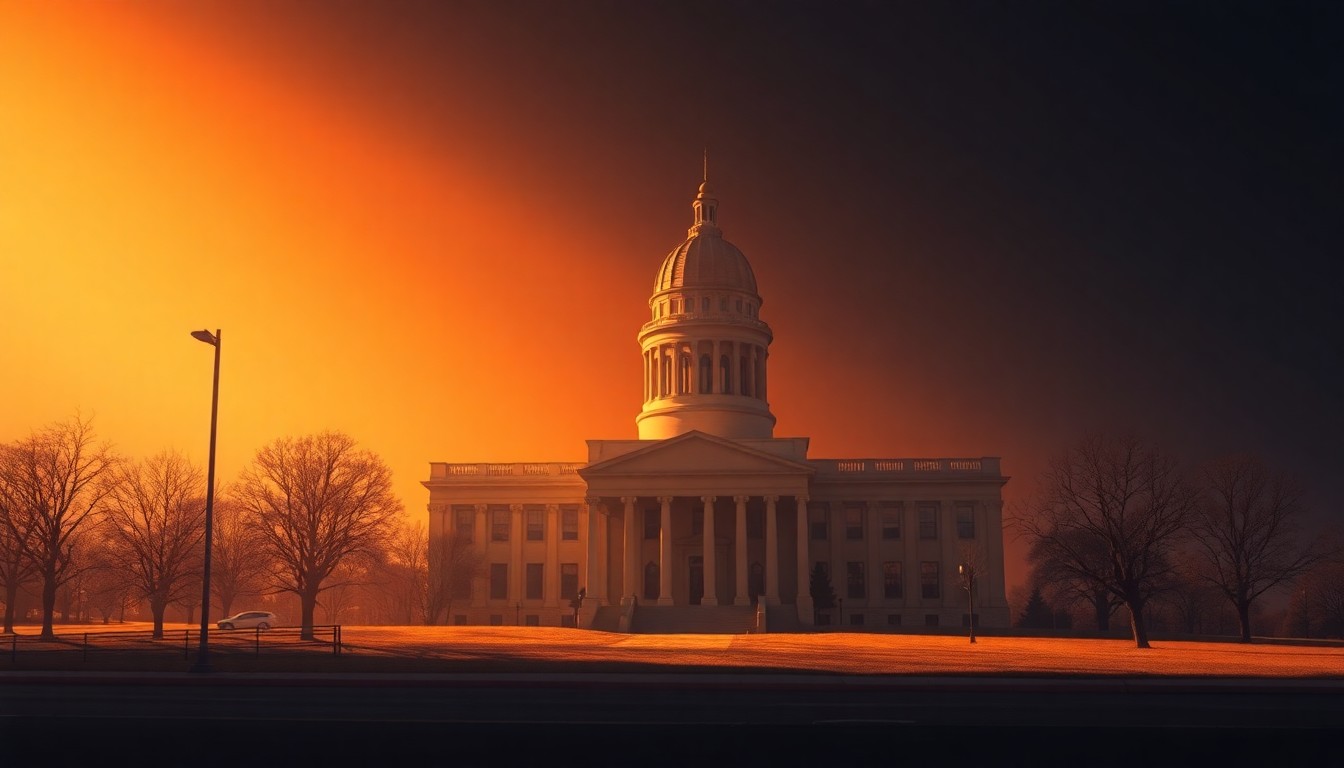 North Dakota's state capitol stands as a symbol of the state's fiscal challenges, as Governor Armstrong seeks to rein in unsustainable budget growth.Bismarck Today
North Dakota Governor Kelly Armstrong has presented his executive budget guidelines for the next biennium, calling on state agencies to prepare hold-even budgets or identify base budget reductions of 3-10% as part of a long-term strategy to bring general fund spending in line with general fund revenues by 2032. The guidelines aim to address a growing gap between the state's ongoing revenues and ongoing expenditures.
Why it matters
North Dakota has experienced 20 years of budget growth, much of which was necessary, but the growth rate is now unsustainable. The state faces a balance problem in its budget, with a growing gap between ongoing revenues and ongoing expenditures that needs to be addressed through a long-term strategy.
The details
The budget guidelines call for agencies with general fund budgets under $10 million to prepare hold-even budgets, while agencies with budgets between $10-20 million must identify 3% base budget reductions, and agencies over $20 million must identify 10% base budget reductions. Agencies in the hold-even or 3% categories must also submit an additional 3% reduction package as a contingency against potential revenue shortfalls. No new full-time positions or new building construction projects will be granted without an exception, and any new proposals relying on ongoing revenues must be offset by corresponding reductions in ongoing expenditures.
- The budget guidelines were presented on April 8, 2026.
- Governor Armstrong will present his executive budget recommendation for the 2027-2029 biennium to state legislators in December 2026, ahead of their January regular session.
The players
Kelly Armstrong
The Governor of North Dakota, who presented the executive budget guidelines and is calling for a long-term strategy to address the state's budget imbalance.
Joe Morrissette
The Director of the North Dakota Office of Management and Budget, who outlined the gap between the state's general fund ongoing revenues and ongoing appropriations.
What they’re saying
“Twenty years of growth in North Dakota has come with 20 years of growth in the state budget. Much of that was necessary, but the growth rate is also unsustainable.”
— Kelly Armstrong, Governor
“The biennium began with an ongoing general fund gap of nearly $800 million. While strong revenue growth is expected to reduce this gap, significant effort and collaboration across all agencies will be necessary to develop a budget that puts us on a sustainable path and ensures ongoing revenues and expenditures are balanced.”
— Joe Morrissette, Director, Office of Management and Budget
What’s next
Governor Armstrong will present his executive budget recommendation for the 2027-2029 biennium to state legislators in December 2026, ahead of their January regular session.
The takeaway
North Dakota's budget growth over the past 20 years has become unsustainable, leading to a growing gap between the state's ongoing revenues and ongoing expenditures. Governor Armstrong's budget guidelines aim to address this imbalance through a long-term strategy of hold-even budgets and base budget reductions, in order to put the state on a sustainable fiscal path.
Bismarck top stories

Bismarck events
Apr. 10, 2026
Bismarck Bobcats vs. Minot Minotauros
Apr. 11, 2026
Bismarck Bobcats vs. Minot Minotauros