- Today
- Holidays
- Birthdays
- Reminders
- Cities
- Atlanta
- Austin
- Baltimore
- Berwyn
- Beverly Hills
- Birmingham
- Boston
- Brooklyn
- Buffalo
- Charlotte
- Chicago
- Cincinnati
- Cleveland
- Columbus
- Dallas
- Denver
- Detroit
- Fort Worth
- Houston
- Indianapolis
- Knoxville
- Las Vegas
- Los Angeles
- Louisville
- Madison
- Memphis
- Miami
- Milwaukee
- Minneapolis
- Nashville
- New Orleans
- New York
- Omaha
- Orlando
- Philadelphia
- Phoenix
- Pittsburgh
- Portland
- Raleigh
- Richmond
- Rutherford
- Sacramento
- Salt Lake City
- San Antonio
- San Diego
- San Francisco
- San Jose
- Seattle
- Tampa
- Tucson
- Washington
Whitefish Today
By the People, for the People
Flathead Ski Areas Persevere Despite Low Snowfall Season
Whitefish Mountain Resort and Blacktail Mountain Ski Area adapt to challenging winter conditions.
Apr. 7, 2026 at 10:54pm
Got story updates? Submit your updates here. ›
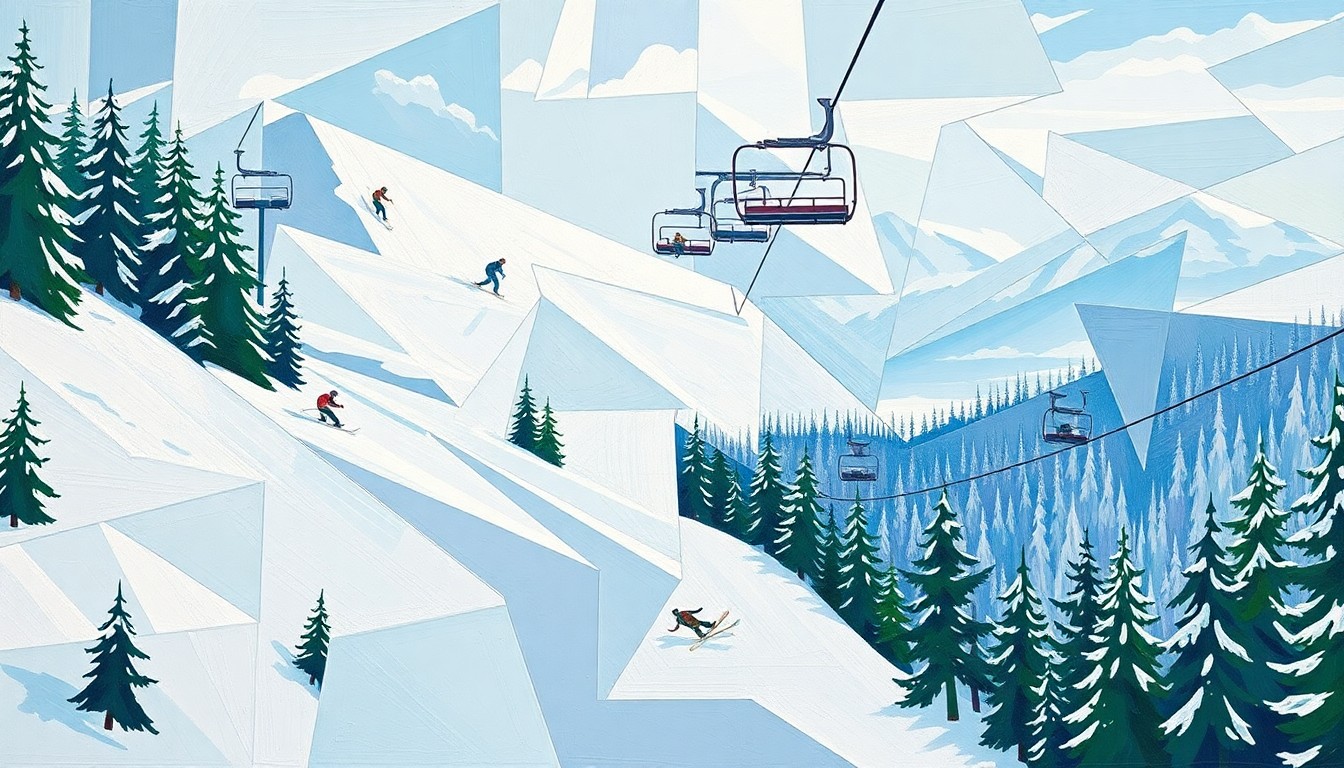 A cubist interpretation of a Montana ski resort, reflecting the challenges of a low-snow season.Whitefish Today
Despite a challenging winter with lower-than-average snowfall across the western United States, ski areas in Montana's Flathead region, including Whitefish Mountain Resort and Blacktail Mountain Ski Area, were able to keep the majority of their terrain open for most of the season and host their annual closing events.
Why it matters
The ability of these ski areas to adapt and overcome low snowfall conditions highlights their resilience and the importance of the ski industry to the local economy in northwest Montana. As climate change brings more variable winter weather patterns, the strategies used by these ski areas could provide insights for other mountain communities.
The details
Whitefish Mountain Resort was able to keep 90% of its 3,000 acres of terrain open throughout the season, ending with about 207 inches of snowfall at the summit. While visitation numbers were down about 8% from the previous year, the resort still had its 5th busiest season on record, with around 457,000 skier visits. About 50 miles south, Blacktail Mountain Ski Area was only able to operate the lower half of the mountain on the Crystal chairlift for 9 days, but still managed to have more than half of its typical visitation.
- The 2025-2026 ski season was challenging for ski areas across the western United States due to lower-than-average snowfall.
- Whitefish Mountain Resort ended its season with about 207 inches of snowfall at the summit.
- Blacktail Mountain Ski Area was only able to operate the lower half of the mountain for 9 days during the season.
The players
Whitefish Mountain Resort
A ski resort located in Whitefish, Montana that was able to keep 90% of its 3,000 acres of terrain open throughout the challenging 2025-2026 ski season.
Blacktail Mountain Ski Area
A ski area located in Lakeside, Montana that was only able to operate the lower half of the mountain on the Crystal chairlift for 9 days during the 2025-2026 ski season.
Chad Sokol
The spokesman for Whitefish Mountain Resort.
Jessi Wood
The general manager of Blacktail Mountain Ski Area.
What they’re saying
“We kept most of our 3,000 acres of terrain open throughout the season which really made a difference and made folks want to come here and spend their time on the slopes.”
— Chad Sokol, Whitefish Mountain Resort Spokesman
“We operated about half of the mountain and had more than half of the visits, but it wasn't a great year for us visitation-wise.”
— Jessi Wood, Blacktail Mountain Ski Area General Manager
What’s next
Blacktail Mountain Ski Area will focus on cleaning up fallen tree debris from winter windstorms during the off-season to prepare the slopes and lifts for the next ski season.
The takeaway
The ability of Whitefish Mountain Resort and Blacktail Mountain Ski Area to adapt and overcome low snowfall conditions during the 2025-2026 season demonstrates the resilience of the ski industry in northwest Montana. As climate change brings more variable winter weather patterns, the strategies used by these ski areas could provide valuable insights for other mountain communities seeking to maintain their winter tourism economies.