- Today
- Holidays
- Birthdays
- Reminders
- Cities
- Atlanta
- Austin
- Baltimore
- Berwyn
- Beverly Hills
- Birmingham
- Boston
- Brooklyn
- Buffalo
- Charlotte
- Chicago
- Cincinnati
- Cleveland
- Columbus
- Dallas
- Denver
- Detroit
- Fort Worth
- Houston
- Indianapolis
- Knoxville
- Las Vegas
- Los Angeles
- Louisville
- Madison
- Memphis
- Miami
- Milwaukee
- Minneapolis
- Nashville
- New Orleans
- New York
- Omaha
- Orlando
- Philadelphia
- Phoenix
- Pittsburgh
- Portland
- Raleigh
- Richmond
- Rutherford
- Sacramento
- Salt Lake City
- San Antonio
- San Diego
- San Francisco
- San Jose
- Seattle
- Tampa
- Tucson
- Washington
Ozark Today
By the People, for the People
Missouri's Black Bear Population Grows, Prompting Guidance from MU Extension
New publication offers insights into black bear ecology and management as numbers increase across the state.
Apr. 12, 2026 at 10:05pm
Got story updates? Submit your updates here. ›
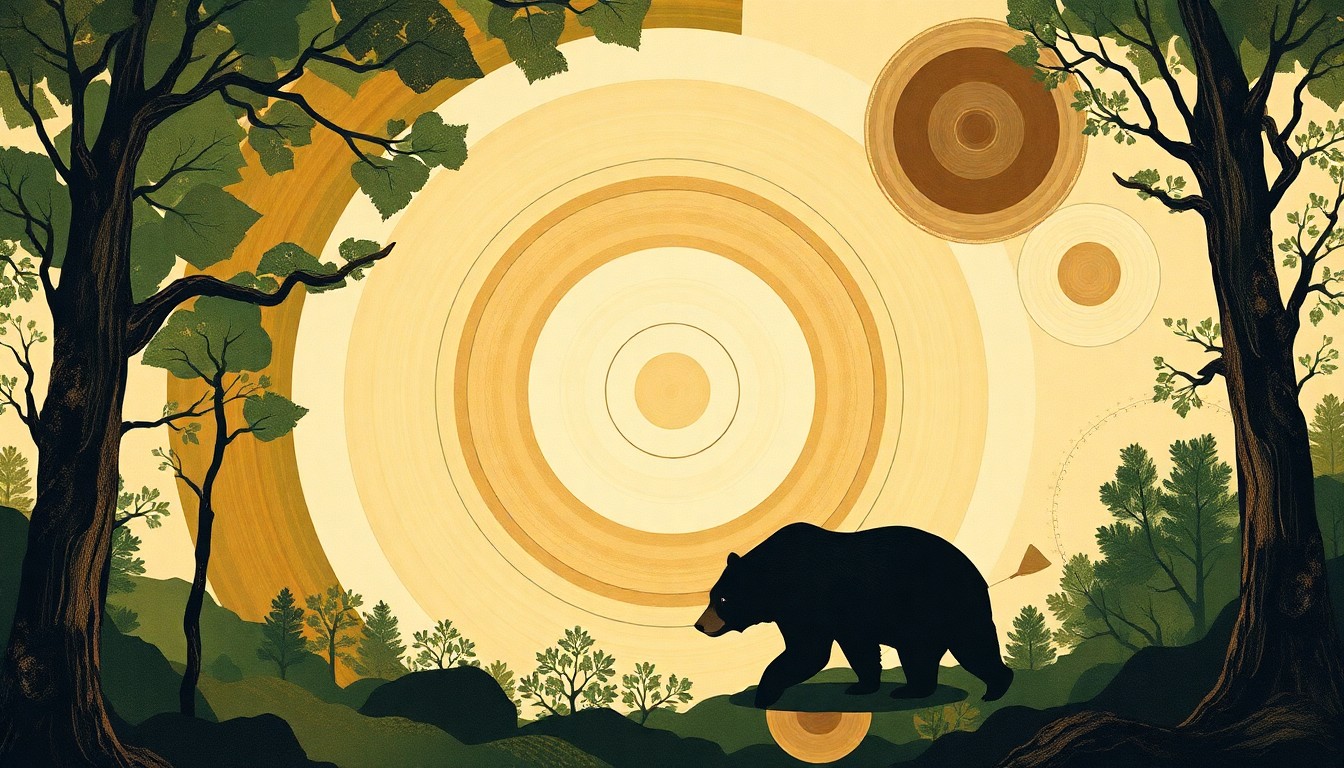 An abstract visualization of the natural forces and ecological factors enabling the recovery and expansion of Missouri's black bear population.Ozark Today
The University of Missouri Extension has released a new publication, 'Ecology and Management of Black Bears in Missouri,' providing guidance on the state's growing black bear population. According to the report, Missouri's black bear numbers have gradually increased in recent years, with current estimates around 1,000 bears, primarily found in the Ozark region. The publication covers the bears' ecology, behavior, and the state's efforts to manage the sustainable population through regulated hunting seasons.
Why it matters
The growth of Missouri's black bear population is considered a conservation success story, as the animals were once nearly wiped out in the state due to unregulated hunting and habitat loss. As the bear numbers continue to rise, the MU Extension publication aims to help residents and officials better understand these adaptable animals and how to coexist with them, especially as bears may start to use more fragmented or marginal habitats.
The details
Black bears are the most abundant bear species in North America, and their population in Missouri has steadily increased in recent years. Most of the state's bears are found in the oak-hickory forests of the Ozark region. During the 1960s, bears were reintroduced to Arkansas from Minnesota and Canada, and the population has since expanded northward into Missouri. Adult male black bears in Missouri can weigh between 130 and 600 pounds, while females range from 90 to 296 pounds. The bears have excellent senses of smell, hearing, and vision, and they are skilled climbers and swimmers. They hibernate during the winter months, with cubs typically born in late January or February.
- In the 1960s, the Arkansas Game and Fish Commission captured and released 254 black bears from Minnesota and Manitoba, Canada, in the Ozark and Ouachita mountain ranges.
- Missouri's black bear population has gradually increased in the past several years, with current numbers estimated at around 1,000 bears.
The players
Robert Pierce
MU associate extension professor and state wildlife and fisheries specialist.
Missouri Department of Conservation
The state agency that has conducted research on Missouri's black bear population and established a Bear Management Plan to guide future decisions.
What they’re saying
“The growth of Missouri's bear population should be considered a significant conservation success story.”
— Robert Pierce, MU associate extension professor and state wildlife and fisheries specialist
“Bears can move large distances, and research indicates that young bears may travel into these types of areas in search of adequate habitats.”
— Robert Pierce, MU associate extension professor and state wildlife and fisheries specialist
What’s next
The Missouri Department of Conservation will likely adjust the current 40-bear harvest quota limit as the black bear population continues to grow in the state.
The takeaway
The recovery and growth of Missouri's black bear population demonstrates the success of conservation efforts, but also presents new challenges as the adaptable animals may start to use more fragmented or marginal habitats. The MU Extension publication aims to help residents and officials better understand and coexist with the increasing bear population.