- Today
- Holidays
- Birthdays
- Reminders
- Cities
- Atlanta
- Austin
- Baltimore
- Berwyn
- Beverly Hills
- Birmingham
- Boston
- Brooklyn
- Buffalo
- Charlotte
- Chicago
- Cincinnati
- Cleveland
- Columbus
- Dallas
- Denver
- Detroit
- Fort Worth
- Houston
- Indianapolis
- Knoxville
- Las Vegas
- Los Angeles
- Louisville
- Madison
- Memphis
- Miami
- Milwaukee
- Minneapolis
- Nashville
- New Orleans
- New York
- Omaha
- Orlando
- Philadelphia
- Phoenix
- Pittsburgh
- Portland
- Raleigh
- Richmond
- Rutherford
- Sacramento
- Salt Lake City
- San Antonio
- San Diego
- San Francisco
- San Jose
- Seattle
- Tampa
- Tucson
- Washington
Unveiling SPEAR-1: The Open-Source Robot Brain Revolutionizing Industrial Robotics
European researchers unleash a 3D-trained AI model to accelerate the development of smarter, more dexterous robots
Apr. 11, 2026 at 4:11pm
Got story updates? Submit your updates here. ›
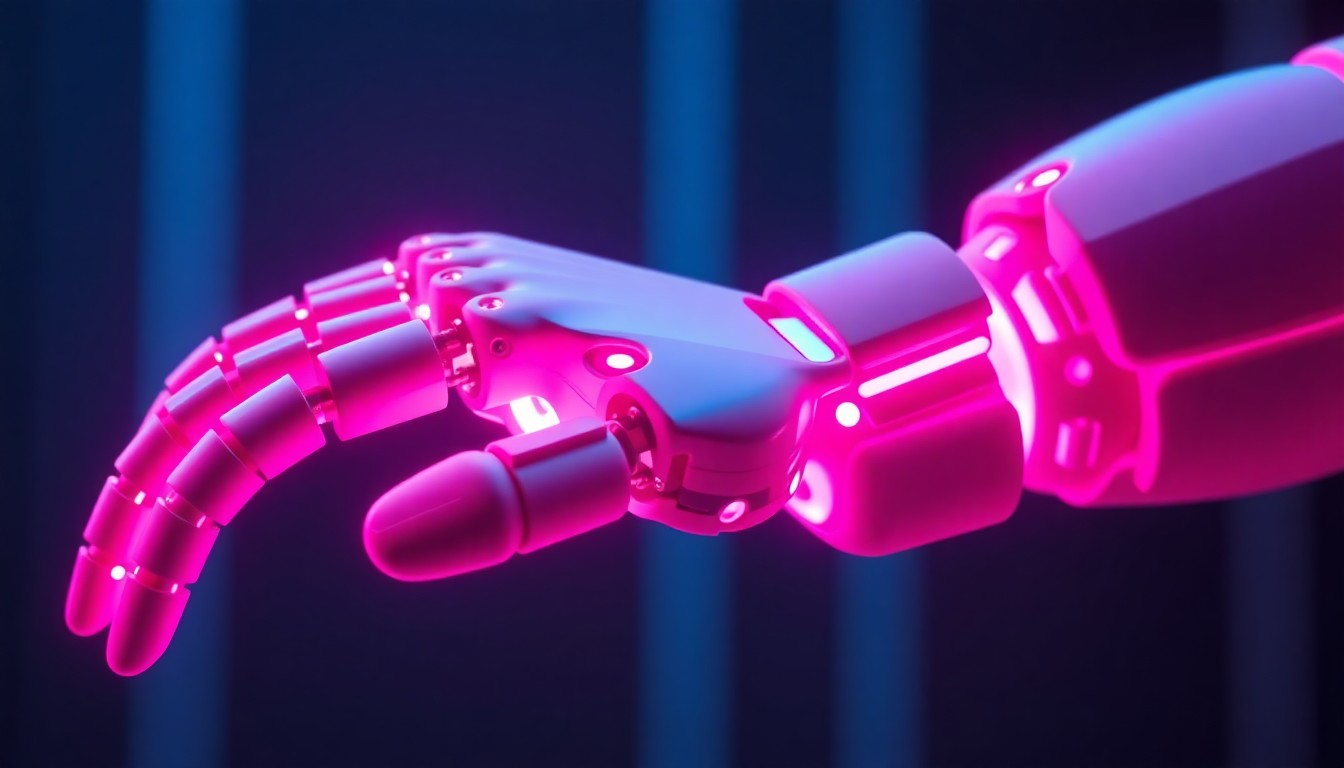 SPEAR-1's 3D-trained robot brain could accelerate the development of more adaptable and dexterous industrial robots, bridging the gap between virtual and physical worlds.Kansas City Today
European researchers have unveiled SPEAR-1, an open-source robot brain that uses 3D training data to enable robots to navigate and manipulate objects with unprecedented precision. Developed by the Institute for Computer Science, Artificial Intelligence and Technology (INSAIT) in Bulgaria, SPEAR-1 is designed to help researchers and startups experiment with advanced robotics for factories and warehouses. The model's 3D training approach sets it apart from traditional 2D-based robot foundation models, bridging the gap between a robot's 3D operating space and the physical world.
Why it matters
SPEAR-1's open-source nature suggests the future of robot intelligence may not be dominated by closed models from tech giants, but rather a mix of open and closed models that could drive innovation. The 3D training approach also has the potential to accelerate the development of robots with more general capabilities, able to navigate and interact with complex, real-world environments.
The details
SPEAR-1 incorporates 3D data into its training, unlike traditional robot foundation models that rely on 2D images. This 3D training gives the model an edge, enabling robots to grasp and manipulate objects with greater precision. On RoboArena, a benchmark testing robot capabilities, SPEAR-1 performs on par with commercial models, handling tasks like squeezing ketchup bottles or stapling paper. This puts it in the same league as Pi-0.5 from Physical Intelligence, a billion-dollar robotics startup.
- SPEAR-1 was developed by researchers at the Institute for Computer Science, Artificial Intelligence and Technology (INSAIT) in Bulgaria.
- The model was unveiled to the public in April 2026.
The players
Martin Vechev
A computer scientist at INSAIT and ETH Zurich who believes open-source models are crucial for advancing embodied AI.
Karl Pertsch
From Physical Intelligence, a billion-dollar robotics startup, who applauds SPEAR-1's rapid progress and calls it 'really cool' to see academic groups achieving such generalizable performance in diverse environments.
What they’re saying
“Open-weight models are crucial for advancing embodied AI.”
— Martin Vechev, Computer Scientist
“It's really cool to see academic groups achieving such generalizable performance in diverse environments—something unimaginable just a year ago.”
— Karl Pertsch, Physical Intelligence
What’s next
Researchers hope that massive training data and computational power—the same ingredients behind large language models—will eventually create robots with general capabilities, able to navigate messy, unfamiliar environments with ease.
The takeaway
SPEAR-1's open-source nature suggests the future of robot intelligence may not be dominated by closed models from tech giants, but rather a mix of open and closed models that could democratize robotics innovation and drive rapid progress in the field.
Kansas City top stories



Kansas City events

Apr. 11, 2026
Kansas City Royals vs. Chicago White Sox
Apr. 11, 2026
Nitepunk
Apr. 11, 2026
Seth Meyers