- Today
- Holidays
- Birthdays
- Reminders
- Cities
- Atlanta
- Austin
- Baltimore
- Berwyn
- Beverly Hills
- Birmingham
- Boston
- Brooklyn
- Buffalo
- Charlotte
- Chicago
- Cincinnati
- Cleveland
- Columbus
- Dallas
- Denver
- Detroit
- Fort Worth
- Houston
- Indianapolis
- Knoxville
- Las Vegas
- Los Angeles
- Louisville
- Madison
- Memphis
- Miami
- Milwaukee
- Minneapolis
- Nashville
- New Orleans
- New York
- Omaha
- Orlando
- Philadelphia
- Phoenix
- Pittsburgh
- Portland
- Raleigh
- Richmond
- Rutherford
- Sacramento
- Salt Lake City
- San Antonio
- San Diego
- San Francisco
- San Jose
- Seattle
- Tampa
- Tucson
- Washington
Alexandria Today
By the People, for the People
Railroads Transformed Douglas County in the Early 20th Century
The arrival of the Great Northern Railway and Soo Line brought goods, services, and people to the region.
Mar. 29, 2026 at 3:21pm
Got story updates? Submit your updates here. ›
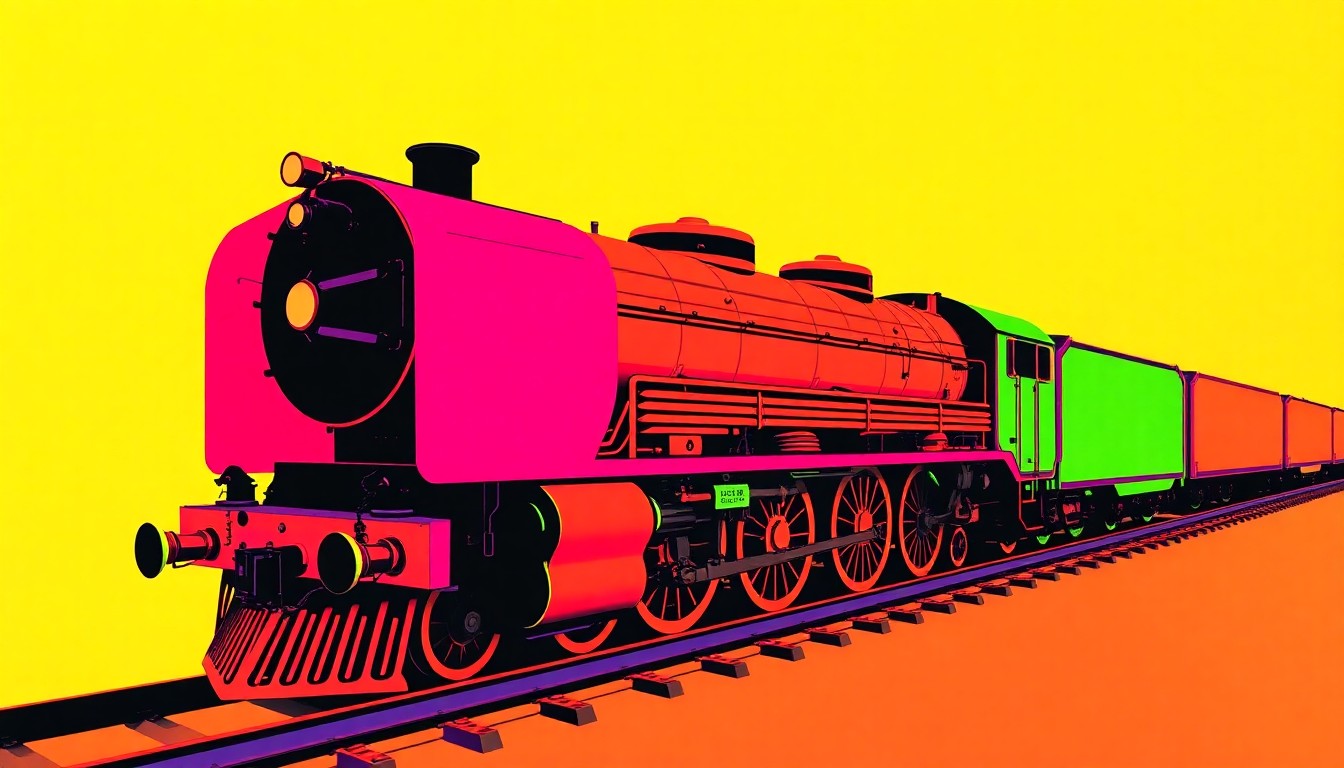 The railroads that once connected Douglas County to the broader region are now commemorated in a bold, colorful pop art style.Alexandria Today
Railroads played a crucial role in the development of Douglas County, Minnesota in the late 19th and early 20th centuries. The Great Northern Railway, established in 1889 by James J. Hill, and the Soo Line, founded by Minneapolis businessmen in 1883, both expanded into the area, providing access to goods, services, and tourism. The railroads helped spur immigration and economic growth, though passenger service eventually declined in the mid-20th century.
Why it matters
The expansion of the railroads was a transformative event for Douglas County, connecting the rural region to broader economic and social networks. The railroads brought new opportunities for trade, travel, and settlement, shaping the county's development in lasting ways.
The details
The Great Northern Railway, collated from several existing lines, provided both passenger and freight service, helping to establish many of the area's largest lake resorts. The Soo Line, founded by Minneapolis flour millers, aimed to transport grain from North Dakota to Minneapolis mills and eastern markets. Before the railroads arrived in the 1870s, the only way to access Douglas County was by horseback, wagon, or stagecoach, limiting trade and commerce. The arrival of the railroads spurred growth, though financial troubles and the rise of automobiles led to the decline of passenger service by the mid-20th century.
- The first Euro-American settlers came to Douglas County around 1858, before the railroads arrived.
- The Great Northern Railway was established in 1889 by James J. Hill.
- The Soo Line was established in 1883 by Minneapolis businessmen.
- The first train arrived in Douglas County on November 14, 1878.
- Passenger service on the Great Northern Line to Alexandria was terminated on May 1, 1971.
The players
James J. Hill
The founder of the Great Northern Railway, which expanded into Douglas County in the late 19th century.
Knute Nelson
A dedicated advocate who helped bring the railroad to Alexandria in the 1870s.
Jenna Collins
The associate director of the Douglas County Historical Society, who provided historical details about the railroads in the region.
Charles Pillsbury
A Minneapolis businessman who was involved in the founding of the Soo Line, which aimed to transport grain from North Dakota.
Canadian Pacific Kansas City Ltd.
The rail line that now controls the tracks that run past the Douglas County Historical Society.
What they’re saying
“Great Northern had both passenger and freight trains. The passenger trains really helped bring tourists up to the lakes country. Many of the largest of our lakes resorts … were really established once the railroad came to town in 1878.”
— Jenna Collins, Associate Director, Douglas County Historical Society
“The majority of these men were actually flour millers like Charles Pillsbury. They wanted access to grain — grain farms and markets — specifically in North Dakota. They wanted to control the means of transporting that grain, so they would get the grain from North Dakota, bring it to Minneapolis to be milled and then out to customers out east.”
— Jenna Collins, Associate Director, Douglas County Historical Society
The takeaway
The arrival of the railroads in Douglas County in the late 19th century was a pivotal moment that transformed the region, connecting it to broader economic and social networks. While passenger service eventually declined, the railroads' lasting impact can still be seen in the county's development and the role they played in shaping its history.