- Today
- Holidays
- Birthdays
- Reminders
- Cities
- Atlanta
- Austin
- Baltimore
- Berwyn
- Beverly Hills
- Birmingham
- Boston
- Brooklyn
- Buffalo
- Charlotte
- Chicago
- Cincinnati
- Cleveland
- Columbus
- Dallas
- Denver
- Detroit
- Fort Worth
- Houston
- Indianapolis
- Knoxville
- Las Vegas
- Los Angeles
- Louisville
- Madison
- Memphis
- Miami
- Milwaukee
- Minneapolis
- Nashville
- New Orleans
- New York
- Omaha
- Orlando
- Philadelphia
- Phoenix
- Pittsburgh
- Portland
- Raleigh
- Richmond
- Rutherford
- Sacramento
- Salt Lake City
- San Antonio
- San Diego
- San Francisco
- San Jose
- Seattle
- Tampa
- Tucson
- Washington
260-Million-Year-Old Apex Predator Discovered in South Africa
Jirahgorgon ceto find challenges long-held beliefs about early land carnivore evolution
Apr. 13, 2026 at 12:45am
Got story updates? Submit your updates here. ›
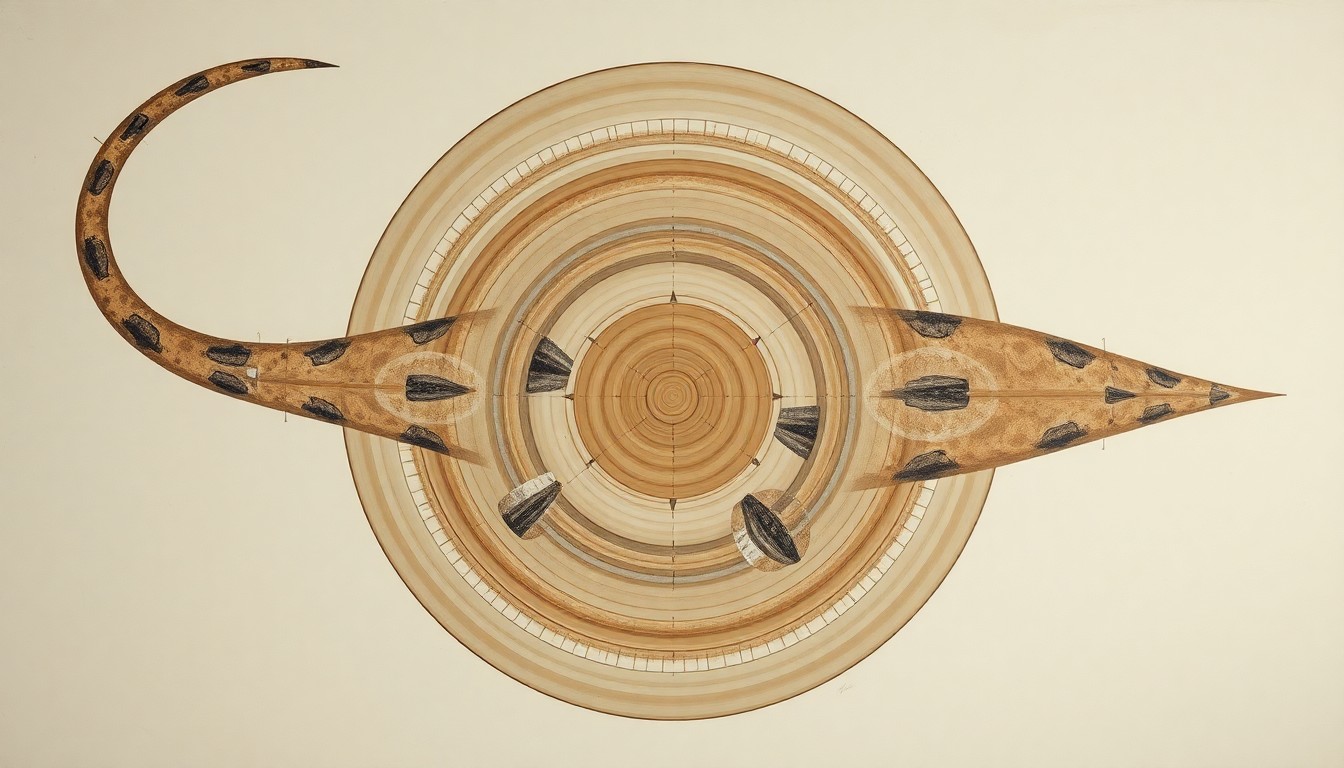 A conceptual illustration depicting the advanced anatomical features and evolutionary adaptations of the 260-million-year-old apex predator Jirahgorgon ceto, whose discovery in South Africa has challenged long-held beliefs about the linear progression of early land carnivore evolution.Sault Ste. Marie Today
The recent discovery of a 260-million-year-old apex predator named Jirahgorgon ceto in South Africa has sent shockwaves through the scientific community, challenging long-held beliefs about the evolution of early land carnivores. The advanced anatomical features of this ancient predator closely resemble those of much later and larger predators, suggesting evolutionary pathways were not as linear as previously thought.
Why it matters
This discovery has far-reaching implications for our understanding of the Permian period and the rise of apex predators. It raises questions about the complexity of ecosystems during this time and the role of these predators in shaping them, as the presence of a large-bodied, specialized predator at the Wordian–Capitanian boundary indicates that size and hunting adaptations did not follow a simple, linear progression.
The details
Researchers have found that increases in body size among gorgonopsians occurred independently and multiple times, pointing to evolutionary experimentation and the exploration of similar traits under varying environmental pressures. This finding has significant implications for our understanding of the Permian–Triassic extinction event, as it suggests ecosystems leading up to this event were likely more intricate and competitive than once believed.
- The discovery of Jirahgorgon ceto was made in 2026 in the Karoo Basin of South Africa.
- The fossil remains date back approximately 260 million years.
The players
Jirahgorgon ceto
A 260-million-year-old apex predator discovered in South Africa, with advanced anatomical features that challenge long-held beliefs about the evolution of early land carnivores.
Karoo Basin
A region in South Africa where the fossil remains of Jirahgorgon ceto were discovered, known for its rich paleontological history.
What’s next
Researchers plan to continue fieldwork in the Karoo Basin, hoping to uncover more specimens of Jirahgorgon ceto that could provide further insights into the evolution of early land carnivores.
The takeaway
This discovery of a 260-million-year-old apex predator in South Africa challenges long-held beliefs about the linear progression of evolutionary adaptations, suggesting a more complex and dynamic history of early terrestrial ecosystems. It highlights the importance of ongoing paleontological research in refining our understanding of the past and the interconnectedness of all life on Earth.