- Today
- Holidays
- Birthdays
- Reminders
- Cities
- Atlanta
- Austin
- Baltimore
- Berwyn
- Beverly Hills
- Birmingham
- Boston
- Brooklyn
- Buffalo
- Charlotte
- Chicago
- Cincinnati
- Cleveland
- Columbus
- Dallas
- Denver
- Detroit
- Fort Worth
- Houston
- Indianapolis
- Knoxville
- Las Vegas
- Los Angeles
- Louisville
- Madison
- Memphis
- Miami
- Milwaukee
- Minneapolis
- Nashville
- New Orleans
- New York
- Omaha
- Orlando
- Philadelphia
- Phoenix
- Pittsburgh
- Portland
- Raleigh
- Richmond
- Rutherford
- Sacramento
- Salt Lake City
- San Antonio
- San Diego
- San Francisco
- San Jose
- Seattle
- Tampa
- Tucson
- Washington
Levothyroxine Discontinuation Safe for Many Older Adults
About 1 in 4 overall and two thirds of those taking doses of 50 μg/d or lower were able to come off the treatment while maintaining adequate thyroid function for 1 year.
Apr. 7, 2026 at 10:43am
Got story updates? Submit your updates here. ›
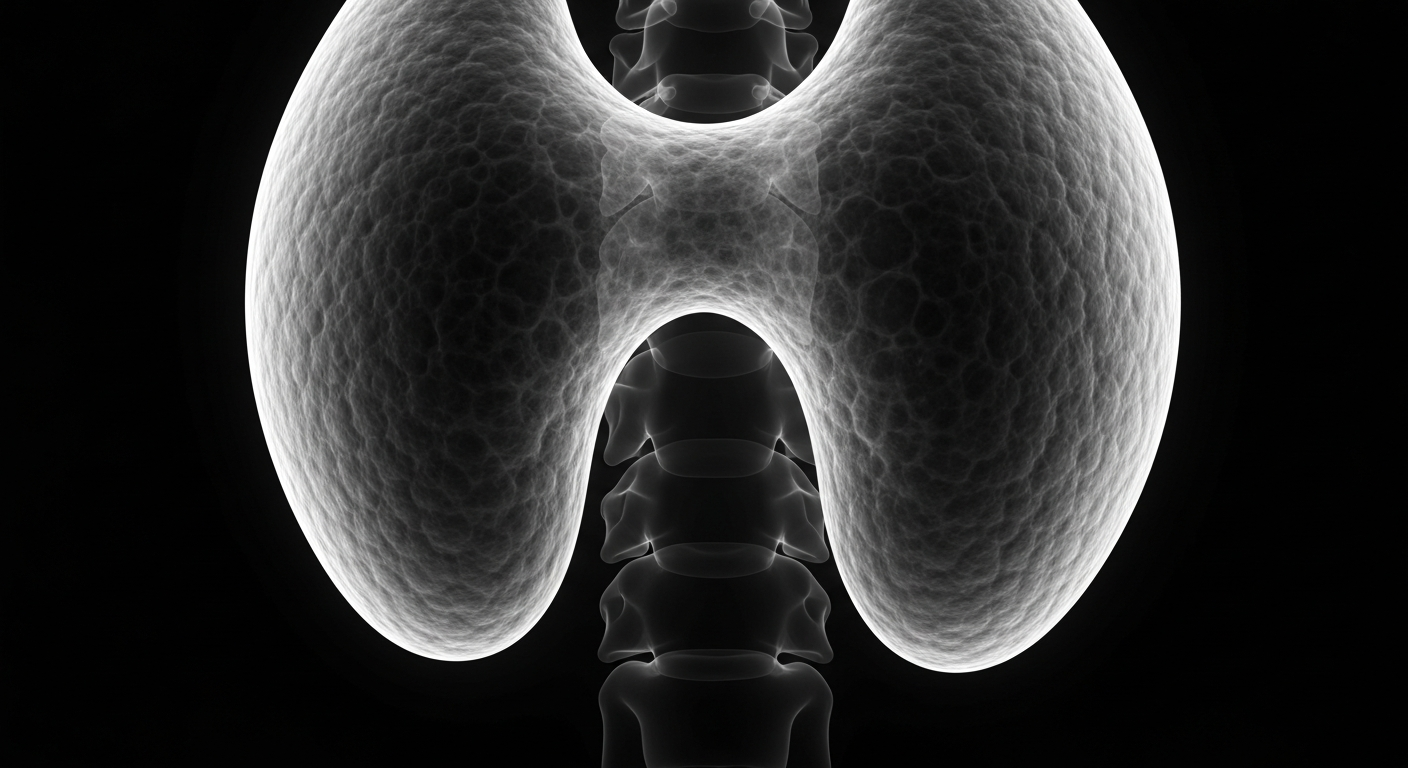 An X-ray view of the human thyroid gland offers a glimpse into the complexities of endocrine health and the potential for safe medication adjustments in older adults.Ann Arbor Today
A new study found that levothyroxine treatment can be discontinued safely in about 1 in 4 adults aged 60 years or older while still maintaining adequate thyroid function at 1 year without the medication. The findings suggest that evaluation of the need to continue levothyroxine should be considered in older adults, particularly those taking lower doses.
Why it matters
Overtreatment with levothyroxine is a growing concern because it is associated with increased risks, including fractures, atrial fibrillation, cognitive disorders, and mortality. The new study provides evidence that many older adults may be able to safely discontinue or reduce their levothyroxine dose.
The details
The study was conducted in 58 primary care practices in the Netherlands. Participants had been on levothyroxine doses less than 150 μg/d (mean 84 μg/d) for at least a year and had thyrotropin (TSH) levels less than 10 mIU/L. The protocol involved stepwise dose reductions, with testing to ensure adequate thyroid function. The primary outcome was the proportion who successfully discontinued levothyroxine while maintaining a TSH less than 10 mIU/L and free thyroxine within the reference range at 1 year, which was 25.7%. Another 32.2% reduced their dose by 50% or more while maintaining adequate thyroid function. Higher baseline doses were associated with a lower chance of successful discontinuation.
- The study was published online on April 6, 2026.
- Participants had been on the same levothyroxine dose for at least 1 year prior to the study.
The players
Janneke Ravensberg, MD
Department of Public Health and Primary Care, Leiden University Medical Center, Leiden, Netherlands, and lead author of the study.
Maria Papaleontiou, MD
Associate professor of internal medicine at the University of Michigan in Ann Arbor, Michigan, who specializes in geriatric endocrinology.
Anne R. Cappola, MD
Endocrinologist and professor of medicine at the University of Pennsylvania in Philadelphia, who has served on the American Thyroid Association's Task Force on Thyroid Hormone Replacement.
What they’re saying
“Overtreatment is a growing concern because it is associated with fractures, atrial fibrillation, cognitive disorders, and mortality.”
— Janneke Ravensberg, MD, Lead author
“Evaluation of the need to continue levothyroxine should be considered in adults aged 60 years or older, particularly in those taking a 50-μg/d dose or lower.”
— Janneke Ravensberg, MD, Lead author
“Deprescribing low-dose levothyroxine (≤ 50 μg/d) in patients without a clear indication for treatment appears to be safe when guided by gradual dose reduction and monitoring of thyrotropin level and symptoms 6 weeks after a dose reduction.”
— Maria Papaleontiou, MD, Associate professor of internal medicine
“Clinicians should reassess the necessity of thyroid hormone therapy to minimize overtreatment and its associated risks, embracing a strategy of patient-centered, evidence-based deprescribing.”
— Anne R. Cappola, MD, Endocrinologist and professor of medicine
What’s next
Randomized clinical trials are needed that prioritize intervention effectiveness while integrating patient preference and goals into the deprescribing process.
The takeaway
This study suggests that many older adults on low-dose levothyroxine may be able to safely discontinue or reduce their medication, highlighting the importance of regularly reassessing the necessity of thyroid hormone therapy to minimize overtreatment and associated risks.
Ann Arbor top stories



Ann Arbor events

Apr. 10, 2026
The Fab Faux Presents The Glorious Hodgepodge Show