- Today
- Holidays
- Birthdays
- Reminders
- Cities
- Atlanta
- Austin
- Baltimore
- Berwyn
- Beverly Hills
- Birmingham
- Boston
- Brooklyn
- Buffalo
- Charlotte
- Chicago
- Cincinnati
- Cleveland
- Columbus
- Dallas
- Denver
- Detroit
- Fort Worth
- Houston
- Indianapolis
- Knoxville
- Las Vegas
- Los Angeles
- Louisville
- Madison
- Memphis
- Miami
- Milwaukee
- Minneapolis
- Nashville
- New Orleans
- New York
- Omaha
- Orlando
- Philadelphia
- Phoenix
- Pittsburgh
- Portland
- Raleigh
- Richmond
- Rutherford
- Sacramento
- Salt Lake City
- San Antonio
- San Diego
- San Francisco
- San Jose
- Seattle
- Tampa
- Tucson
- Washington
Alpena Today
By the People, for the People
New Bovine TB Cases Confirmed in Michigan Deer Herds
Officials are investigating how the disease spread in two counties.
Apr. 8, 2026 at 11:22pm
Got story updates? Submit your updates here. ›
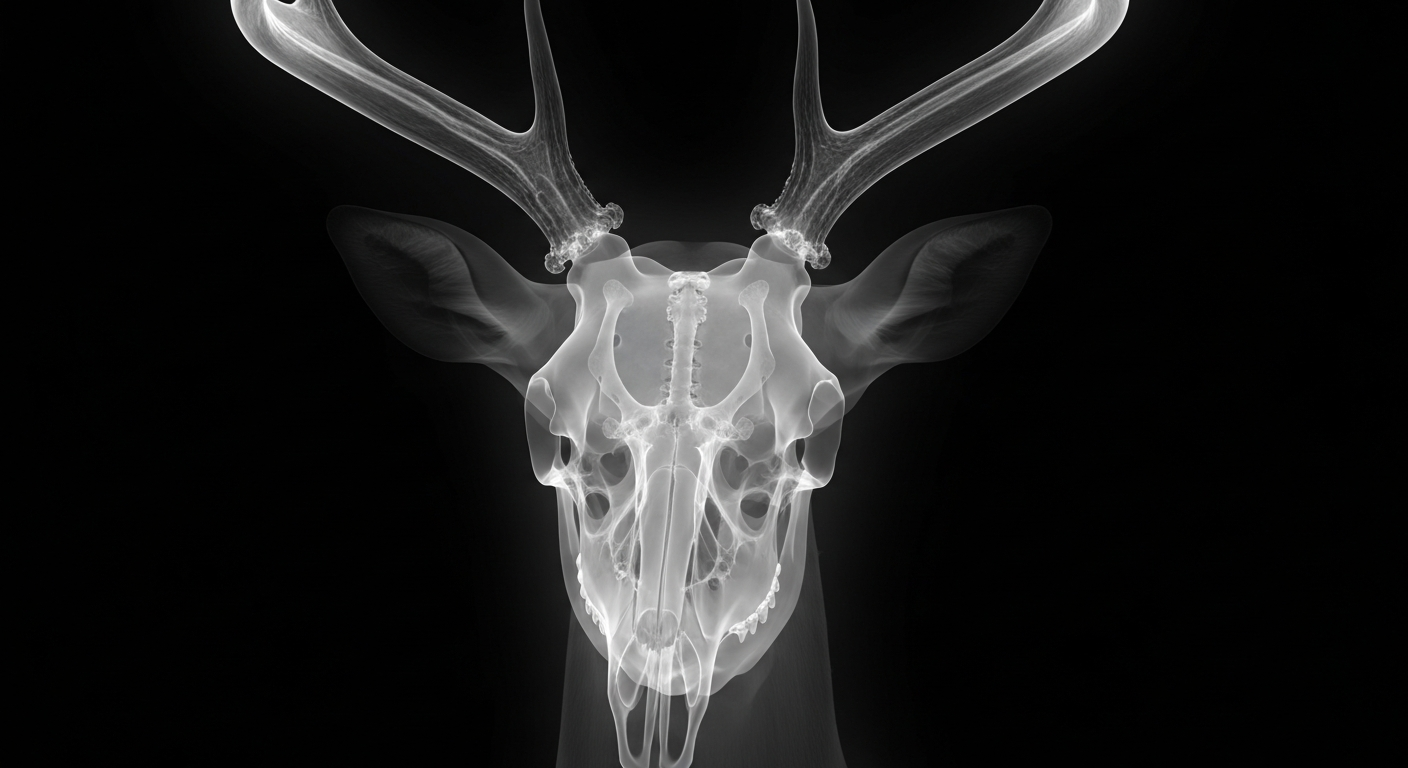 An X-ray view of a deer's head reveals the internal structures that could harbor bovine tuberculosis, a disease that continues to impact Michigan's wildlife and livestock.Alpena Today
The Michigan Department of Agriculture and Rural Development (MDARD) has confirmed new cases of bovine tuberculosis (TB) in cattle herds located in Alpena and Presque Isle counties. The infections were discovered during routine annual whole-herd testing, a process designed to catch the disease early and limit its spread.
Why it matters
Bovine TB is a bacterial disease that can affect cattle, deer, and other mammals. Transmission often occurs when cattle come into contact with infected deer, making wildlife interaction the key factor. State officials will conduct a full investigation to trace how the infection occurred and continue to rely on surveillance testing, animal tracking, and wildlife management to contain the disease.
The details
Bovine TB isn't new to Michigan. The disease has been established for years in the whitetail herd across parts of northeastern Lower Michigan. The state manages this through two zones: the Modified Accredited Zone (MAZ) covering Alcona, Alpena, Montmorency, and Oscoda counties, and the Accredited Free Zone covering the rest of Michigan, including Presque Isle County. Even in the Accredited Free Zone, counties near the MAZ follow stricter testing and cattle movement rules due to the ongoing risk.
- The new bovine TB cases were confirmed on April 8, 2026.
The players
Michigan Department of Agriculture and Rural Development (MDARD)
The state agency responsible for managing bovine TB in Michigan, including conducting surveillance testing, animal tracking, and wildlife management efforts.
What’s next
State officials will conduct a full investigation, including genetic testing of the bacteria, to trace how the infection occurred. MDARD says it will continue to rely on surveillance testing, animal tracking, and wildlife management to contain the disease.
The takeaway
The discovery of new bovine TB cases in Michigan highlights the ongoing challenge of managing this disease, which can spread between cattle and deer herds. Continued vigilance and a multi-pronged approach involving testing, tracking, and wildlife management will be crucial to limiting the impact of bovine TB in the state.