- Today
- Holidays
- Birthdays
- Reminders
- Cities
- Atlanta
- Austin
- Baltimore
- Berwyn
- Beverly Hills
- Birmingham
- Boston
- Brooklyn
- Buffalo
- Charlotte
- Chicago
- Cincinnati
- Cleveland
- Columbus
- Dallas
- Denver
- Detroit
- Fort Worth
- Houston
- Indianapolis
- Knoxville
- Las Vegas
- Los Angeles
- Louisville
- Madison
- Memphis
- Miami
- Milwaukee
- Minneapolis
- Nashville
- New Orleans
- New York
- Omaha
- Orlando
- Philadelphia
- Phoenix
- Pittsburgh
- Portland
- Raleigh
- Richmond
- Rutherford
- Sacramento
- Salt Lake City
- San Antonio
- San Diego
- San Francisco
- San Jose
- Seattle
- Tampa
- Tucson
- Washington
Early Detection Key for Treating Triple-Negative Breast Cancer
Oncologist says aggressive form of cancer can be managed if caught early, especially for Black women and those with BRCA1 gene
Apr. 6, 2026 at 8:51pm
Got story updates? Submit your updates here. ›
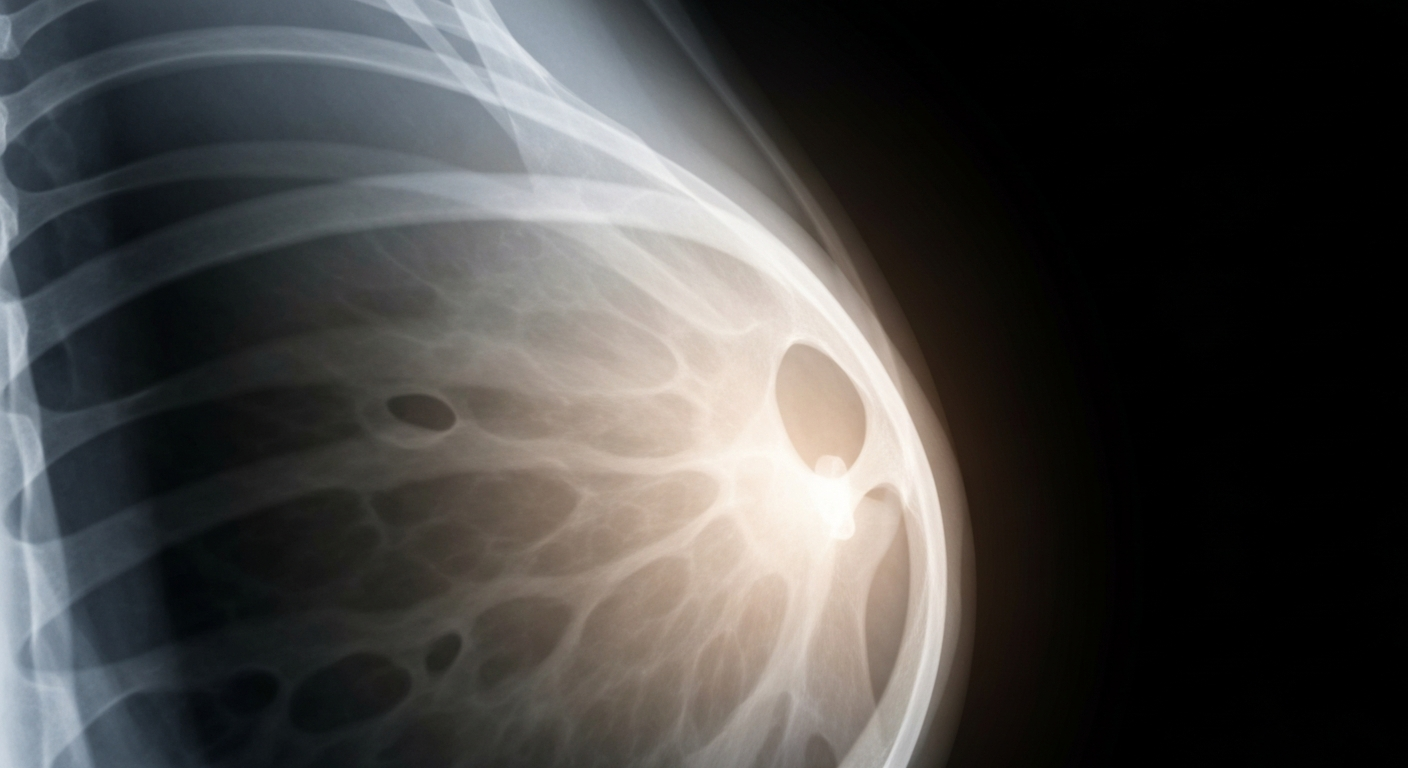 An X-ray view of the inner workings of the breast reveals the early signs of treatable triple-negative cancer, underscoring the importance of vigilance and self-advocacy.Baltimore Today
Triple-negative breast cancer, an aggressive form of the disease that represents about 15% of all breast cancer cases, can be treated effectively if detected early, according to Dr. David Riseberg, an oncologist at Mercy Medical Center in Baltimore. Jasmine Leigh Morse, a patient who was diagnosed with Stage 1B triple-negative breast cancer at just under 40 years old, credits early detection and advocacy for her successful treatment, which included chemotherapy, a lumpectomy, and a mastectomy.
Why it matters
Triple-negative breast cancer disproportionately affects Black women and those with the BRCA1 gene mutation, making early detection and treatment critical. This story highlights the importance of regular screenings, self-advocacy, and access to quality cancer care, especially for high-risk populations.
The details
Triple-negative breast cancer is an aggressive form of the disease that lacks the three most common receptors found in other breast cancers - estrogen, progesterone, and HER2. This makes it more difficult to treat, but Dr. Riseberg says the majority of women diagnosed at an early stage can survive it with proper treatment. Morse's case is an example, as she was able to undergo chemotherapy, a lumpectomy, and a mastectomy and is now cancer-free.
- Morse was diagnosed with Stage 1B triple-negative breast cancer in August 2020, at just under 40 years old.
- Morse underwent chemotherapy, a lumpectomy, and a mastectomy in 2021.
The players
Dr. David Riseberg
An oncologist at Mercy Medical Center in Baltimore who specializes in treating triple-negative breast cancer.
Jasmine Leigh Morse
A patient who was diagnosed with Stage 1B triple-negative breast cancer at just under 40 years old and has since undergone successful treatment.
What they’re saying
“When we say 'triple negative,' it means it's negative for the two hormone receptors as well as something called the HER2 receptor. So, these are things that we test for in breast cancer cells.”
— Dr. David Riseberg, Oncologist
“I wasn't even 40, so I hadn't been getting mammograms, and it literally came out of nowhere because I had just had my wellness exam a few months prior.”
— Jasmine Leigh Morse
“We're seeing that, these days, the majority of women with triple-negative breast cancer, who are caught such that they're still in a reasonably early stage, they're surviving it.”
— Dr. David Riseberg, Oncologist
“Initially, my GYN said that she didn't think it was anything. She thought it was just a cyst. I said, 'No, I have a history and I want to get a biopsy.' And she did it right away. But if I had walked out of the office, who knows what would have happened?”
— Jasmine Leigh Morse
What’s next
Morse will continue to undergo regular screenings and monitoring to ensure the cancer does not return.
The takeaway
This story highlights the importance of early detection and self-advocacy for women, especially those at higher risk of triple-negative breast cancer. With proper treatment, even this aggressive form of cancer can be managed if caught early.
Baltimore top stories



Baltimore events

Apr. 6, 2026
Seong-Jin Cho

Apr. 10, 2026
Words, Wings & Wine