- Today
- Holidays
- Birthdays
- Reminders
- Cities
- Atlanta
- Austin
- Baltimore
- Berwyn
- Beverly Hills
- Birmingham
- Boston
- Brooklyn
- Buffalo
- Charlotte
- Chicago
- Cincinnati
- Cleveland
- Columbus
- Dallas
- Denver
- Detroit
- Fort Worth
- Houston
- Indianapolis
- Knoxville
- Las Vegas
- Los Angeles
- Louisville
- Madison
- Memphis
- Miami
- Milwaukee
- Minneapolis
- Nashville
- New Orleans
- New York
- Omaha
- Orlando
- Philadelphia
- Phoenix
- Pittsburgh
- Portland
- Raleigh
- Richmond
- Rutherford
- Sacramento
- Salt Lake City
- San Antonio
- San Diego
- San Francisco
- San Jose
- Seattle
- Tampa
- Tucson
- Washington
Baltimore Launches 'Oops! Tag' Recycling Program
New initiative aims to reduce contamination in city's recycling bins
Mar. 31, 2026 at 2:07am
Got story updates? Submit your updates here. ›
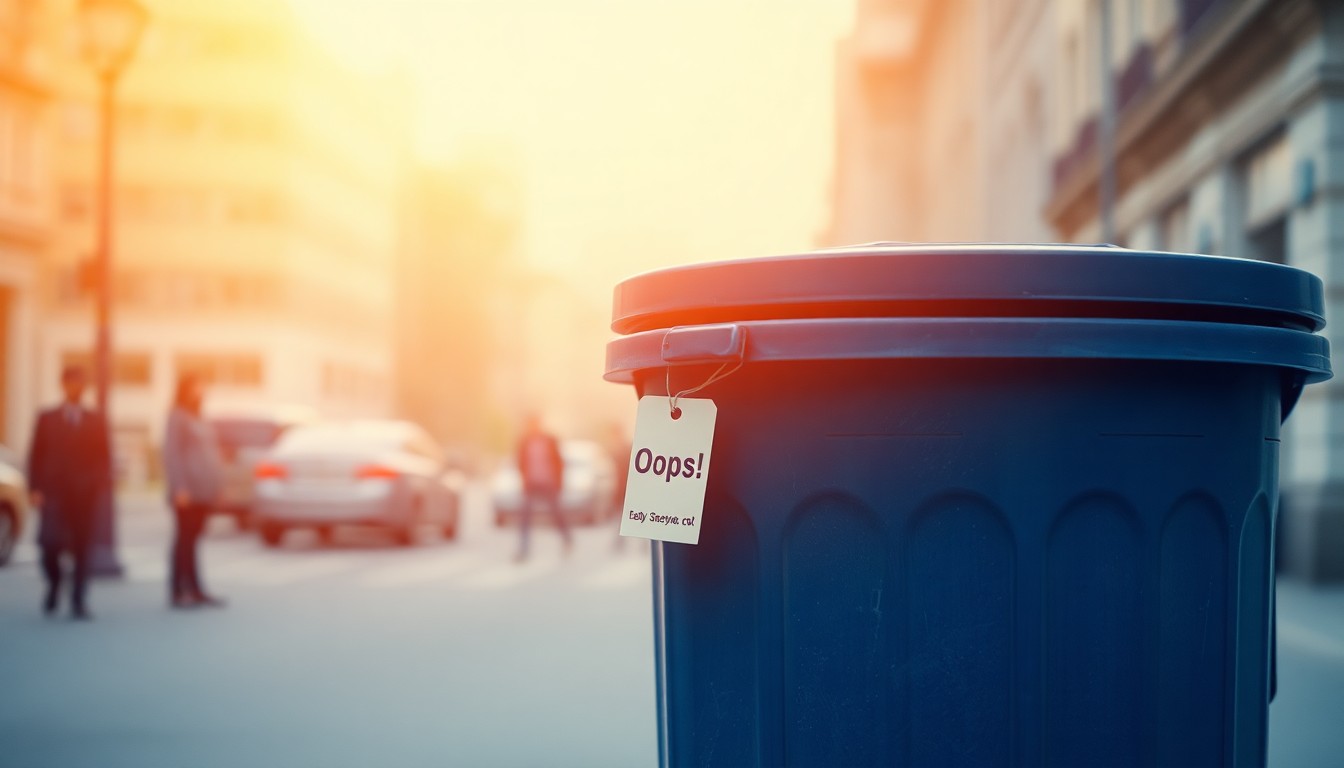 The 'Oops!' tag program aims to educate Baltimore residents on proper recycling practices, reducing contamination and improving the efficiency of the city's recycling efforts.Baltimore Today
The Baltimore City Department of Public Works has launched a new 'Oops! Tag Recycling' program to educate residents about what can and cannot be recycled. The goal is to reduce contamination in the city's recycling bins, which can clog up recycling machinery and reduce the efficiency of the entire recycling program. As part of the initiative, sanitation workers will place 'Oops!' tags on bins that contain non-recyclable items, informing residents of the contaminants.
Why it matters
Reducing recycling contamination is crucial for maintaining an effective and efficient recycling program. Contaminants like plastic bags, cords, and food-soiled containers can damage recycling equipment and lead to entire loads being rejected, undermining the city's sustainability efforts. The 'Oops! Tag' program aims to directly engage residents and improve recycling habits across Baltimore.
The details
The 'Oops! Tag Recycling' program was launched by the Baltimore City Department of Public Works to address the issue of recycling contamination. Sanitation workers will place 'Oops!' tags on recycling bins that contain non-recyclable items, informing residents of the specific contaminants. The tags list what can and cannot be recycled, with the goal of educating the public and improving recycling practices. From June 2024 to July 2025, the city's recycling contamination rate was 21.11%, but that number has since fallen to 15.09% from August 2025 to the present day.
- The 'Oops! Tag Recycling' program was launched by the Baltimore City Department of Public Works in 2026.
- From June 2024 to July 2025, the city's recycling contamination rate was 21.11%.
- From August 2025 to the present day, the city's recycling contamination rate has fallen to 15.09%.
The players
Baltimore City Department of Public Works
The government agency responsible for managing the city's recycling program and launching the 'Oops! Tag Recycling' initiative.
Sean Crockett
A recycling supervisor at the Baltimore City Department of Public Works who spoke about the 'Oops! Tag Recycling' program.
What they’re saying
“It's easy: Bottles, cans, paper, that's what's recycled.”
— Sean Crockett, Recycling Supervisor, Baltimore City Department of Public Works
“It clogs up the machines that recycle, and it destroys the efficiency of the whole, entire program. So, most of it is considered contamination at that point — the whole load is lost.”
— Sean Crockett, Recycling Supervisor, Baltimore City Department of Public Works
“Most people want to put their recycling in plastic bags. You can't do that.”
— Sean Crockett, Recycling Supervisor, Baltimore City Department of Public Works
“The ultimate message is education. We all try to get better. Read the tag. Get better. On one side, it's what you can't use. On the other side is what you can use.”
— Sean Crockett, Recycling Supervisor, Baltimore City Department of Public Works
What’s next
The Baltimore City Department of Public Works plans to continue monitoring the city's recycling contamination rates and expanding the 'Oops! Tag Recycling' program to further educate residents and improve recycling habits.
The takeaway
The 'Oops! Tag Recycling' program in Baltimore is a proactive approach to reducing recycling contamination and improving the efficiency of the city's recycling efforts. By directly engaging residents and providing clear guidance on what can and cannot be recycled, the program aims to empower the community to be better recyclers and support the city's broader sustainability goals.
Baltimore top stories

Baltimore events

Apr. 6, 2026
Seong-Jin Cho

Apr. 10, 2026
Words, Wings & Wine