- Today
- Holidays
- Birthdays
- Reminders
- Cities
- Atlanta
- Austin
- Baltimore
- Berwyn
- Beverly Hills
- Birmingham
- Boston
- Brooklyn
- Buffalo
- Charlotte
- Chicago
- Cincinnati
- Cleveland
- Columbus
- Dallas
- Denver
- Detroit
- Fort Worth
- Houston
- Indianapolis
- Knoxville
- Las Vegas
- Los Angeles
- Louisville
- Madison
- Memphis
- Miami
- Milwaukee
- Minneapolis
- Nashville
- New Orleans
- New York
- Omaha
- Orlando
- Philadelphia
- Phoenix
- Pittsburgh
- Portland
- Raleigh
- Richmond
- Rutherford
- Sacramento
- Salt Lake City
- San Antonio
- San Diego
- San Francisco
- San Jose
- Seattle
- Tampa
- Tucson
- Washington
New 'Don't Eat Me' Signal Found in Leukemia Study
Researchers identify CD43 as a key factor in tumor cells evading detection by macrophages.
Apr. 11, 2026 at 5:36am
Got story updates? Submit your updates here. ›
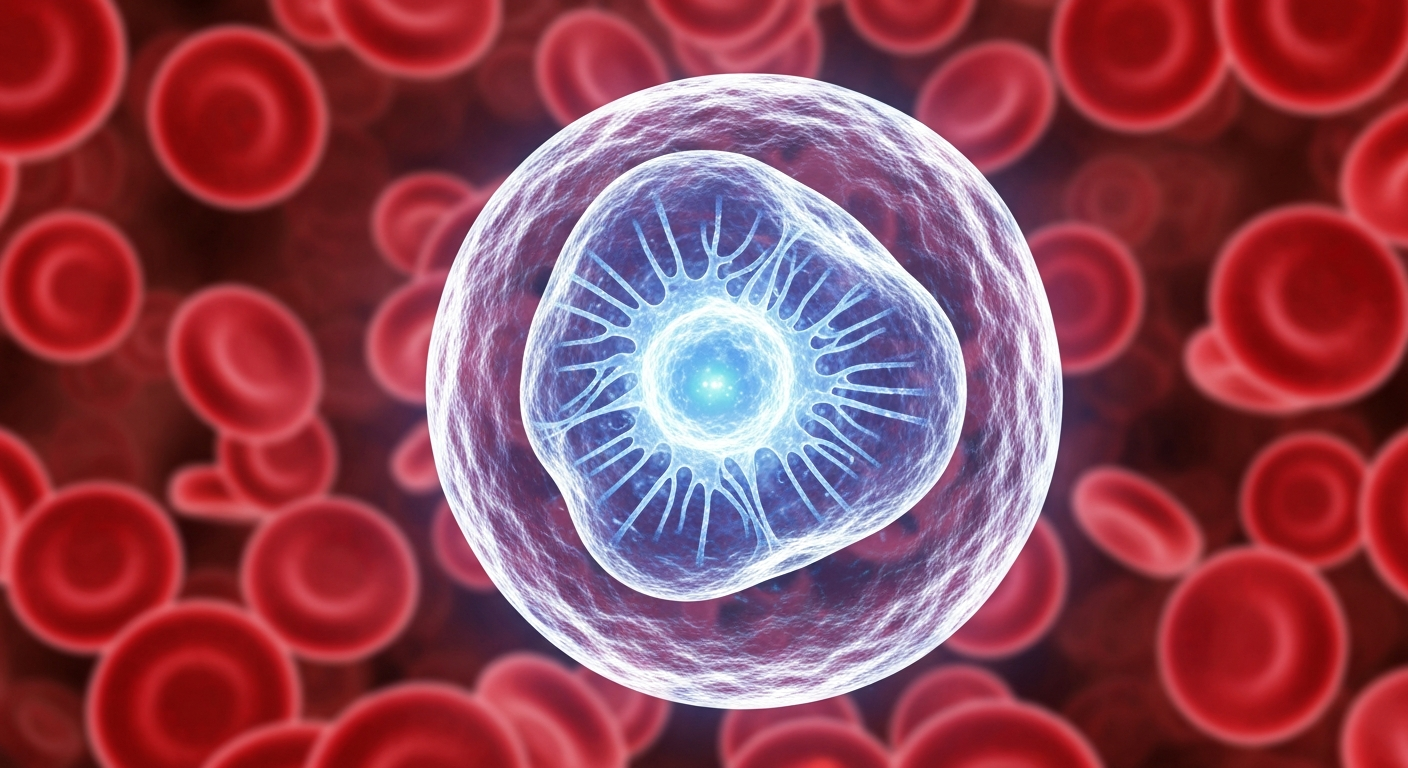 An X-ray view of a leukemia cell reveals the intricate internal structures that allow it to evade detection by the body's immune system.Boston Today
A team of researchers from Mass General Brigham, Dana-Farber Cancer Institute and the Broad Institute of MIT and Harvard have discovered that a signal called CD43, rather than the classic CD47 'don't eat me' signal, has a much stronger influence on macrophage detection of tumor cells in acute myeloid leukemia (AML). Their findings suggest therapies targeting CD43 could be promising for treating AML and potentially other cancers.
Why it matters
Current treatments aimed at turning off the 'don't eat me' signal CD47 have not been as effective as anticipated in patients with AML and other blood cancers. Understanding the role of alternative 'don't eat me' signals like CD43 could lead to more effective immunotherapies for these difficult-to-treat cancers.
The details
The research team conducted a genome-scale loss of function screen in AML cell lines, systematically turning off individual genes and cataloging those that affected detection by macrophages. They found that while the classic CD47 'don't eat me' signal had only a weak effect, another signal called CD43 had a much stronger influence on macrophage detection of tumor cells.
- The study was published in the journal Science on April 9, 2026.
The players
Jooho Chung
MD, PhD, co-lead author of the study.
Mounica Vallurupalli
MD, co-lead author of the study.
Robert Manguso
PhD, co-senior author of the study.
Todd Golub
MD, co-author of the study.
Mass General Brigham
The hospital system where the research was conducted.
What they’re saying
“Our findings suggest that therapies targeting CD43 could be promising for treating patients with AML and, potentially, a broader range of cancers.”
— Jooho Chung, MD, PhD, co-lead author
“Understanding the role of alternative 'don't eat me' signals like CD43 could lead to more effective immunotherapies for these difficult-to-treat cancers.”
— Mounica Vallurupalli, MD, co-lead author
What’s next
The researchers plan to further investigate the role of CD43 in tumor evasion of macrophages and explore the potential of therapies targeting this signal for the treatment of AML and other blood cancers.
The takeaway
This study challenges the prevailing focus on CD47 as the primary 'don't eat me' signal and identifies CD43 as a promising new target for developing more effective immunotherapies for difficult-to-treat blood cancers like AML.
Boston top stories


Boston events

Apr. 11, 2026
Boston Bruins vs. Tampa Bay Lightning
Apr. 11, 2026
Shen Yun