- Today
- Holidays
- Birthdays
- Reminders
- Cities
- Atlanta
- Austin
- Baltimore
- Berwyn
- Beverly Hills
- Birmingham
- Boston
- Brooklyn
- Buffalo
- Charlotte
- Chicago
- Cincinnati
- Cleveland
- Columbus
- Dallas
- Denver
- Detroit
- Fort Worth
- Houston
- Indianapolis
- Knoxville
- Las Vegas
- Los Angeles
- Louisville
- Madison
- Memphis
- Miami
- Milwaukee
- Minneapolis
- Nashville
- New Orleans
- New York
- Omaha
- Orlando
- Philadelphia
- Phoenix
- Pittsburgh
- Portland
- Raleigh
- Richmond
- Rutherford
- Sacramento
- Salt Lake City
- San Antonio
- San Diego
- San Francisco
- San Jose
- Seattle
- Tampa
- Tucson
- Washington
Bees Crack Morse Code: Bumblebees Demonstrate Time Perception Abilities
Researchers discover bees can learn and differentiate between visual cues similar to Morse code, challenging assumptions about insect cognition.
Apr. 11, 2026 at 5:25am
Got story updates? Submit your updates here. ›
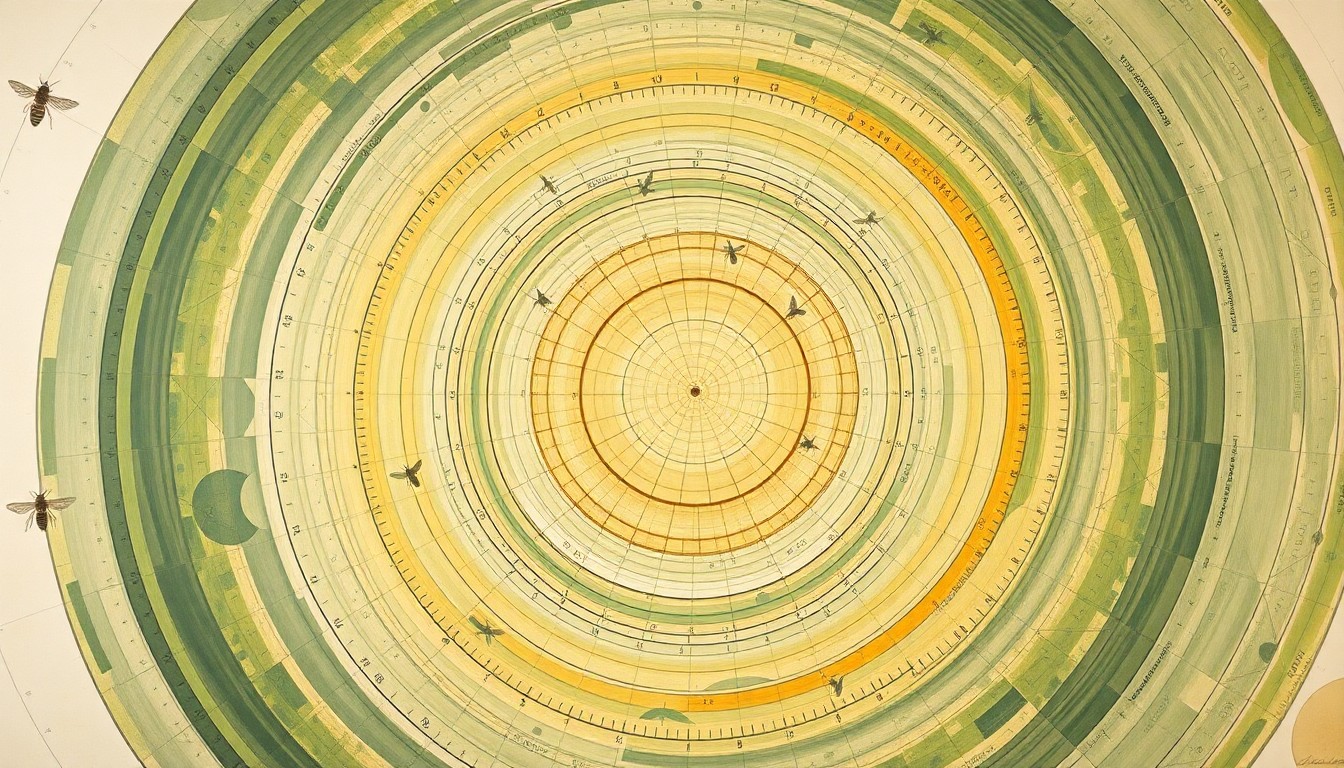 Bees' remarkable ability to perceive and differentiate time durations challenges our understanding of complex cognition in the natural world.Boston Today
Researchers at Queen Mary University of London have made a groundbreaking discovery - bumblebees can learn to recognize and respond to different durations of visual cues, similar to the 'dot' and 'dash' of Morse code. This unexpected finding demonstrates the incredible cognitive abilities of these tiny insects, as they were able to reliably choose the 'correct' flashing light even when the spatial location was changed, despite never encountering such stimuli in nature.
Why it matters
This discovery challenges long-held assumptions about the cognitive limitations of insects and opens up new avenues of research into the neural mechanisms behind time perception in miniature brains. Understanding how bees and other insects process time could lead to insights about the evolution of complex cognitive traits and inform the development of artificial neural networks.
The details
In the study published in Biology Letters, a research team led by Ph.D. student Alex Davidson and Dr. Elisabetta Versace trained individual bumblebees to associate a sugar reward with either a short or long flash of light in a specialized maze. Despite their tiny brains, the bees demonstrated an astonishing ability to perceive and distinguish between these durations, even when the spatial location of the stimulus was changed.
- The study was published in April 2026.
The players
Alex Davidson
A Ph.D. student at Queen Mary University of London who led the research team that made this discovery.
Dr. Elisabetta Versace
A Senior Lecturer in Psychology at Queen Mary University of London and a co-leader of the research team.
Queen Mary University of London
The institution where the groundbreaking research on bees' time perception abilities was conducted.
What they’re saying
“It was so thrilling to see the bees learn this skill.”
— Alex Davidson, Ph.D. student
“The fact that bees can encode and process time duration so effectively is a testament to the complexity of their nervous system.”
— Dr. Elisabetta Versace, Senior Lecturer in Psychology
What’s next
Researchers plan to further investigate the neural mechanisms behind bees' time-tracking abilities, testing different models and theories to better understand this unexpected cognitive skill in insects.
The takeaway
This discovery of bees' ability to learn and differentiate between Morse code-like visual cues challenges long-held assumptions about insect cognition and opens up new avenues of research into the evolution of complex time-processing abilities, with potential implications for the development of artificial neural networks.
Boston top stories



Boston events

Apr. 11, 2026
Boston Bruins vs. Tampa Bay Lightning
Apr. 11, 2026
Shen Yun