- Today
- Holidays
- Birthdays
- Reminders
- Cities
- Atlanta
- Austin
- Baltimore
- Berwyn
- Beverly Hills
- Birmingham
- Boston
- Brooklyn
- Buffalo
- Charlotte
- Chicago
- Cincinnati
- Cleveland
- Columbus
- Dallas
- Denver
- Detroit
- Fort Worth
- Houston
- Indianapolis
- Knoxville
- Las Vegas
- Los Angeles
- Louisville
- Madison
- Memphis
- Miami
- Milwaukee
- Minneapolis
- Nashville
- New Orleans
- New York
- Omaha
- Orlando
- Philadelphia
- Phoenix
- Pittsburgh
- Portland
- Raleigh
- Richmond
- Rutherford
- Sacramento
- Salt Lake City
- San Antonio
- San Diego
- San Francisco
- San Jose
- Seattle
- Tampa
- Tucson
- Washington
Runners Train for 'Double Boston' Marathon
Athletes to run Boston Marathon course in reverse before standard race
Mar. 31, 2026 at 2:49am
Got story updates? Submit your updates here. ›
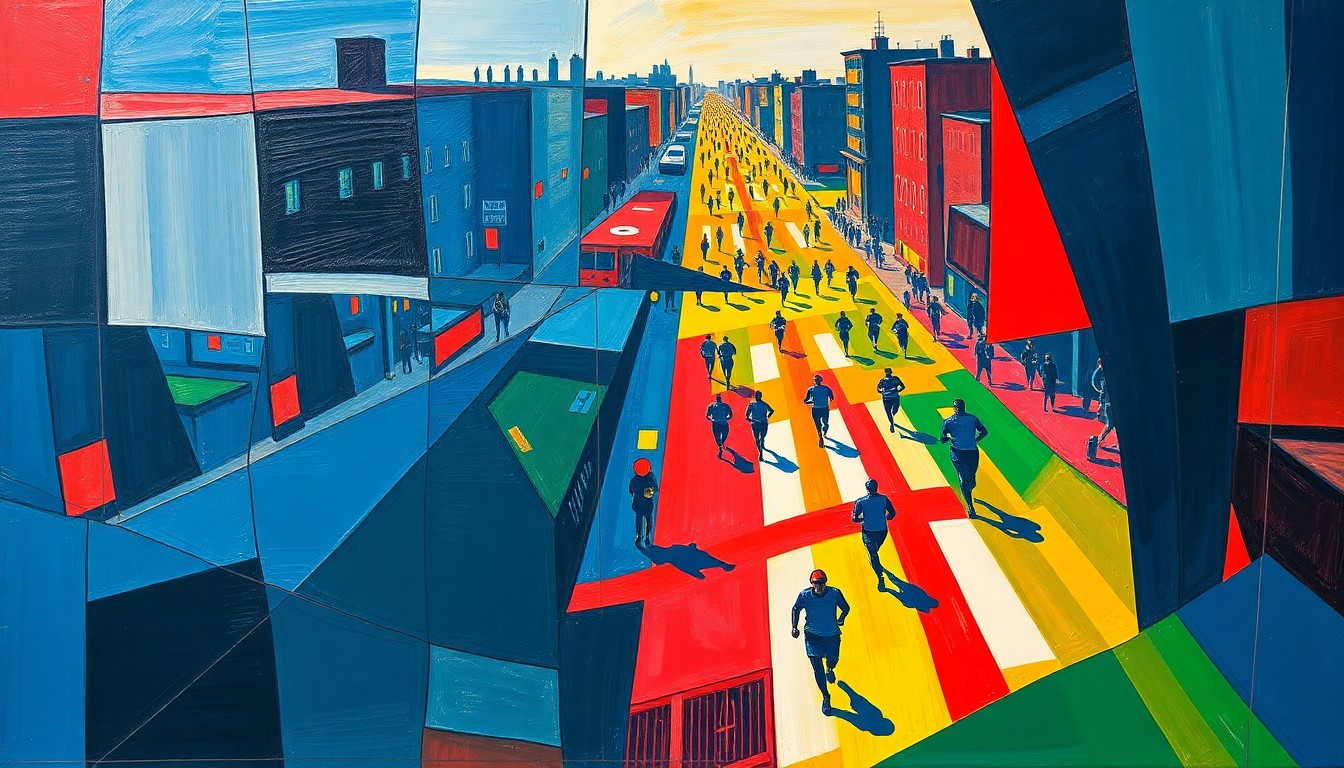 An artistic interpretation of the grueling 'Double Boston' challenge, where runners will conquer the iconic marathon course in reverse before racing it again in the standard direction.Boston Today
A group of seven runners from the Trail Animals Running Club will attempt the 'Double Boston' challenge, running the Boston Marathon course in reverse from the finish line to the start line early on marathon Monday, before taking a short break and then running the standard Boston Marathon route.
Why it matters
The 'Double Boston' is an informal endurance challenge that has been attempted by a small number of runners in recent years, but this year it is being sponsored by a running shoe company, bringing more attention to the unique feat. The reverse course adds significant difficulty, as the Boston Marathon is known for being mostly downhill, making the 'Double Boston' an extreme test of mental and physical stamina.
The details
The seven runners - Kathryn Zioto, Justin Hetherington, Jon Western, Maria Chevalier, Dave Desnoyers, Brendan Morgan and Bill Dittman - will start at the Boylston Street finish line in Boston and run the 26.2 mile course backwards to the start line in Hopkinton. They will then have a short break at a house rented by the sponsor, Mount to Coast, before tackling the standard Boston Marathon route.
- The runners will start the reverse course at 3 a.m. on marathon Monday.
- They will then have a few hours to rest and refuel before starting the standard Boston Marathon route.
The players
Trail Animals Running Club
A running club that the seven athletes competing in the 'Double Boston' challenge are members of.
Mount to Coast
A company that makes long-distance running shoes and is sponsoring the group of 'Double Boston' runners.
Kathryn Zioto
One of the seven runners competing in the 'Double Boston' challenge, who has completed several Boston Marathons and ultramarathons.
Justin Hetherington
One of the seven runners competing in the 'Double Boston' challenge, who has completed three Boston Marathons and several ultramarathons.
Boston Marathon
The iconic annual marathon race held in Boston, Massachusetts.
What they’re saying
“'People say, 'You're crazy,'' Hetherington said of many's reaction to Double Boston. 'My family and friends all think I'm a crazy person, but they know that now.'”
— Justin Hetherington, Runner
“'I've never started a race this early. We start at 3 a.m. That means I wake up at 1 a.m.,' Hetherington said. 'It's cool because there's this aspect of yet-to-be-determined uncertainty. It's exciting and scary.'”
— Justin Hetherington, Runner
“'Boston is a net downhill course, meaning you run mostly downhill and have a hard hill section,' Zioto said. 'So a lot of the Boston course is kind of going along. I think if you turn that on its head, that means a lot of the course is uphill – most of it, actually.'”
— Kathryn Zioto, Runner
“'I think people who aren't familiar with ultrarunning might think it's really unnecessary, but I think it'll be a lot of fun,' Zioto said. 'Achieving something you're not sure you can do is one of the great joys of life.'”
— Kathryn Zioto, Runner
What’s next
The runners will attempt the 'Double Boston' challenge on marathon Monday, April 21, 2026, before participating in the standard Boston Marathon later that same day.
The takeaway
The 'Double Boston' challenge showcases the extreme endurance and mental toughness of a small group of elite runners, as they take on the iconic Boston Marathon course in reverse before running it again in the standard direction. This unique event highlights the continued innovation and evolution of long-distance running.
Boston top stories

Boston events
Mar. 31, 2026
The Outsiders (Touring)
Apr. 1, 2026
The Outsiders (Touring)
Apr. 2, 2026
The Outsiders (Touring)