- Today
- Holidays
- Birthdays
- Reminders
- Cities
- Atlanta
- Austin
- Baltimore
- Berwyn
- Beverly Hills
- Birmingham
- Boston
- Brooklyn
- Buffalo
- Charlotte
- Chicago
- Cincinnati
- Cleveland
- Columbus
- Dallas
- Denver
- Detroit
- Fort Worth
- Houston
- Indianapolis
- Knoxville
- Las Vegas
- Los Angeles
- Louisville
- Madison
- Memphis
- Miami
- Milwaukee
- Minneapolis
- Nashville
- New Orleans
- New York
- Omaha
- Orlando
- Philadelphia
- Phoenix
- Pittsburgh
- Portland
- Raleigh
- Richmond
- Rutherford
- Sacramento
- Salt Lake City
- San Antonio
- San Diego
- San Francisco
- San Jose
- Seattle
- Tampa
- Tucson
- Washington
Renowned Physicist Carl H. Brans Dies at 91
Brans, known for his contributions to general relativity and the Brans-Dicke theory, passed away in April 2026.
Apr. 13, 2026 at 12:10am
Got story updates? Submit your updates here. ›
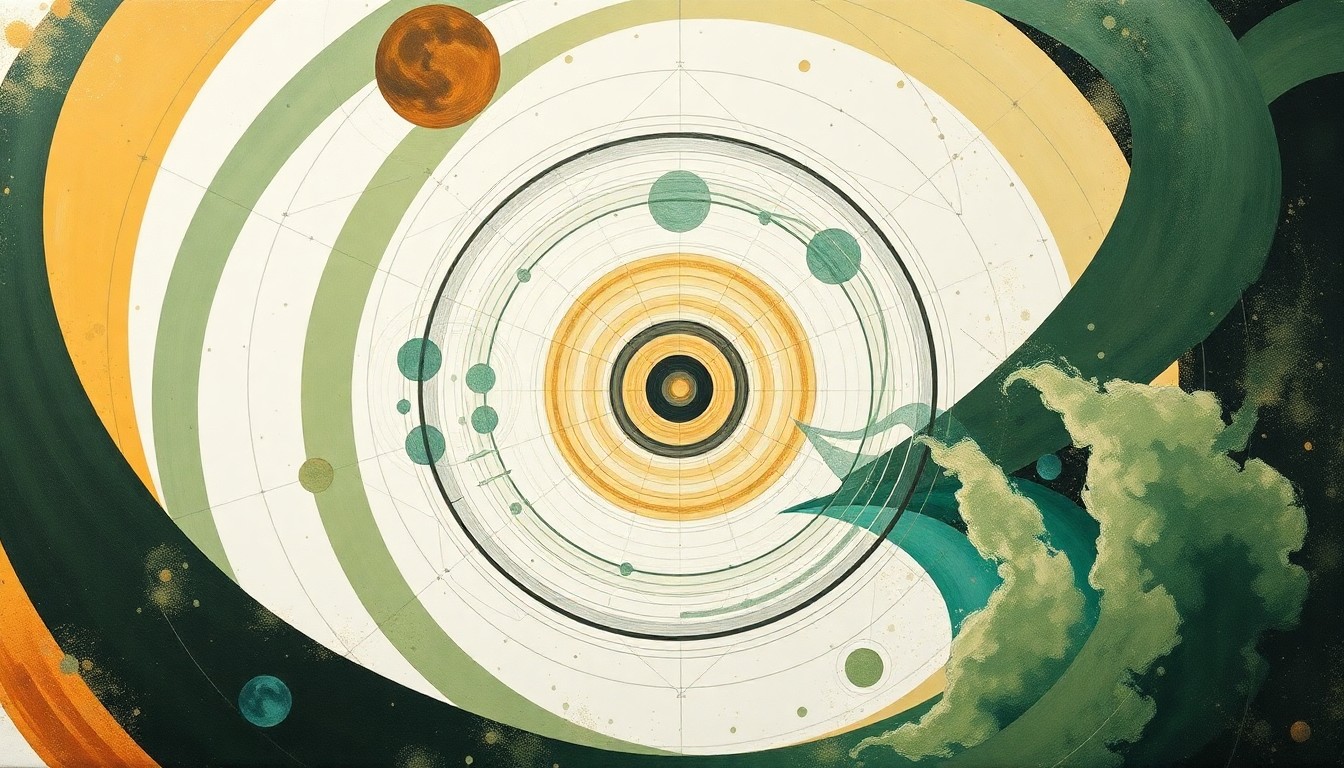 A conceptual illustration honoring the legacy of physicist Carl H. Brans and his pioneering work on alternative theories of gravity.New Orleans Today
Carl H. Brans, a renowned physicist who made significant contributions to the field of general relativity and the Brans-Dicke theory of gravity, has passed away at the age of 91. Brans, who was born in New Orleans, Louisiana, dedicated his life's work to exploring alternative theories of gravity and the potential variability of Newton's gravitational constant.
Why it matters
Brans' work on the Brans-Dicke theory, which proposed that Newton's gravitational constant could vary over time and space, was influential in the development of modern cosmology and the search for alternative theories of gravity. His ideas have continued to inspire physicists and have even influenced the portrayal of gravitational anomalies in popular science fiction, such as the movie Interstellar.
The details
Brans first became interested in general relativity and unified field theories as an undergraduate at Loyola University in New Orleans, where he taught himself advanced mathematics and physics. He went on to make significant contributions to the field, including the development of the Brans-Dicke theory, which proposed that Newton's gravitational constant could be controlled by a non-gravitational field. While the Brans-Dicke theory did not ultimately lead to the discovery of varying gravitational constants, it inspired numerous experiments and continued to be an important area of research in theoretical physics.
- Brans was born in 1935 in New Orleans, Louisiana.
- He developed the Brans-Dicke theory of gravity in the early 1960s while a PhD student at Princeton University.
- Brans passed away in April 2026 at the age of 91.
The players
Carl H. Brans
A renowned physicist who made significant contributions to the field of general relativity and the Brans-Dicke theory of gravity. He was born in New Orleans, Louisiana and dedicated his life's work to exploring alternative theories of gravity and the potential variability of Newton's gravitational constant.
Robert H. Dicke
A Princeton University physicist who collaborated with Brans on the development of the Brans-Dicke theory of gravity, which proposed that Newton's gravitational constant could be controlled by a non-gravitational field.
Kip Thorne
A Caltech physicist who has cited Brans and Dicke's work on the Brans-Dicke theory as an inspiration for his interpretation of gravitational anomalies in the movie Interstellar.
What they’re saying
“The ideas that Newton's gravitational constant G might change from place to place and time to time, and might be controlled by some sort of nongravitational field, were hot topics in the Princeton University physics department when I was a PhD student there in the early 1960s. These ideas had been proposed by Princeton's Professor Robert H. Dicke and his graduate student Carl Brans in connection with their 'Brans-Dicke theory of gravity', an interesting alternative to Einstein's general relativity.”
— Kip Thorne, Caltech Physicist
The takeaway
Carl Brans' work on the Brans-Dicke theory of gravity, which proposed the possibility of a variable gravitational constant, has had a lasting impact on the field of theoretical physics. While his specific theory did not lead to the discovery of varying gravitational forces, it inspired ongoing research into alternative theories of gravity and has even influenced popular science fiction portrayals of gravitational anomalies.
New Orleans top stories


New Orleans events

Apr. 13, 2026
Charmaine Neville Band
Apr. 13, 2026
Marc Ridge & The Revelers and Friends
Apr. 13, 2026
HaSizzle and The To Be Continued Brass Band