- Today
- Holidays
- Birthdays
- Reminders
- Cities
- Atlanta
- Austin
- Baltimore
- Berwyn
- Beverly Hills
- Birmingham
- Boston
- Brooklyn
- Buffalo
- Charlotte
- Chicago
- Cincinnati
- Cleveland
- Columbus
- Dallas
- Denver
- Detroit
- Fort Worth
- Houston
- Indianapolis
- Knoxville
- Las Vegas
- Los Angeles
- Louisville
- Madison
- Memphis
- Miami
- Milwaukee
- Minneapolis
- Nashville
- New Orleans
- New York
- Omaha
- Orlando
- Philadelphia
- Phoenix
- Pittsburgh
- Portland
- Raleigh
- Richmond
- Rutherford
- Sacramento
- Salt Lake City
- San Antonio
- San Diego
- San Francisco
- San Jose
- Seattle
- Tampa
- Tucson
- Washington
Livingston Today
By the People, for the People
Astrophysicists Inch Closer to Proving Primordial Black Holes
University of Miami researchers say a LIGO signal hints at primordial black holes and a possible link to dark matter.
Mar. 30, 2026 at 11:51am
Got story updates? Submit your updates here. ›
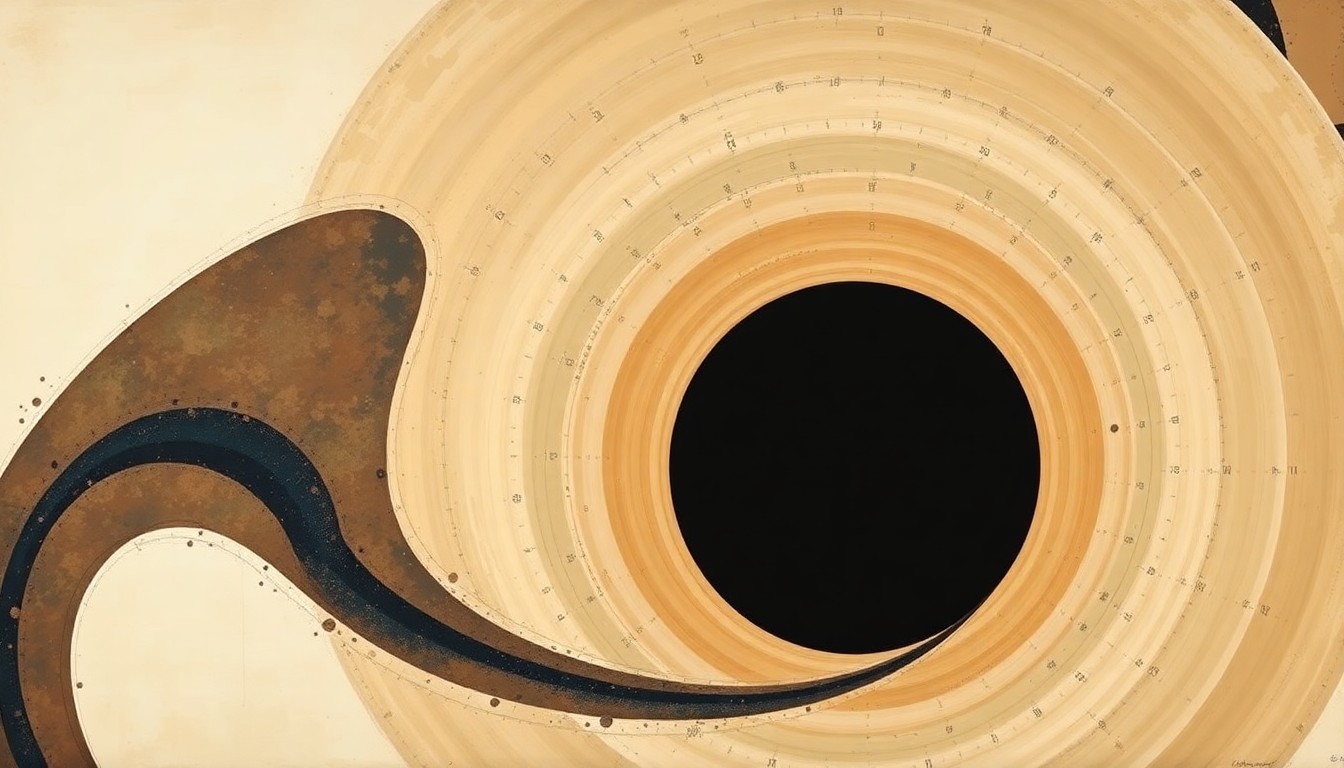 Astrophysicists inch closer to proving the existence of primordial black holes, which could help solve the mystery of dark matter.Livingston Today
University of Miami researchers Nico Cappelluti and Alberto Magaraggia have published research in the Astrophysical Journal building a quantitative case that a recent unusual LIGO signal is consistent with the detection of a primordial black hole, a class of objects first proposed in the early 1970s. Their work suggests these primordial black holes could account for a significant portion, if not all, of the universe's dark matter.
Why it matters
The detection of primordial black holes would be a major breakthrough in cosmology, as these objects could help solve the longstanding mystery of dark matter, which makes up about 85% of all matter in the universe. Confirming their existence could open new avenues of research into the earliest moments after the Big Bang.
The details
The November 2025 LIGO signal, catalogued as S251112cm, was unusual because at least one of the objects that created it appeared to weigh less than the sun. No known stellar process produces a black hole that small, leading the researchers to believe it may have originated from the raw density of the universe itself in the moments after the Big Bang. Cappelluti and Magaraggia's research indicates that these primordial black holes, if they exist, could account for a significant portion or even all of the universe's dark matter.
- On November 12, 2025, the LIGO signal S251112cm was detected.
- The researchers published their findings in the Astrophysical Journal in 2026.
The players
Nico Cappelluti
An associate professor in the Department of Physics at the University of Miami.
Alberto Magaraggia
A Ph.D. student at the University of Miami.
LIGO
The Laser Interferometer Gravitational-Wave Observatory, which first detected gravitational waves in 2015 and picked up the unusual S251112cm signal in 2025.
What they’re saying
“Our research indicates that these primordial black holes could account for a significant portion, if not all, of dark matter.”
— Nico Cappelluti, Associate Professor, University of Miami
“We attempted to estimate how many primordial black holes may exist in the universe and how many of them LIGO should be able to detect. Our results are encouraging. We predict that subsolar black holes like the one LIGO may have observed should indeed be rare, consistent with how infrequently such events have been seen so far.”
— Alberto Magaraggia, Ph.D. Student, University of Miami
What’s next
LIGO is scheduled for future upgrades that will increase its sensitivity, potentially widening the window for detecting rare sub-solar events. The European Space Agency's Laser Interferometer Space Antenna, set to launch in 2035, and the proposed U.S. ground-based facility called Cosmic Explorer, currently in design, would also be able to detect gravitational waves from the earliest epochs after the Big Bang and potentially confirm the existence of primordial black holes.
The takeaway
The detection of primordial black holes could be a major breakthrough in solving the mystery of dark matter, which makes up about 85% of all matter in the universe. While the recent LIGO signal provides strong evidence, researchers will need to detect more such signals to confirm the existence of these elusive objects from the earliest moments of the universe.