- Today
- Holidays
- Birthdays
- Reminders
- Cities
- Atlanta
- Austin
- Baltimore
- Berwyn
- Beverly Hills
- Birmingham
- Boston
- Brooklyn
- Buffalo
- Charlotte
- Chicago
- Cincinnati
- Cleveland
- Columbus
- Dallas
- Denver
- Detroit
- Fort Worth
- Houston
- Indianapolis
- Knoxville
- Las Vegas
- Los Angeles
- Louisville
- Madison
- Memphis
- Miami
- Milwaukee
- Minneapolis
- Nashville
- New Orleans
- New York
- Omaha
- Orlando
- Philadelphia
- Phoenix
- Pittsburgh
- Portland
- Raleigh
- Richmond
- Rutherford
- Sacramento
- Salt Lake City
- San Antonio
- San Diego
- San Francisco
- San Jose
- Seattle
- Tampa
- Tucson
- Washington
Defending Champ Virginia Looms as NCAA Women's Swimming Day 2 Sees Strategic Scratches
Coaches balance scoring ambitions with long-term program health, prioritizing relays over individual events
Apr. 11, 2026 at 7:56am
Got story updates? Submit your updates here. ›
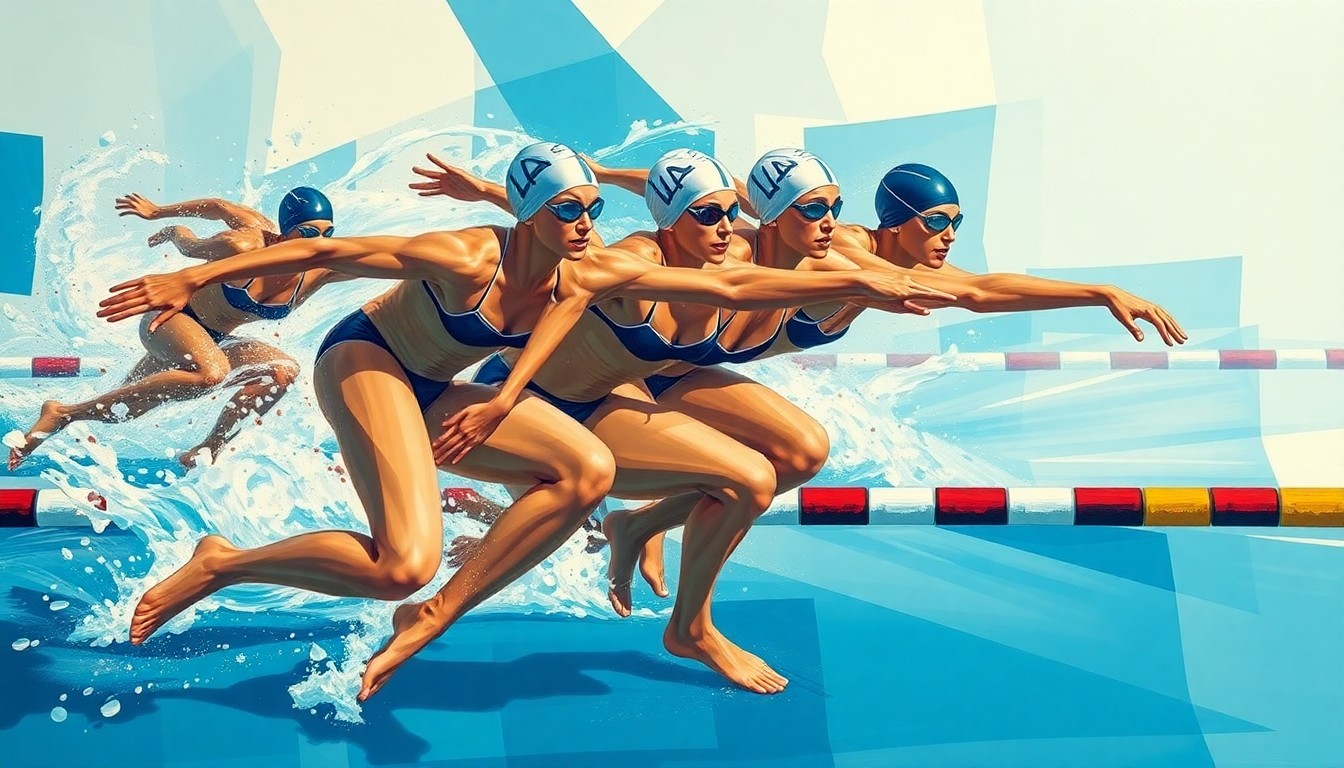 The strategic calculus of relay lineups and event scratches reveals the evolving priorities of elite NCAA swimming programs.Louisville Today
The 2026 NCAA Division I Women's Swimming and Diving Championships in Atlanta saw a number of notable scratches on Day 2, as elite programs made strategic decisions to protect their athletes and maximize team depth. Veteran swimmers like Louisville's Kim Emely Herkle and Ohio State's Emma Finlin opted to sit out events like the 400 IM, prioritizing fresher legs for relays and shorter races that can accumulate crucial points across the scoreboard. This reflects a broader trend in collegiate swimming towards event specialization, data-driven athlete management, and the emphasis on relay success as a 'score amplifier' - a shift away from chasing individual glory in favor of orchestrating a championship-winning 'chorus' of contributors.
Why it matters
The strategic scratches on Day 2 reveal how elite NCAA swimming programs are evolving their approach to competition, prioritizing team depth and long-term athlete health over individual event results. This shift towards a more holistic, data-driven model of success challenges the traditional narrative of college swimming and highlights the growing importance of relay performance, event specialization, and calculated risk-taking in the pursuit of a team championship.
The details
Several notable swimmers, including Louisville's Kim Emely Herkle and Ohio State's Emma Finlin, chose to scratch events like the 400 IM despite having competitive seeds. Coaches are making pointed decisions to protect athletes who might be pivotal in the NCAA meet's later stages or in conference prestige, even at the cost of a preferred seed. This reflects a broader strategic calculus in collegiate swimming, where the value of relays as a 'score amplifier' is paramount. Programs are increasingly looking for athletes who can blend into a relay quartet, stabilize a medley leg, and still contribute in the A-final as necessity dictates, rather than just recruiting specialists in individual events.
- The 2026 NCAA Division I Women's Swimming and Diving Championships are taking place in Atlanta.
- The strategic scratches occurred during the Day 2 prelims of the meet.
The players
Kim Emely Herkle
A fifth-year veteran swimmer from the University of Louisville who chose to scratch the 400 IM despite having a competitive seed time.
Emma Finlin
A sophomore swimmer from Ohio State University who scratched the 400 IM, despite having represented Canada internationally and posting a strong time in the 1650 freestyle at a prior meet.
Albane Cachot
A swimmer from Arizona State University who appeared to focus more on the relays, like the 200 Medley Relay and 800 Free Relay, rather than the individual 200 freestyle.
Virginia
The defending champion in the NCAA Division I Women's Swimming and Diving Championships, serving as a reminder of the importance of persistence and dominance in the sport.
What’s next
The NCAA Women's Swimming and Diving Championships will continue with the remaining days of competition, where teams will look to leverage their strategic depth and relay prowess to secure the team title.
The takeaway
The strategic scratches on Day 2 of the 2026 NCAA Women's Swimming Championships highlight a shifting paradigm in how success is defined at the collegiate level. It's less about a handful of standout stars and more about orchestrating a cohesive team effort, where data-driven decisions and athlete management are just as crucial as raw speed and individual event results.
Louisville top stories



Louisville events

Apr. 14, 2026
Louisville Bats vs. Toledo Mudhens
Apr. 15, 2026
Louisville Bats vs. Toledo Mudhens
Apr. 16, 2026
CeCe Winans - More Than This Tour