- Today
- Holidays
- Birthdays
- Reminders
- Cities
- Atlanta
- Austin
- Baltimore
- Berwyn
- Beverly Hills
- Birmingham
- Boston
- Brooklyn
- Buffalo
- Charlotte
- Chicago
- Cincinnati
- Cleveland
- Columbus
- Dallas
- Denver
- Detroit
- Fort Worth
- Houston
- Indianapolis
- Knoxville
- Las Vegas
- Los Angeles
- Louisville
- Madison
- Memphis
- Miami
- Milwaukee
- Minneapolis
- Nashville
- New Orleans
- New York
- Omaha
- Orlando
- Philadelphia
- Phoenix
- Pittsburgh
- Portland
- Raleigh
- Richmond
- Rutherford
- Sacramento
- Salt Lake City
- San Antonio
- San Diego
- San Francisco
- San Jose
- Seattle
- Tampa
- Tucson
- Washington
Harness Racing's Golden Age in the 1930s
A decade of speed, success, and iconic moments that captivated audiences across North America
Apr. 12, 2026 at 4:26am
Got story updates? Submit your updates here. ›
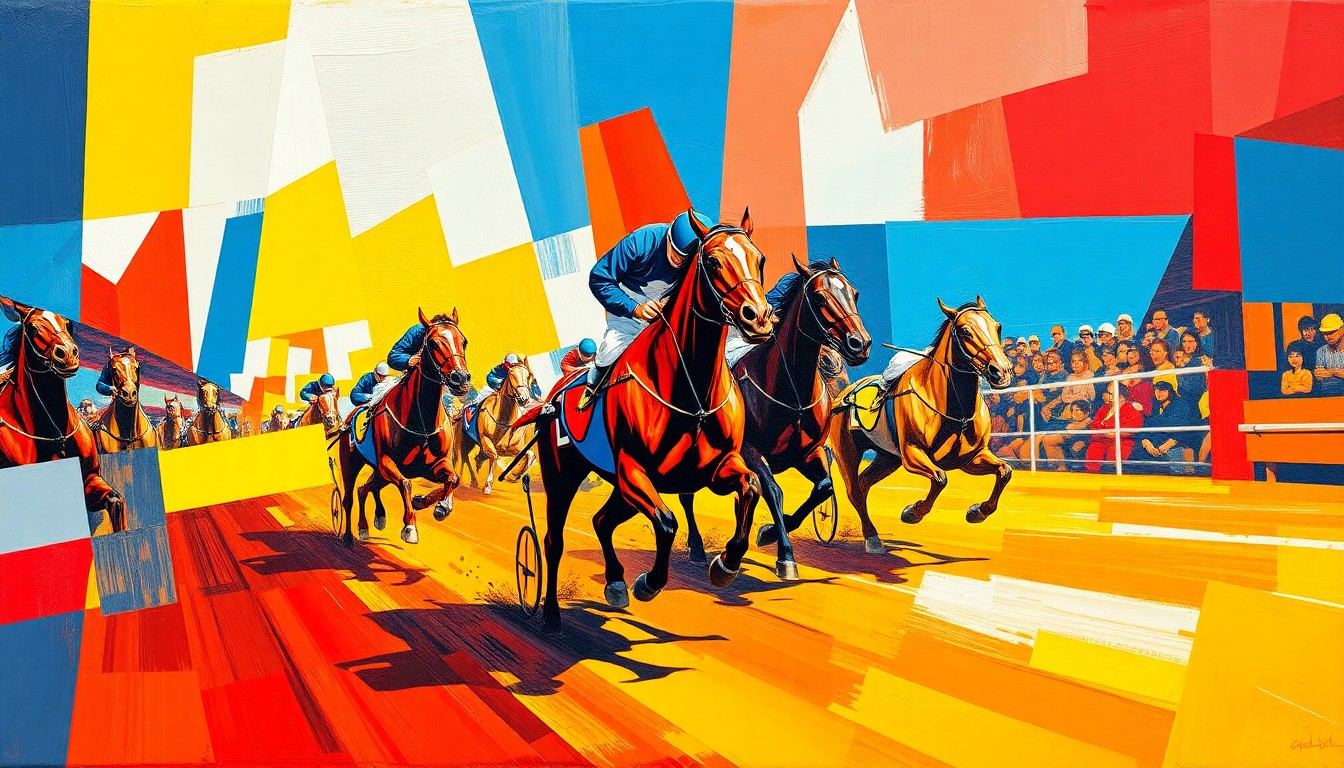 A cubist interpretation of the thrilling action and energy of 1930s harness racing, a golden age for the sport.Lexington Today
The 1930s were a pivotal era for harness racing, marked by a unique blend of economic hardship and sporting passion. This period witnessed the rise of legendary horses, drivers, and events that left an indelible mark on the sport's history. From the Canadian Pacing Derby's meteoric rise to Lord Jim's historic Hambletonian victory and the surge in two-minute miles at the Red Mile in Lexington, Kentucky, the 1930s solidified harness racing's enduring appeal and set the stage for its continued growth.
Why it matters
The 1930s were a golden age for harness racing, showcasing the sport's ability to captivate audiences even during challenging economic times. The iconic events, record-breaking performances, and emergence of legendary figures during this decade cemented harness racing's place in North American sports culture and laid the foundation for its future success.
The details
The Canadian Pacing Derby, first held in 1936 in the small town of New Hamburg, quickly became a highlight of the harness racing calendar, drawing in fans from across the region. In 1934, the legendary horse Lord Jim made history by winning the prestigious Hambletonian race, with his sire, Guy Axworthy, being an impressive 28 years old. The Toronto Exhibition Week in 1936 also showcased the talent of emerging stars, with Dillinger Grattan and Goldsmith setting new records. The Red Mile in Lexington, Kentucky, became a hotspot for two-minute miles, with 51 such feats recorded in the 1930s alone, a significant increase from the previous 25 years.
- The Canadian Pacing Derby was first held in 1936.
- Lord Jim won the Hambletonian in 1934.
- The Toronto Exhibition Week took place in 1936.
- The Red Mile in Lexington, Kentucky, saw a surge in two-minute miles during the 1930s, with 51 recorded in the decade.
The players
Lord Jim
A legendary harness racing horse who won the prestigious Hambletonian race in 1934, with his sire, Guy Axworthy, being an impressive 28 years old at the time.
Hugh "Doc" Parshall
The 34-year-old driver of Lord Jim, who became the youngest driver to ever win the Hambletonian, challenging the common belief that drivers needed to be at least 50 to be considered capable.
Dillinger Grattan
A horse that dominated the three-year-old pacing event at the 1936 Toronto Exhibition Week, setting a new record of 2:10 1/4.
Goldsmith
A horse that won the companion trot for sophomores at the 1936 Toronto Exhibition Week, breaking a trotting record with a time of 2:13 flat.
W.L. "Lindley" Fraser
The owner, trainer, and driver of Dillinger Grattan, who dominated the three-year-old pacing event at the 1936 Toronto Exhibition Week.
The takeaway
The 1930s were a golden age for harness racing, showcasing the sport's enduring appeal and ability to captivate audiences even during challenging economic times. The iconic events, record-breaking performances, and emergence of legendary figures during this decade cemented harness racing's place in North American sports culture and laid the foundation for its continued growth and evolution.
Lexington top stories

Lexington events

Apr. 12, 2026
Theresa Caputo