- Today
- Holidays
- Birthdays
- Reminders
- Cities
- Atlanta
- Austin
- Baltimore
- Berwyn
- Beverly Hills
- Birmingham
- Boston
- Brooklyn
- Buffalo
- Charlotte
- Chicago
- Cincinnati
- Cleveland
- Columbus
- Dallas
- Denver
- Detroit
- Fort Worth
- Houston
- Indianapolis
- Knoxville
- Las Vegas
- Los Angeles
- Louisville
- Madison
- Memphis
- Miami
- Milwaukee
- Minneapolis
- Nashville
- New Orleans
- New York
- Omaha
- Orlando
- Philadelphia
- Phoenix
- Pittsburgh
- Portland
- Raleigh
- Richmond
- Rutherford
- Sacramento
- Salt Lake City
- San Antonio
- San Diego
- San Francisco
- San Jose
- Seattle
- Tampa
- Tucson
- Washington
Paris Today
By the People, for the People
Paris-Roubaix: Why NOT Gravel Bikes on the Cobbles?
The Phantom Gravel Bike: Why the 'Queen of the Classics' Still Favors the Road Warrior
Apr. 11, 2026 at 5:41pm
Got story updates? Submit your updates here. ›
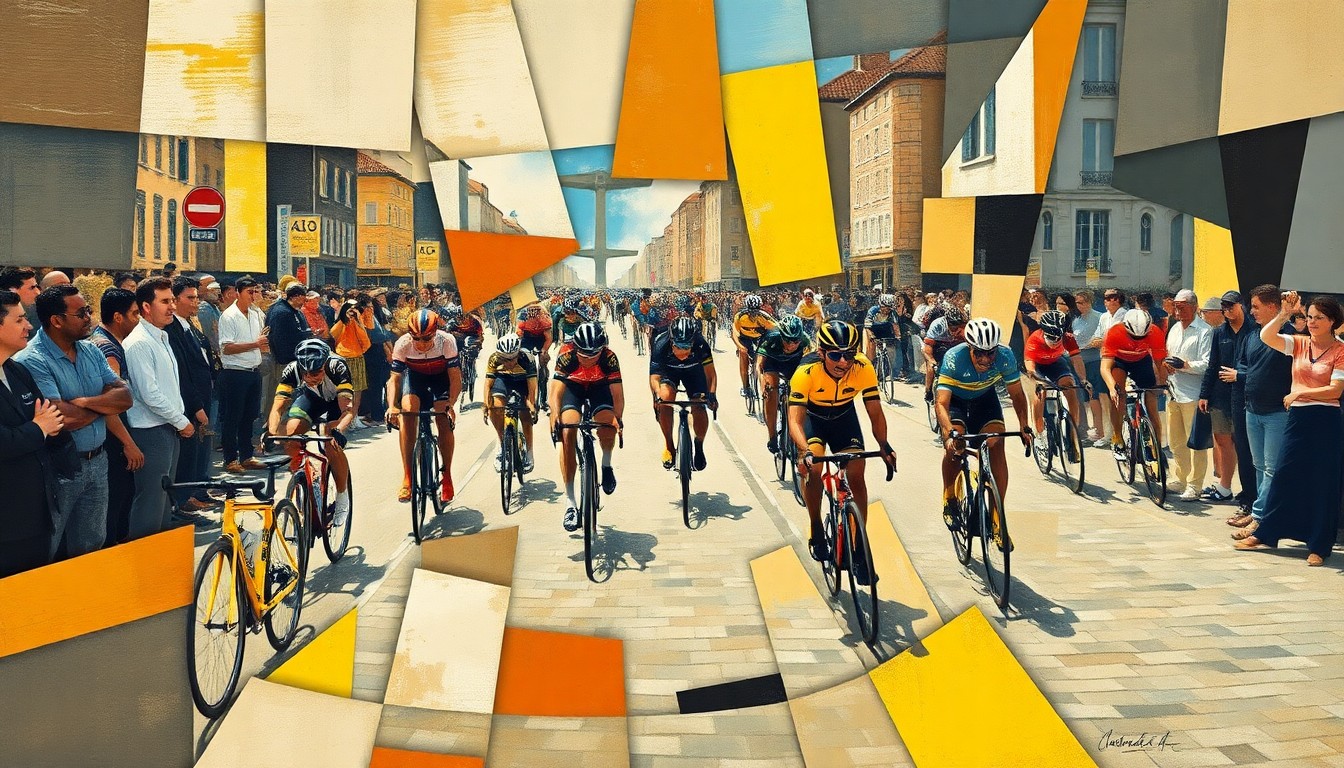 The iconic Paris-Roubaix cobbles challenge riders to navigate a fractured, geometric landscape, where the traditional road bike continues to reign supreme.Paris Today
Paris-Roubaix, the legendary 'Queen of the Classics,' is a race that conjures images of grit, glory, and the brutal beauty of Belgian cobbles. Yet, a common question arises: why don't the riders simply use gravel bikes for this event? The reality, however, is more nuanced, as the race's unique demands and the evolution of road bike technology have made the traditional road bike a remarkably versatile tool capable of handling the cobbled challenge.
Why it matters
The appeal of Paris-Roubaix lies in its signature cobbled sectors, which demand a unique blend of power, skill, and resilience from the riders. While gravel bikes may seem like the obvious choice, the race's complex nature, with significant portions on smooth tarmac, means that the aerodynamic advantages of a road bike remain crucial. The evolution of road bike technology, including wider tire clearance and advancements in tubeless technology, has further bridged the gap, making the road bike an increasingly capable all-around machine for this event.
The details
Modern road bikes have evolved to meet the demands of races like Paris-Roubaix. The removal of rim brake constraints has allowed for wider tire clearance, with many aero road bikes now accommodating tires up to 34mm wide. Additionally, advancements in tubeless technology and tire inserts have enabled riders to run lower tire pressures, effectively smoothing out the jarring impacts of the cobbles without the inherent risks of traditional tubular tires. Furthermore, the nature of the 'mud' at Roubaix is often more of a spray than a thick, gear-clogging mess, meaning the extreme mud-shedding capabilities of some gravel bikes aren't always a necessity.
- The initial kilometers, and indeed a significant portion of the total distance, are still on smooth tarmac.
- In the past, the limitations of rim brakes meant that tire clearance was a significant constraint, leading to the rise of cyclocross and gravel bikes as alternatives.
- Today's aero road bikes can accommodate tires of impressive width, often exceeding 30mm, and sometimes even reaching 34mm.
The players
Paris-Roubaix
The legendary 'Queen of the Classics,' a race that features the iconic cobbled sectors of Belgium.
Road Bikes
The sleek, aerodynamic machines that have traditionally dominated the Paris-Roubaix peloton, despite the apparent appeal of gravel bikes for the cobbled terrain.
Gravel Bikes
Bikes designed for off-road and mixed-surface riding, which may seem like a natural choice for the cobbled challenges of Paris-Roubaix.
What they’re saying
“We see the cobbles and immediately think 'gravel,' but the race is a much longer, more complex affair.”
— The Author
“If a road bike was good enough for the legends of the past, there's a strong psychological pull to believe it's still the best option.”
— The Author
What’s next
As gravel race bikes continue to evolve and become more aero-focused, it's possible that we'll see more teams experimenting with them in Paris-Roubaix in the future. However, the iconic image of a road bike battling the cobbles remains, and the deep-seated traditions of the sport suggest that the road bike will likely continue to reign supreme for now.
The takeaway
The story of Paris-Roubaix and the choice between road bikes and gravel bikes highlights the remarkable adaptability of cycling technology and the powerful influence of tradition in the sport. While gravel bikes may seem like the obvious choice for the cobbled terrain, the road bike has evolved to meet the varied demands of the race, offering a compelling all-around package that has maintained its dominance.