- Today
- Holidays
- Birthdays
- Reminders
- Cities
- Atlanta
- Austin
- Baltimore
- Berwyn
- Beverly Hills
- Birmingham
- Boston
- Brooklyn
- Buffalo
- Charlotte
- Chicago
- Cincinnati
- Cleveland
- Columbus
- Dallas
- Denver
- Detroit
- Fort Worth
- Houston
- Indianapolis
- Knoxville
- Las Vegas
- Los Angeles
- Louisville
- Madison
- Memphis
- Miami
- Milwaukee
- Minneapolis
- Nashville
- New Orleans
- New York
- Omaha
- Orlando
- Philadelphia
- Phoenix
- Pittsburgh
- Portland
- Raleigh
- Richmond
- Rutherford
- Sacramento
- Salt Lake City
- San Antonio
- San Diego
- San Francisco
- San Jose
- Seattle
- Tampa
- Tucson
- Washington
Paris Today
By the People, for the People
Cycling Authorities Criticized for Selective Enforcement After Flanders Incidents
Fines for minor infractions draw scrutiny while a dangerous railway crossing incident is met with lax response
Apr. 11, 2026 at 5:41pm
Got story updates? Submit your updates here. ›
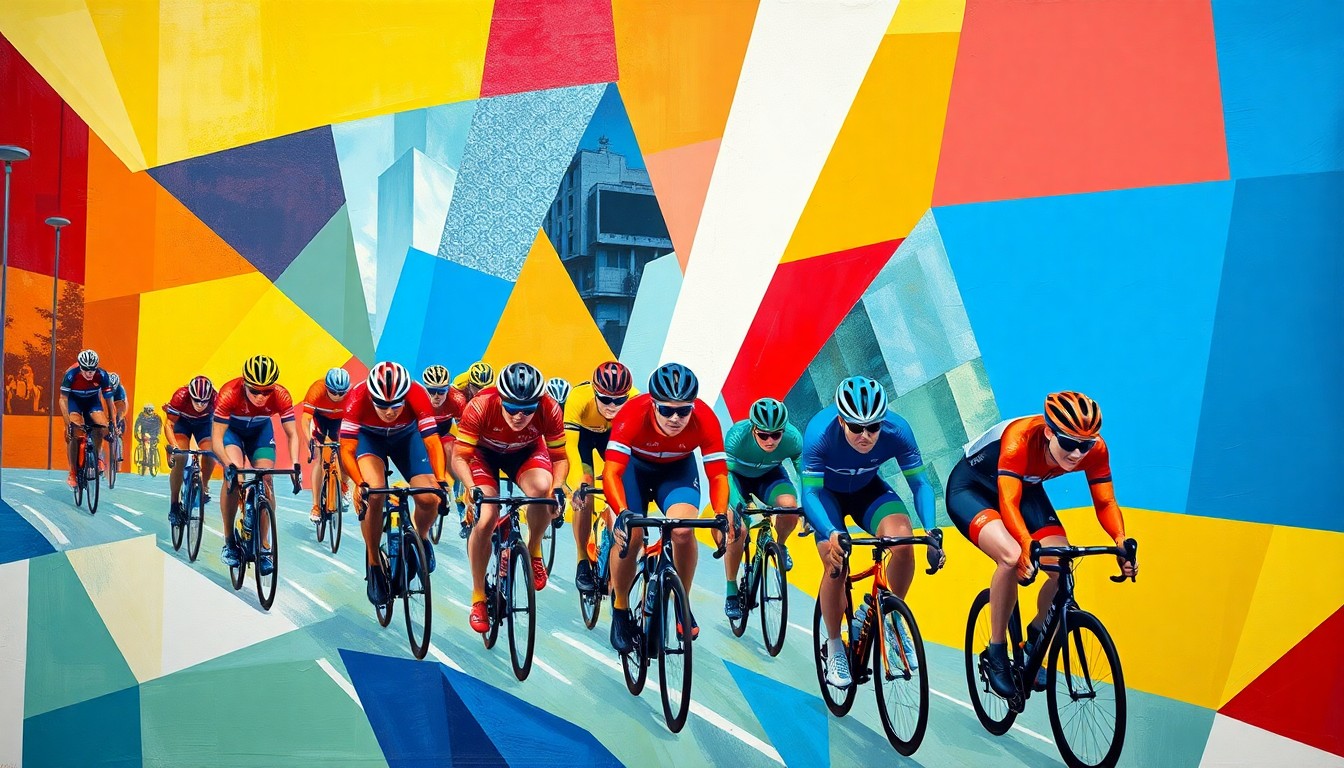 A cubist interpretation of the chaos and risk-taking that defines professional cycling, as authorities struggle to enforce safety protocols.Paris Today
The recent Tour of Flanders has sparked criticism over the cycling authorities' approach to enforcing rules and prioritizing safety. While riders like Remco Evenepoel and Tadej Pogačar faced fines for minor infractions, a far more dangerous incident involving riders crossing a railway line during the race has drawn outrage over the lack of a decisive safety-first response.
Why it matters
This incident highlights a longstanding issue in professional cycling where the pursuit of victory and race flow often takes precedence over fundamental safety protocols. The selective enforcement of rules and the failure to address serious safety breaches sends a concerning message to aspiring cyclists and the public about the culture of risk within the sport.
The details
Early in the Tour of Flanders, a front group including Pogačar and Evenepoel barreled through a railway crossing just as the barriers were descending and the lights were flashing red. This blatant disregard for traffic laws could have had catastrophic consequences, yet the cycling authorities' response was reportedly limited to a brief chat and a promise to identify the offenders for potential fines or discipline. Meanwhile, Evenepoel and his directeur sportif were fined for irregular feeding, while Pogačar himself was penalized for littering outside designated zones.
- The railway crossing incident occurred early in the Tour of Flanders race.
- The post-race jury report was issued shortly after the conclusion of the event.
The players
Tadej Pogačar
A Slovenian professional cyclist who won his third Tour of Flanders title, solidifying his legendary status in the sport.
Remco Evenepoel
A Belgian professional cyclist who was fined for irregular feeding during the Tour of Flanders.
Sven Vanthourenhout
The directeur sportif of Remco Evenepoel's team, who was also penalized for the irregular feeding incident.
UCI
The governing body of professional cycling, responsible for enforcing rules and regulations.
Local Authorities
The authorities in the area where the Tour of Flanders took place, who are reportedly not pleased with the railway crossing incident and have threatened legal action.
What they’re saying
“The fact that this led to a split in the peloton, with some riders forced to stop and others forging ahead, is a testament to the chaotic nature of professional cycling.”
— Author
“What makes this particularly fascinating, and frankly, alarming, is the official response. While local authorities are reportedly not pleased and have threatened legal action, the cycling commissaires' response seems to have been a brief chat and a promise to identify those involved for potential fines or discipline.”
— Author
What’s next
As Pogačar turns his attention to the upcoming Paris-Roubaix race, known for its inherent dangers, there are concerns that the culture of risk-taking and selective enforcement of rules will continue to be an issue in professional cycling.
The takeaway
This incident in the Tour of Flanders highlights the need for a more robust and proactive approach to safety from the cycling authorities. Instead of waiting for incidents to happen and then issuing minor penalties, there needs to be a stronger emphasis on education and a zero-tolerance policy for actions that endanger riders and the public.