- Today
- Holidays
- Birthdays
- Reminders
- Cities
- Atlanta
- Austin
- Baltimore
- Berwyn
- Beverly Hills
- Birmingham
- Boston
- Brooklyn
- Buffalo
- Charlotte
- Chicago
- Cincinnati
- Cleveland
- Columbus
- Dallas
- Denver
- Detroit
- Fort Worth
- Houston
- Indianapolis
- Knoxville
- Las Vegas
- Los Angeles
- Louisville
- Madison
- Memphis
- Miami
- Milwaukee
- Minneapolis
- Nashville
- New Orleans
- New York
- Omaha
- Orlando
- Philadelphia
- Phoenix
- Pittsburgh
- Portland
- Raleigh
- Richmond
- Rutherford
- Sacramento
- Salt Lake City
- San Antonio
- San Diego
- San Francisco
- San Jose
- Seattle
- Tampa
- Tucson
- Washington
Mazon Today
By the People, for the People
300-Million-Year-Old 'Octopus' Fossil Reclassified as Nautilus
Cutting-edge imaging reveals the ancient specimen is not the oldest octopus after all, reshaping the timeline of cephalopod evolution.
Apr. 10, 2026 at 7:12pm
Got story updates? Submit your updates here. ›
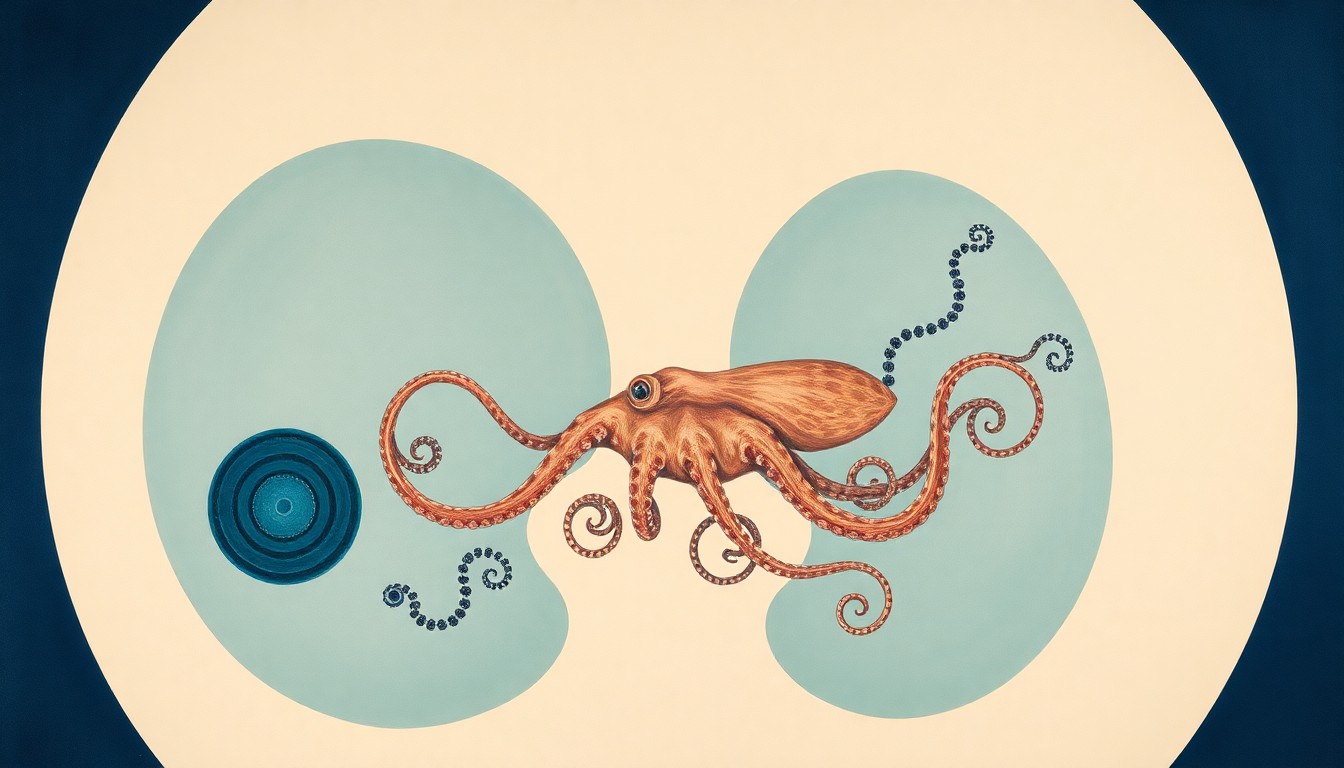 A reclassification of an ancient 'octopus' fossil reveals the complex and ever-evolving story of cephalopod evolution, reminding us that scientific understanding is a living, breathing conversation.Mazon Today
A fossil long celebrated as the oldest octopus—Pohlsepia mazonensis—has been reclassified after synchrotron imaging revealed its true kinship. Researchers uncovered a molluscan feeding apparatus (a radula) that points to a nautiloid relative rather than an octopus, correcting a dating error and reshaping our understanding of cephalopod evolution.
Why it matters
The reclassification of Pohlsepia mazonensis is a cautionary tale about the fragility of our scientific 'firsts' and the importance of new imaging techniques in paleontology. It highlights how surface morphology can be unreliable without deeper analysis of internal structures, and underscores the provisional nature of our deep-time maps, which are shaped as much by technology as by the fossils themselves.
The details
Using cutting-edge synchrotron imaging, researchers discovered that Pohlsepia mazonensis, long considered the oldest known octopus fossil, actually had a molluscan feeding apparatus (radula) characteristic of nautiloids, not octopuses. This reclassification pushes the oldest known nautiloid soft tissue fossil back by roughly 220 million years, surpassing the previous record. The finding suggests the octopus lineage likely emerged later, in the Jurassic, with the split from ten-armed relatives like squids occurring in the Mesozoic rather than the Paleozoic.
- The Pohlsepia mazonensis fossil was discovered in the Mazon Creek fossil beds in Illinois.
- The fossil has been celebrated as the oldest known octopus for decades.
The players
Pohlsepia mazonensis
A fossil long considered the oldest known octopus, but now reclassified as a nautiloid relative.
Mazon Creek
A fossil-rich site in Illinois that continues to yield surprises about the reliability of the fossil record.
What’s next
The reclassification of Pohlsepia mazonensis is expected to spur further research into the timing and patterns of cephalopod evolution, as well as the importance of soft tissue preservation in the fossil record.
The takeaway
This discovery highlights the provisional nature of our scientific understanding and the need for humility in the face of new evidence. It serves as a reminder that the oldest chapters of life are not always where we expect them to be, and that breakthrough discoveries can often be hiding in plain sight, waiting for the right tools and techniques to uncover their true stories.