- Today
- Holidays
- Birthdays
- Reminders
- Cities
- Atlanta
- Austin
- Baltimore
- Berwyn
- Beverly Hills
- Birmingham
- Boston
- Brooklyn
- Buffalo
- Charlotte
- Chicago
- Cincinnati
- Cleveland
- Columbus
- Dallas
- Denver
- Detroit
- Fort Worth
- Houston
- Indianapolis
- Knoxville
- Las Vegas
- Los Angeles
- Louisville
- Madison
- Memphis
- Miami
- Milwaukee
- Minneapolis
- Nashville
- New Orleans
- New York
- Omaha
- Orlando
- Philadelphia
- Phoenix
- Pittsburgh
- Portland
- Raleigh
- Richmond
- Rutherford
- Sacramento
- Salt Lake City
- San Antonio
- San Diego
- San Francisco
- San Jose
- Seattle
- Tampa
- Tucson
- Washington
Mazon Today
By the People, for the People
Fossil Believed to Be Oldest Octopus Revealed as Nautilus Relative
Advanced imaging uncovers hidden teeth, rewriting evolutionary timeline
Apr. 8, 2026 at 1:54am
Got story updates? Submit your updates here. ›
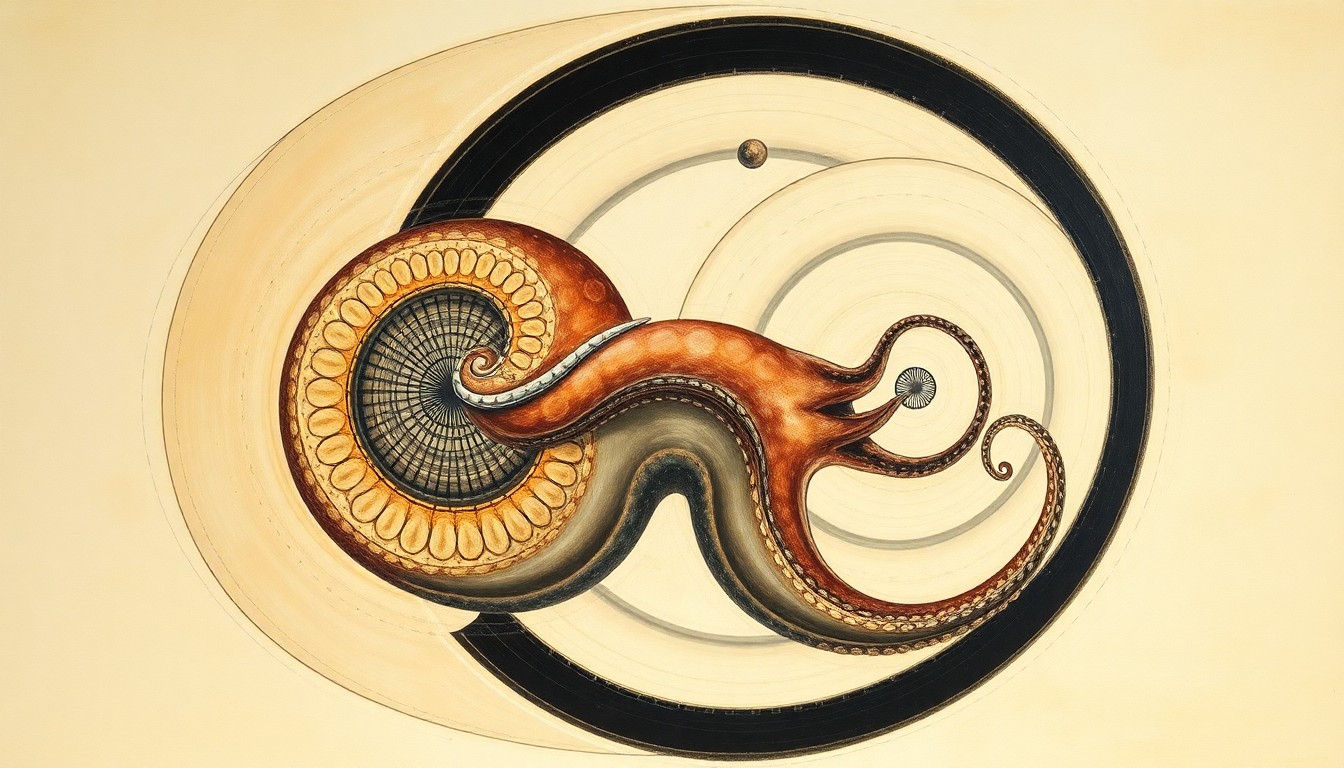 A scientific reexamination of a controversial fossil has rewritten the evolutionary timeline for octopuses, revealing their origins are much more recent than previously believed.Mazon Today
A famous 300-million-year-old fossil once thought to be the oldest octopus ever discovered has been reclassified as a relative of the modern nautilus after new analysis using cutting-edge synchrotron imaging revealed the presence of small tooth-like features, indicating it was not an octopus at all.
Why it matters
This discovery significantly changes the timeline for octopus evolution, suggesting octopuses appeared much later during the Jurassic period rather than hundreds of millions of years earlier as previously believed. It also provides the earliest known example of preserved soft tissue from a nautiloid.
The details
Researchers used synchrotron imaging to examine the fossil, known as Pohlsepia mazonensis, in detail. Inside the rock, they found small tooth-like features that showed the fossil belonged to a group related to the modern nautilus, not an octopus as previously thought. The confusion stemmed from the fact that as the animal decayed before fossilization, its body changed in ways that made it resemble an octopus.
- The fossil was originally discovered in Illinois, USA, and first described in 2000.
- The new study was published on April 8, 2026 in Proceedings of the Royal Society B.
The players
Thomas Clements
Lead author and Lecturer in Invertebrate Zoology at the University of Reading.
Pohlsepia mazonensis
The fossil that was previously believed to be the oldest octopus ever discovered.
Paleocadmus pohli
A known fossil nautiloid species found at the same site as the Pohlsepia mazonensis fossil.
What they’re saying
“It turns out the world's most famous octopus fossil was never an octopus at all. It was a nautilus relative that had been decomposing for weeks before it became buried and later preserved in rock, and that decomposition is what made it look so convincingly octopus-like.”
— Thomas Clements, Lead author and Lecturer in Invertebrate Zoology at the University of Reading
What’s next
The discovery provides the earliest known example of preserved soft tissue from a nautiloid and removes the fossil's status as the "oldest octopus" from the record books.
The takeaway
This discovery significantly changes the timeline for octopus evolution, suggesting octopuses appeared much later during the Jurassic period rather than hundreds of millions of years earlier as previously believed. It also provides important new insights into the early evolution of cephalopods.