- Today
- Holidays
- Birthdays
- Reminders
- Cities
- Atlanta
- Austin
- Baltimore
- Berwyn
- Beverly Hills
- Birmingham
- Boston
- Brooklyn
- Buffalo
- Charlotte
- Chicago
- Cincinnati
- Cleveland
- Columbus
- Dallas
- Denver
- Detroit
- Fort Worth
- Houston
- Indianapolis
- Knoxville
- Las Vegas
- Los Angeles
- Louisville
- Madison
- Memphis
- Miami
- Milwaukee
- Minneapolis
- Nashville
- New Orleans
- New York
- Omaha
- Orlando
- Philadelphia
- Phoenix
- Pittsburgh
- Portland
- Raleigh
- Richmond
- Rutherford
- Sacramento
- Salt Lake City
- San Antonio
- San Diego
- San Francisco
- San Jose
- Seattle
- Tampa
- Tucson
- Washington
300-Million-Year-Old 'Octopus' Fossil Reclassified as Nautilus Relative
New research using advanced imaging technology reveals the world's oldest 'octopus' fossil is actually an ancient nautiloid.
Apr. 10, 2026 at 7:31am
Got story updates? Submit your updates here. ›
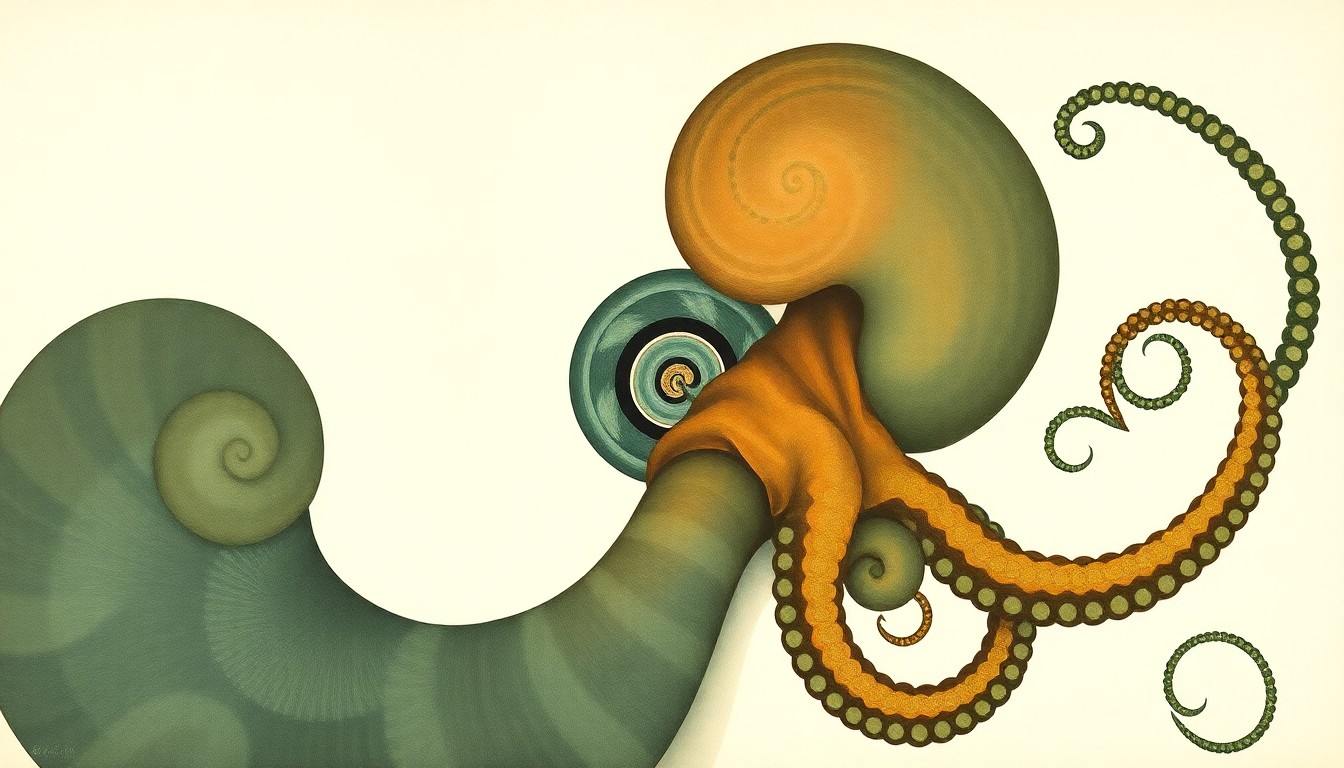 A scientific illustration exploring the surprising evolutionary connection between an ancient nautiloid fossil and the modern octopus.Chicago Today
A 300-million-year-old fossilized creature long believed to be the earliest known octopus has now been reclassified as a relative of the nautilus, a cephalopod with both tentacles and a shell. Researchers used synchrotron imaging to discover the fossil, known as Pohlsepia mazonensis, has too many teeth to be an octopus and instead matches the characteristics of an ancient nautiloid species.
Why it matters
The original identification of Pohlsepia as the world's oldest octopus fossil upended previous theories about the evolution of octopuses, suggesting they emerged much earlier than previously thought. This new finding corrects that misunderstanding and restores the timeline of octopus evolution.
The details
The Pohlsepia fossil, a blob-like creature about the size of a human hand, was discovered in the fossil-rich Mazon Creek area of Illinois. In 2000, paleontologists classified it as the earliest known octopus, but scientists have long debated this identification. Using synchrotron imaging, the new study found that Pohlsepia has 11 teeth per row on its radula, while octopuses have either 7 or 9 teeth. This matches the characteristics of a nautiloid species called Paleocadmus pohli found in the same area.
- The Pohlsepia fossil dates back approximately 300 million years.
- The original identification of Pohlsepia as the world's oldest octopus fossil was published in 2000.
- The new research reclassifying Pohlsepia as a nautiloid relative was published in 2026.
The players
Thomas Clements
The lead researcher behind the new findings and a zoologist at the University of Reading.
James Pohl
The discoverer of the Pohlsepia fossil, which is named after him and is in the collection of the Field Museum in Chicago.
Paul Mayer
The manager of the Field Museum's collection of fossil invertebrates.
Pohlsepia mazonensis
The fossilized creature long believed to be the world's oldest octopus, but now reclassified as a relative of the nautilus.
Paleocadmus pohli
The fossil nautiloid species that the Pohlsepia fossil has been matched to based on its tooth characteristics.
What they’re saying
“It's a very difficult fossil to interpret. To look at it, it kind of just looks like a white mush.”
— Thomas Clements, Lead Researcher
“If you look at it and you are a cephalopod researcher and you're interested in everything octopus, it does superficially look a lot like a deep-water octopus.”
— Thomas Clements, Lead Researcher
“This has too many teeth, so it can't be an octopus. And that's how we realize that the world's oldest octopus is actually a fossil nautilus, not an octopus.”
— Thomas Clements, Lead Researcher
“We will be resting the original 'oldest octopus fossil' title and look forward to reviewing this new evidence.”
— Adam Millward, Managing Editor, Guinness World Records
“I'm a little surprised, but people have been questioning whether it was an octopus ever since the original paper was first published in 2000.”
— Paul Mayer, Manager, Field Museum Fossil Invertebrate Collection
What’s next
The Field Museum plans to continue studying the Pohlsepia fossil and other ancient nautiloid specimens from the Mazon Creek area, as new technologies allow for deeper scientific investigation of these rare fossils.
The takeaway
This reclassification of the world's oldest 'octopus' fossil as a nautiloid relative highlights the importance of using advanced imaging techniques and ongoing scientific scrutiny to correct long-held misunderstandings about the evolutionary history of cephalopods.
Chicago top stories



Chicago events


Apr. 10, 2026
Hamilton (Chicago)
Apr. 10, 2026
Mrs. Krishnan's Party