- Today
- Holidays
- Birthdays
- Reminders
- Cities
- Atlanta
- Austin
- Baltimore
- Berwyn
- Beverly Hills
- Birmingham
- Boston
- Brooklyn
- Buffalo
- Charlotte
- Chicago
- Cincinnati
- Cleveland
- Columbus
- Dallas
- Denver
- Detroit
- Fort Worth
- Houston
- Indianapolis
- Knoxville
- Las Vegas
- Los Angeles
- Louisville
- Madison
- Memphis
- Miami
- Milwaukee
- Minneapolis
- Nashville
- New Orleans
- New York
- Omaha
- Orlando
- Philadelphia
- Phoenix
- Pittsburgh
- Portland
- Raleigh
- Richmond
- Rutherford
- Sacramento
- Salt Lake City
- San Antonio
- San Diego
- San Francisco
- San Jose
- Seattle
- Tampa
- Tucson
- Washington
Cultivated Flowers Can Attract Pollinators Too
New study finds some bred plants can support bees, butterflies, and other insects.
Apr. 9, 2026 at 1:48am
Got story updates? Submit your updates here. ›
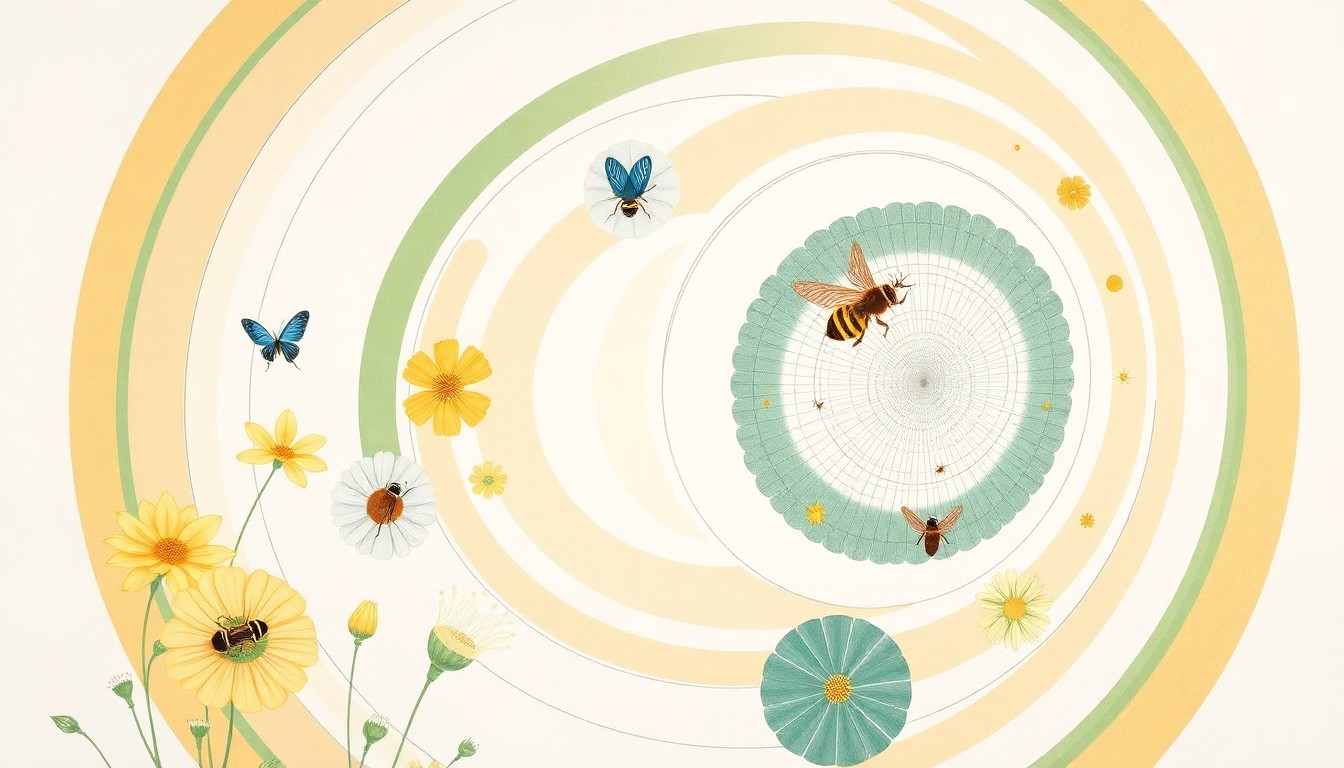 A conceptual illustration capturing the harmonious coexistence of cultivated flowers and the pollinators they support in an urban garden setting.Chicago Today
A new study from plant biologists at Northwestern University and the Chicago Botanic Garden found that some cultivated plants - bred for their vibrant blooms and compact forms - can still provide meaningful support for pollinators like bees and butterflies, offering a more approachable starting point for people new to pollinator gardening.
Why it matters
The pollinator garden movement has accelerated in recent years as concerns over declining bee populations have grown, but conventional wisdom has often suggested that only native wildtype plants are valuable for attracting insects. This study provides evidence that a mix of cultivated and wild flowers can be an effective way to support pollinators, especially for gardeners who want a more manicured aesthetic.
The details
Researchers planted four native plant species alongside 13 cultivated varieties in the same plot at the Chicago Botanic Garden and observed pollinator visits over a two-year period. They found that while wildtype plants consistently attracted the most insects, some cultivars performed just as well, including certain varieties of black-eyed Susan and beardtongue. However, other cultivars drew significantly fewer visits.
- The study was published on April 1, 2026 in the journal Ecosphere.
- The researchers conducted their controlled experiments at the Chicago Botanic Garden over a two-year period.
The players
Nicholas Dorian
The study's lead author and a postdoctoral research associate in the Program in Plant Biology and Conservation, a partnership between Northwestern's Weinberg College of Arts and Sciences and the Chicago Botanic Garden.
Paul CaraDonna
The study's co-author, an adjunct associate professor at Weinberg and a conservation scientist at the Chicago Botanic Garden's Negaunee Institute.
Chicago Botanic Garden
A major botanical garden that collaborated with Northwestern University on this pollinator research.
Northwestern University
A research university that partnered with the Chicago Botanic Garden on this study through its Weinberg College of Arts and Sciences.
What they’re saying
“Our findings emphasize that ecological value and aesthetics don't have to be at odds with each other.”
— Nicholas Dorian, Lead author
“Somewhat surprisingly, there's not a lot of science behind pollinator gardening guidelines, including which plants are best for pollinators.”
— Paul CaraDonna, Co-author
What’s next
The researchers plan to evaluate a broader range of plant varieties and better understand which floral traits drive pollinator preferences. They also hope to continue building support for the pollinator gardening movement.
The takeaway
This study shows that gardeners don't have to choose between beauty and ecological value when it comes to supporting pollinators. A thoughtful mix of cultivated and wild flowers can attract bees, butterflies, and other insects to yards and green spaces.
Chicago top stories



Chicago events

Apr. 9, 2026
Chicago Blackhawks vs. Carolina Hurricanes
Apr. 9, 2026
White Rooster
Apr. 9, 2026
Hamilton (Chicago)