- Today
- Holidays
- Birthdays
- Reminders
- Cities
- Atlanta
- Austin
- Baltimore
- Berwyn
- Beverly Hills
- Birmingham
- Boston
- Brooklyn
- Buffalo
- Charlotte
- Chicago
- Cincinnati
- Cleveland
- Columbus
- Dallas
- Denver
- Detroit
- Fort Worth
- Houston
- Indianapolis
- Knoxville
- Las Vegas
- Los Angeles
- Louisville
- Madison
- Memphis
- Miami
- Milwaukee
- Minneapolis
- Nashville
- New Orleans
- New York
- Omaha
- Orlando
- Philadelphia
- Phoenix
- Pittsburgh
- Portland
- Raleigh
- Richmond
- Rutherford
- Sacramento
- Salt Lake City
- San Antonio
- San Diego
- San Francisco
- San Jose
- Seattle
- Tampa
- Tucson
- Washington
Ancient 'Octopus' Fossil Revealed to Be Nautilus Relative
300-million-year-old sea creature previously thought to be the world's oldest octopus is actually a nautilus, scientists say.
Apr. 9, 2026 at 8:34am
Got story updates? Submit your updates here. ›
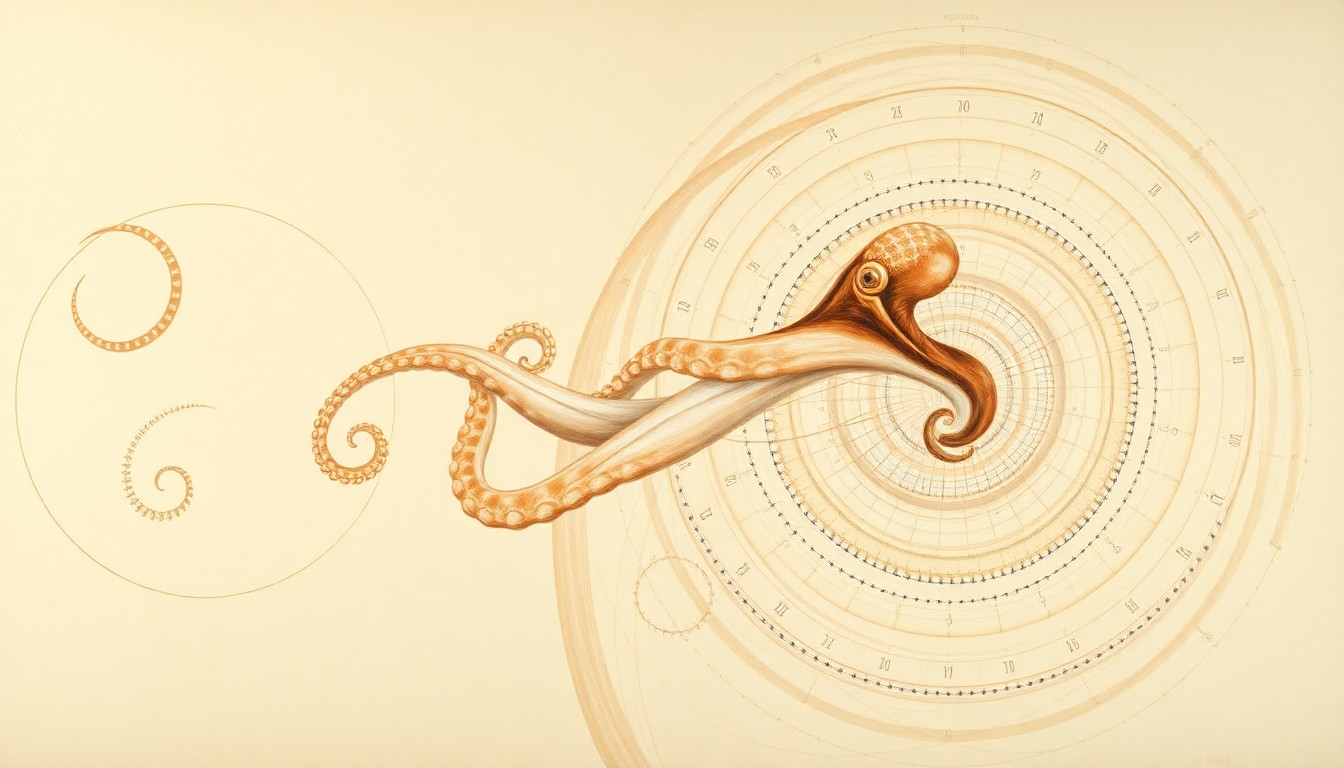 A conceptual illustration depicting the evolutionary relationship between octopuses and their nautilus relatives, as revealed by the re-examination of an ancient 'octopus' fossil.Chicago Today
Scientists have found evidence that a 300-million-year-old sea creature previously thought to be the world's oldest octopus is actually a nautilus relative. The fossil, known as Pohlsepia mazonensis, has long been the subject of scientific debate, with researchers questioning whether it was truly an octopus. A new study using advanced imaging technology has determined the creature has too many teeth to be an octopus, and instead matches the characteristics of a fossil nautiloid.
Why it matters
The misidentification of Pohlsepia mazonensis as the world's oldest octopus fossil had significant implications for understanding the evolution of octopuses. Its discovery in 2000 suggested octopuses emerged much earlier than previously thought, creating a large gap in the fossil record. This new finding helps resolve that mystery and provides more accurate insight into the timeline of cephalopod evolution.
The details
Researchers from the University of Reading, led by zoologist Thomas Clements, used synchrotron technology to closely examine the Pohlsepia mazonensis fossil. They found that the creature had a radula, or ribbon of teeth, with 11 teeth per row - far more than the 7 or 9 teeth typical of octopuses. This evidence conclusively identifies the fossil as a relative of the nautilus, a cephalopod with both tentacles and a shell. The misidentification may have occurred because the creature lost its shell before becoming fossilized, obscuring its true identity.
- The Pohlsepia mazonensis fossil was discovered in the Mazon Creek area of Illinois, about 50 miles southwest of Chicago.
- The fossil was originally identified as the world's oldest octopus in 2000.
The players
Thomas Clements
A zoologist at the University of Reading and the lead researcher behind the new findings.
James Pohl
The discoverer of the Pohlsepia mazonensis fossil, which is now in the collection of the Field Museum in Chicago.
Pohlsepia mazonensis
The 300-million-year-old fossilized sea creature that was previously thought to be the world's oldest octopus.
Paleocadmus pohli
The fossil nautiloid that the Pohlsepia mazonensis fossil was found to match in terms of its tooth structure.
What they’re saying
“It's a very difficult fossil to interpret. To look at it, it kind of just looks like a white mush.”
— Thomas Clements, Zoologist, University of Reading
“If you look at it and you are a cephalopod researcher and you're interested in everything octopus, it does superficially look a lot like a deep-water octopus.”
— Thomas Clements, Zoologist, University of Reading
“This has too many teeth, so it can't be an octopus. And that's how we realize that the world's oldest octopus is actually a fossil nautilus, not an octopus.”
— Thomas Clements, Zoologist, University of Reading
What’s next
The Field Museum, which houses the Pohlsepia mazonensis fossil, has been approached for comment on the new findings.
The takeaway
This discovery helps resolve a long-standing mystery in the fossil record and provides more accurate insight into the timeline of cephalopod evolution. It also highlights the importance of using advanced imaging techniques to re-examine and correctly identify ancient fossils.
Chicago top stories



Chicago events

Apr. 9, 2026
Chicago Blackhawks vs. Carolina Hurricanes
Apr. 9, 2026
White Rooster
Apr. 9, 2026
Hamilton (Chicago)