- Today
- Holidays
- Birthdays
- Reminders
- Cities
- Atlanta
- Austin
- Baltimore
- Berwyn
- Beverly Hills
- Birmingham
- Boston
- Brooklyn
- Buffalo
- Charlotte
- Chicago
- Cincinnati
- Cleveland
- Columbus
- Dallas
- Denver
- Detroit
- Fort Worth
- Houston
- Indianapolis
- Knoxville
- Las Vegas
- Los Angeles
- Louisville
- Madison
- Memphis
- Miami
- Milwaukee
- Minneapolis
- Nashville
- New Orleans
- New York
- Omaha
- Orlando
- Philadelphia
- Phoenix
- Pittsburgh
- Portland
- Raleigh
- Richmond
- Rutherford
- Sacramento
- Salt Lake City
- San Antonio
- San Diego
- San Francisco
- San Jose
- Seattle
- Tampa
- Tucson
- Washington
The Black Church's Enduring Power to Transform America
The civil rights movement was fueled by the black church's century-old foundation of property ownership, financial independence, and prophetic theology.
Apr. 3, 2026 at 6:41am
Got story updates? Submit your updates here. ›
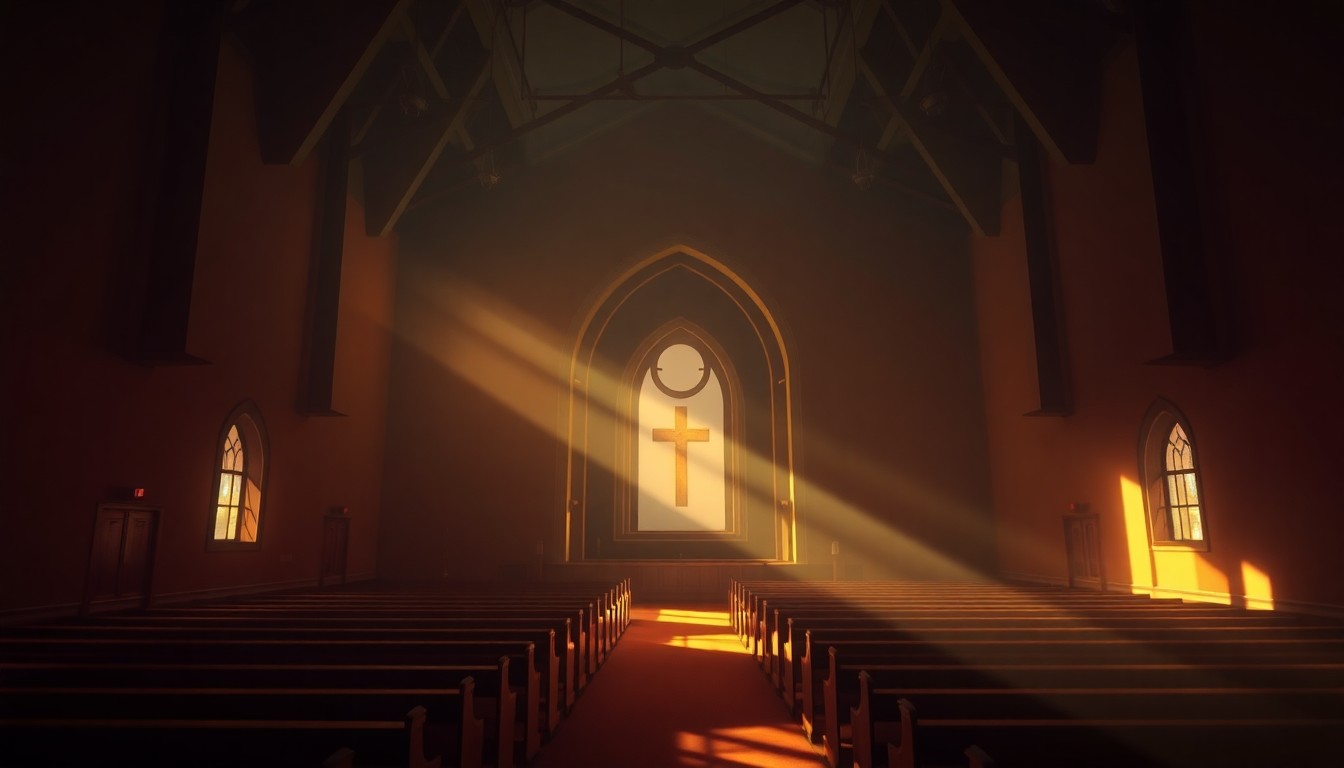 The Black church's century-old foundations of property ownership, financial independence, and prophetic theology fueled the civil rights movement and continue to shape its enduring influence.Chicago Today
The civil rights movement was driven by the institutional strength of the black church, which provided the social infrastructure, trained leadership, and prophetic theology to challenge the nation's unfulfilled promises of equality. While the black church has faced theological drift, community disruption, political capture, and institutional decline, it retains a moral authority and spiritual connection that could once again catalyze transformative social change if this generation is willing to do the unglamorous work of rebuilding the church's foundations.
Why it matters
The black church was central to the success of the civil rights movement because it provided the organizational capacity, economic independence, and theological framework to sustain a decades-long struggle for justice. As the nation faces new challenges, the black church's unique history and continued relevance position it to again be a driving force for positive social change, if it can recapture its prophetic independence and community-building power.
The details
The black church's institutional strength in the civil rights era came from its ownership of property, financial independence from white power structures, and ability to train and empower community leaders. Congregations paid pastors' salaries, giving them the freedom to speak out, and the black church also birthed a pipeline of historically black colleges and universities that produced many of the movement's leaders. Theologically, the black church articulated a vision of justice grounded in the concept of imago dei - the belief that all humans are created in God's image and deserve inalienable rights. This 'sanctification argument' called the nation to live up to its own stated Christian values.
- The civil rights movement gained momentum in the 1950s, with key events like the Montgomery bus boycott in 1955-1956.
- By 1906, black Baptist and Methodist denominations reported owning more than 35,000 church buildings valued at $56 million.
- In the 1960s, urban renewal policies displaced over 1 million Americans, 55% of them Black, disrupting the neighborhood ecosystems that had sustained the black church.
The players
Rev. C.J. Rodgers
A prominent pastor at Mount Eagle Missionary Baptist Church in Chicago in the 1950s, known for his bold preaching in support of the civil rights movement despite threats of being taken off the air.
George Greer
A member of Rev. Rodgers' congregation as a child in the 1950s, who recalls the church's central role in community life and the dense social networks that sustained the civil rights struggle.
Rev. C.J. Rhodes
A leading scholar of the black church tradition who traces its foundations to parallel movements for theological reform and political freedom.
Sen. Raphael Warnock
An ordained pastor whose work has informed Rhodes' understanding of the black church's dual role as a church 'born fighting for freedom' and a theological reform movement.
Justin Giboney
President of the AND Campaign, who argues that for the black church to recapture its prophetic independence, conservative politics would need to distance itself from racist elements of the party.
What they’re saying
“Well, if you're gonna cut me off, you better slice that cut, because I'm gonna speak the truth.”
— Rev. C.J. Rodgers, Pastor, Mount Eagle Missionary Baptist Church
“The black church was a church born fighting for freedom, but it was also a theological reform movement, seeking to reform the broader Christian landscape in America.”
— Rev. C.J. Rhodes, Scholar of the Black Church Tradition
“The creator created black folk too, and we, therefore, deserve the inalienable rights not given by the government, but given by God.”
— Rev. C.J. Rhodes, Scholar of the Black Church Tradition
“You can't claim to believe in the Bible or the God of the Bible and be a mean person. Everyone talking about heaven ain't going to heaven.”
— Rev. C.J. Rhodes, Scholar of the Black Church Tradition
“What made the black church strong was a commitment from the people. The discipline of the people. We depended upon ourselves, and each other.”
— George Greer, Member, Mount Eagle Missionary Baptist Church
What’s next
The judge in the case will decide on Tuesday whether or not to allow Walker Reed Quinn out on bail.
The takeaway
This case highlights growing concerns in the community about repeat offenders released on bail, raising questions about bail reform, public safety on SF streets, and if any special laws to govern autonomous vehicles in residential and commercial areas.
Chicago top stories



Chicago events
Apr. 3, 2026
Hamilton (Chicago)
Apr. 3, 2026
The Wiz (Chicago)
Apr. 3, 2026
The Merry Wives of Windsor