- Today
- Holidays
- Birthdays
- Reminders
- Cities
- Atlanta
- Austin
- Baltimore
- Berwyn
- Beverly Hills
- Birmingham
- Boston
- Brooklyn
- Buffalo
- Charlotte
- Chicago
- Cincinnati
- Cleveland
- Columbus
- Dallas
- Denver
- Detroit
- Fort Worth
- Houston
- Indianapolis
- Knoxville
- Las Vegas
- Los Angeles
- Louisville
- Madison
- Memphis
- Miami
- Milwaukee
- Minneapolis
- Nashville
- New Orleans
- New York
- Omaha
- Orlando
- Philadelphia
- Phoenix
- Pittsburgh
- Portland
- Raleigh
- Richmond
- Rutherford
- Sacramento
- Salt Lake City
- San Antonio
- San Diego
- San Francisco
- San Jose
- Seattle
- Tampa
- Tucson
- Washington
Self-Righteous Acts Prove Destructive, Experts Say
Columnist argues that elite-driven policies often backfire despite feeling morally justified.
Apr. 3, 2026 at 5:55pm
Got story updates? Submit your updates here. ›
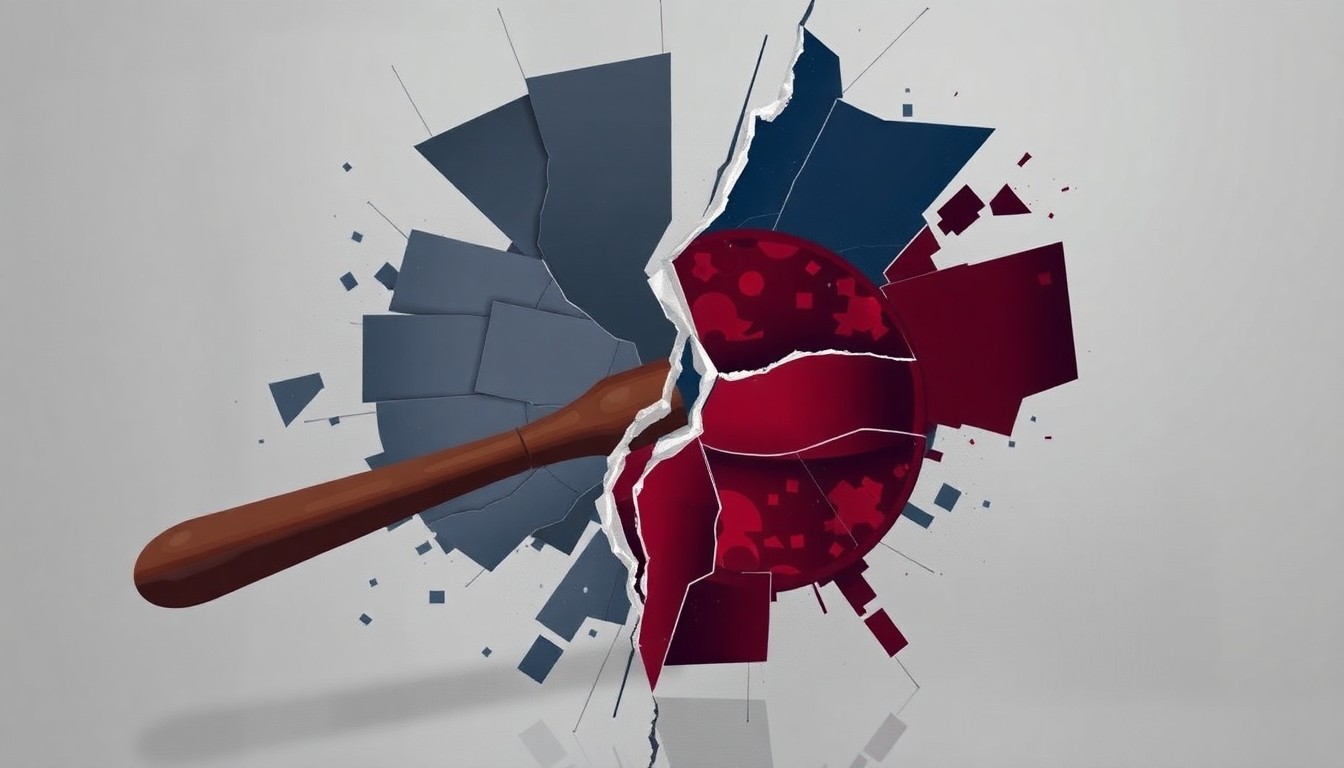 A fractured, abstract illustration captures the divisive and destructive nature of self-righteous political actions.Chicago Today
A columnist argues that self-righteous policies enacted by political elites, such as the Cuban trade embargo, Trump impeachment, Russian sanctions, and the Iran war, have repeatedly led to undesirable outcomes despite the policies being driven by a perceived moral imperative. The author contends these actions make the elites feel good about themselves while failing to achieve their intended goals and often worsening global instability and conflict.
Why it matters
The commentary highlights a pattern of elite-driven policies that appear to be more about moral posturing than practical problem-solving, with the author warning that such self-righteous actions can have severe real-world consequences that undermine their stated aims.
The details
The columnist cites several examples to illustrate his point, including the decades-old Cuban trade embargo, the repeated impeachment efforts against former President Trump, sanctions on Russia over the Ukraine invasion, and the recent U.S. war with Iran. In each case, the author argues the policies were driven more by a desire for retribution and moral superiority than achieving tangible results, leading to outcomes that worsened the original problems.
- The Cuban trade embargo has been in place for over 65 years.
- Trump was impeached twice during his presidency.
- The latest round of sanctions on Russia were implemented in 2022 following the invasion of Ukraine.
- The U.S. war with Iran began in 2025.
The players
Donald Trump
The former U.S. president who the author argues pursued policies driven more by a desire for moral posturing than practical problem-solving.
Democratic Party
The political party that the author says engaged in self-righteous impeachment efforts against Trump that backfired.
Russian government
The target of sanctions imposed by Western nations over the invasion of Ukraine, which the author says have had limited real-world impact.
Iranian government
The target of a recent U.S. military intervention that the author argues failed to achieve its goals and only worsened regional instability.
What they’re saying
“Impeachment was a stupid, self-serving political device that reinforced Trump's standing with his populist base.”
— The author, Columnist
“The outcome of this one? A less stable region. A divided Western Alliance. An expenditure north of $50B. Loss of life to American fighting forces. 2,000 dead Iranians. They still have the enriched uranium. They have half their rocketry and missiles. They still control Hormuz. The theocratic governance is still in place. The Iranian dissident community has not been heard from.”
— The author, Columnist
What’s next
The author does not provide any clear next steps or predictions about future events related to the issues discussed.
The takeaway
The commentary serves as a cautionary tale about the dangers of elite-driven policies that prioritize moral grandstanding over practical problem-solving, with the author warning that such self-righteous actions can have severe unintended consequences that undermine their stated goals and worsen global instability.
Chicago top stories


Chicago events
Apr. 5, 2026
World Famous Gospel Brunch at House of Blues (CHI)
Apr. 5, 2026
World Famous Gospel Brunch at House of Blues (CHI)
Apr. 5, 2026
Hamilton (Chicago)