- Today
- Holidays
- Birthdays
- Reminders
- Cities
- Atlanta
- Austin
- Baltimore
- Berwyn
- Beverly Hills
- Birmingham
- Boston
- Brooklyn
- Buffalo
- Charlotte
- Chicago
- Cincinnati
- Cleveland
- Columbus
- Dallas
- Denver
- Detroit
- Fort Worth
- Houston
- Indianapolis
- Knoxville
- Las Vegas
- Los Angeles
- Louisville
- Madison
- Memphis
- Miami
- Milwaukee
- Minneapolis
- Nashville
- New Orleans
- New York
- Omaha
- Orlando
- Philadelphia
- Phoenix
- Pittsburgh
- Portland
- Raleigh
- Richmond
- Rutherford
- Sacramento
- Salt Lake City
- San Antonio
- San Diego
- San Francisco
- San Jose
- Seattle
- Tampa
- Tucson
- Washington
Non-Risk-Based Lung Cancer Screening Tied to Better Survival
Chinese data shows screening without preselection is associated with reduced lung cancer mortality and improved overall survival.
Mar. 31, 2026 at 11:22am
Got story updates? Submit your updates here. ›
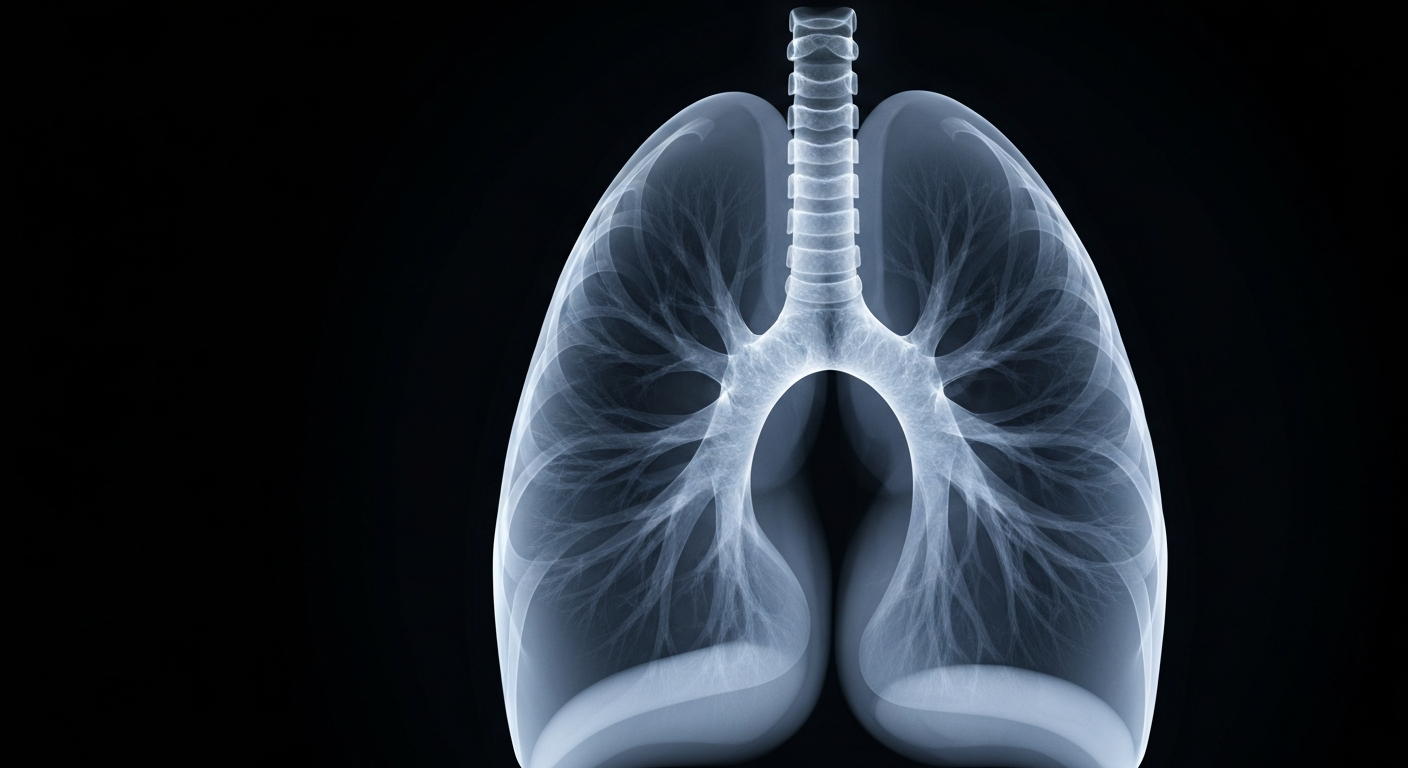 An X-ray view of a healthy lung, highlighting the potential of non-risk-based screening to detect cancer early and improve survival.Chicago Today
Screening individuals for lung cancer with low-dose CT without preselection based on their risk profile is associated with a substantial reduction in lung cancer-specific mortality compared to no screening, according to a Chinese analysis. The cancer detection rate was similar to that in risk-based screening trials, and the study results suggest that early-stage lung cancer detection via screening is associated with markedly improved survival.
Why it matters
Current lung cancer screening guidelines are based on smoking history, leaving out a large and growing group of people who develop lung cancer despite never having smoked, especially in Asia where factors like air pollution and genetic risk play a bigger role. This study suggests that a non-risk-based screening approach could be more effective for certain populations.
The details
The LUNG-CARE Project, a prospective interventional cohort study in China, enrolled 11,708 individuals aged 40-74 without prior lung cancer diagnosis or treatment. Participants underwent a single low-dose CT scan and were compared to a 'natural control' cohort of 114,392 individuals not receiving systematic screening. Lung cancer was detected in 1.9% of the screening group vs 1.0% of the control group, with around 81.5% of cases in the screening group diagnosed as stage I compared to 25.1% in the non-screening group. After a median 7-year follow-up, low-dose CT screening was associated with a significant reduction in lung cancer-specific mortality (HR 0.45) and improved 5-year overall survival (87% vs 39%).
- The study enrolled participants between December 1, 2015, and July 31, 2021.
- Participants were followed up for a median of 7.0 years.
The players
Caichen Li, MD
Researcher at the First Affiliated Hospital of Guangzhou Medical University, National Center for Respiratory Medicine, Guangzhou, China, and lead author of the study.
Joachim GJV Aerts, MD, PhD
Department of Pulmonary Diseases, Erasmus MC, Rotterdam, Netherlands, who discussed the study results on behalf of the European Society for Medical Oncology.
Marina Garassino, MD
Professor of medicine, hematology and oncology at The University of Chicago Medicine, who commented on the potential impact of the study for Asian populations.
What they’re saying
“Current screening guidelines were built around smoking history and in doing so, they leave behind a large and growing group of people who develop lung cancer despite never having smoked.”
— Marina Garassino, MD, Professor of medicine, hematology and oncology, The University of Chicago Medicine
“Lung cancer in Asia follows a different epidemiological playbook...guidelines built on Western smoking-based data simply do not serve these populations.”
— Marina Garassino, MD, Professor of medicine, hematology and oncology, The University of Chicago Medicine
“What this study does demand, urgently, is updated criteria that recognize Asian ancestry as an independent risk factor for screening eligibility.”
— Marina Garassino, MD, Professor of medicine, hematology and oncology, The University of Chicago Medicine
What’s next
Randomized control studies will be needed to further evaluate screening strategies beyond conventional risk-based criteria before broader implementation is considered.
The takeaway
This study suggests that a non-risk-based approach to lung cancer screening could be more effective than current guidelines focused on smoking history, particularly for populations in Asia where factors like air pollution and genetics play a larger role in lung cancer risk. However, more research is needed to confirm these findings and determine the best screening strategies for diverse populations.