- Today
- Holidays
- Birthdays
- Reminders
- Cities
- Atlanta
- Austin
- Baltimore
- Berwyn
- Beverly Hills
- Birmingham
- Boston
- Brooklyn
- Buffalo
- Charlotte
- Chicago
- Cincinnati
- Cleveland
- Columbus
- Dallas
- Denver
- Detroit
- Fort Worth
- Houston
- Indianapolis
- Knoxville
- Las Vegas
- Los Angeles
- Louisville
- Madison
- Memphis
- Miami
- Milwaukee
- Minneapolis
- Nashville
- New Orleans
- New York
- Omaha
- Orlando
- Philadelphia
- Phoenix
- Pittsburgh
- Portland
- Raleigh
- Richmond
- Rutherford
- Sacramento
- Salt Lake City
- San Antonio
- San Diego
- San Francisco
- San Jose
- Seattle
- Tampa
- Tucson
- Washington
Elusive Neutrinos Reveal Secrets of the Universe
These ghostly particles are reshaping our understanding of nature and the cosmos.
Apr. 3, 2026 at 10:05am
Got story updates? Submit your updates here. ›
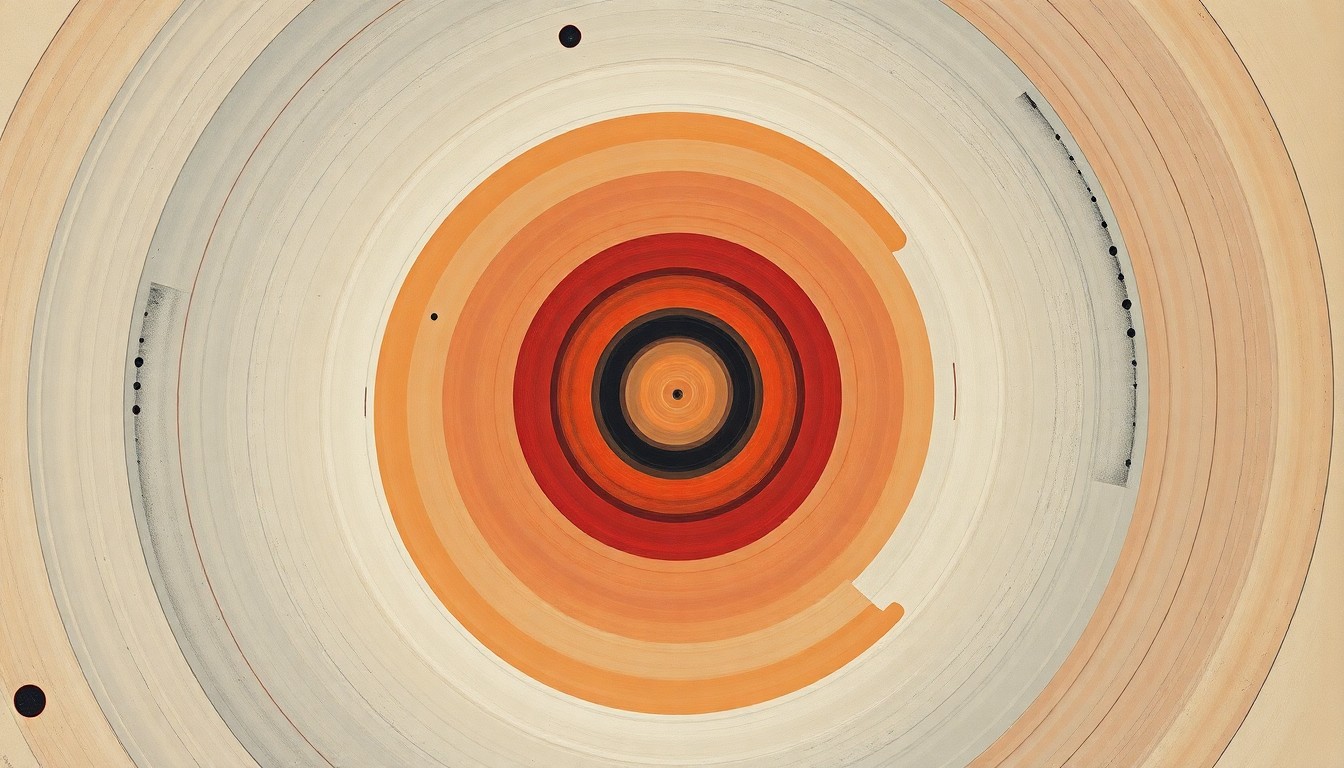 Neutrinos, the ghostly particles that stream through the universe, carry unaltered information about the cosmos' most extreme phenomena.Honolulu Today
Neutrinos, the second most abundant particles in the universe, have quietly reshaped our understanding of physics for nearly a century. These elusive, nearly massless particles stream from the sun, distant stars, and even the Big Bang, carrying unaltered information about the most violent corners of the cosmos. Though difficult to detect, neutrinos have become a key to unlocking the mysteries of the universe.
Why it matters
Neutrinos provide a unique window into the inner workings of the sun, the origins of the universe, and the most extreme astrophysical phenomena. By studying these ghostly particles, scientists can gain insights that are impossible to obtain through traditional astronomy and physics experiments.
The details
Neutrinos were first proposed in 1930 by physicist Wolfgang Pauli to explain a discrepancy in the energy observed during beta decay. Though Pauli initially feared the particle might never be detected, neutrinos were finally observed in 1956 in the intense radiation field of a nuclear reactor. We now know there are three 'flavors' of neutrinos - electron, muon, and tau - that can oscillate between these states as they travel. This oscillation reveals that neutrinos must have a small but non-zero mass, a discovery that has upended our understanding of particle physics.
- Neutrinos were first proposed by Wolfgang Pauli in 1930.
- Neutrinos were first detected in 1956 in a nuclear reactor.
- The three 'flavors' of neutrinos were discovered in the latter half of the 20th century.
The players
Wolfgang Pauli
A key physicist in the development of quantum theory who first proposed the existence of neutrinos in 1930 to explain a discrepancy in beta decay experiments.
What they’re saying
“I have done a terrible thing, I have postulated a particle that cannot be detected.”
— Wolfgang Pauli, Physicist
What’s next
Ongoing experiments aim to further understand the properties and behavior of neutrinos, which could shed light on the origins of the universe and the nature of fundamental particles.
The takeaway
Neutrinos, once considered a desperate theoretical fix, have become a vital tool for unlocking the secrets of the cosmos. By studying these elusive particles, scientists are gaining unprecedented insights into the most extreme and energetic processes in the universe.