- Today
- Holidays
- Birthdays
- Reminders
- Cities
- Atlanta
- Austin
- Baltimore
- Berwyn
- Beverly Hills
- Birmingham
- Boston
- Brooklyn
- Buffalo
- Charlotte
- Chicago
- Cincinnati
- Cleveland
- Columbus
- Dallas
- Denver
- Detroit
- Fort Worth
- Houston
- Indianapolis
- Knoxville
- Las Vegas
- Los Angeles
- Louisville
- Madison
- Memphis
- Miami
- Milwaukee
- Minneapolis
- Nashville
- New Orleans
- New York
- Omaha
- Orlando
- Philadelphia
- Phoenix
- Pittsburgh
- Portland
- Raleigh
- Richmond
- Rutherford
- Sacramento
- Salt Lake City
- San Antonio
- San Diego
- San Francisco
- San Jose
- Seattle
- Tampa
- Tucson
- Washington
Fairburn Today
By the People, for the People
Trump Administration Faces Questions Over Fulton County 2020 Election Records Seizure
Lawyers for the former president will defend the controversial search warrant at a federal hearing.
Mar. 27, 2026 at 8:18pm
Got story updates? Submit your updates here. ›
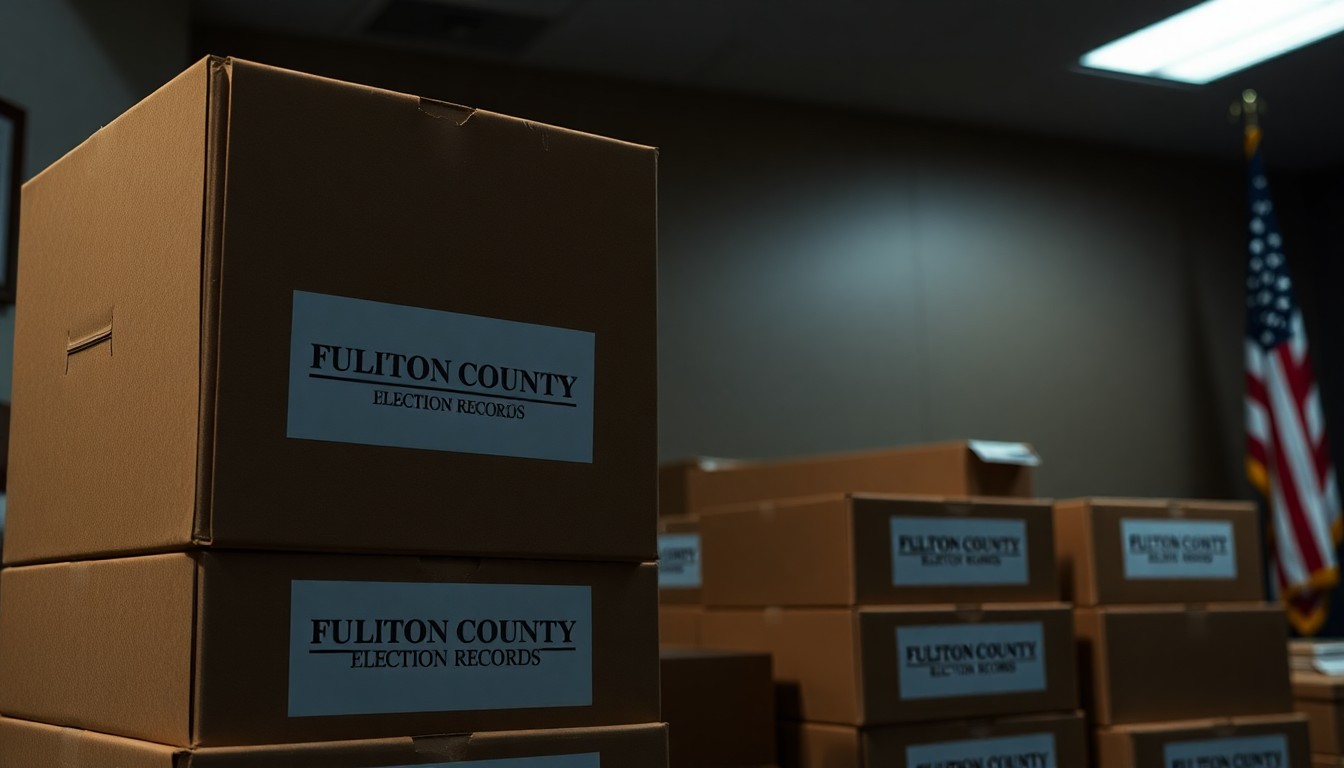 The controversial seizure of Fulton County's 2020 election records has sparked a legal battle over access to sensitive voting materials.Fairburn Today
Lawyers for the Trump administration will face serious questions on Friday about the search and seizure of more than 650 boxes of 2020 election records from a Fulton County, Georgia, election site. Fulton County officials have argued the FBI 'intentionally or recklessly omitted material facts' about purported discrepancies in the 2020 election to secure the warrant, and a federal judge is considering a request to force the Trump administration to return the sensitive records.
Why it matters
This case highlights the ongoing political and legal battles over the 2020 election results in Georgia, with the Trump administration defending the search warrant while Fulton County officials argue the investigation is based on debunked allegations of voter fraud. The outcome could have significant implications for access to sensitive election materials and the broader debate around the integrity of the 2020 vote.
The details
The investigation centers on long-debunked allegations of voter fraud that have already been thoroughly investigated. Fulton County election officials have pushed for the return of the records, arguing that the investigation focuses on 'human errors that its own sources confirm occur in almost every election … without any intentional wrongdoing whatsoever.' Lawyers for the Trump administration have pushed back, highlighting that the search was approved by a magistrate judge and arguing that the lawsuit was a 'way to get a sneak peek at ongoing criminal investigations.'
- The FBI executed the search warrant in January 2026.
- A federal judge scheduled a six-hour evidentiary hearing for Friday, March 27, 2026 to determine if the Trump administration showed 'callous disregard' for constitutional rights.
The players
Fulton County Officials
Officials in Fulton County, Georgia who have argued the FBI 'intentionally or recklessly omitted material facts' about the 2020 election to secure the warrant for the 2020 election records.
Trump Administration
Lawyers representing the former Trump administration who will defend the controversial search warrant at the federal hearing.
Judge JP Boulee
A Trump-appointed U.S. District Judge overseeing the case and considering the request to force the Trump administration to return the seized election records.
What they’re saying
“'Despite years of investigations of the 2020 election, the [search warrant] affidavit does not identify facts that establish probable cause that anyone committed a crime. The Affiant failed to include facts — including from the very sources he cited — that shut the door on even the faintest possibility of probable cause.'”
— Fulton County Officials, Lawyers for Fulton County
“'Petitioners' attempt to turn a semantic dispute into a deliberate falsehood (with no citation to any offer of proof on this issue) is beyond the pale. And given the other evidence, probable cause would easily exist without the County's admissions.'”
— Department of Justice Lawyers
What’s next
Judge Boulee will determine whether the Trump administration showed 'callous disregard' for constitutional rights by executing the controversial search warrant.
The takeaway
This case highlights the ongoing political and legal battles over the 2020 election results in Georgia, with the Trump administration defending the search warrant while Fulton County officials argue the investigation is based on debunked allegations. The outcome could have significant implications for access to sensitive election materials and the broader debate around the integrity of the 2020 vote.