- Today
- Holidays
- Birthdays
- Reminders
- Cities
- Atlanta
- Austin
- Baltimore
- Berwyn
- Beverly Hills
- Birmingham
- Boston
- Brooklyn
- Buffalo
- Charlotte
- Chicago
- Cincinnati
- Cleveland
- Columbus
- Dallas
- Denver
- Detroit
- Fort Worth
- Houston
- Indianapolis
- Knoxville
- Las Vegas
- Los Angeles
- Louisville
- Madison
- Memphis
- Miami
- Milwaukee
- Minneapolis
- Nashville
- New Orleans
- New York
- Omaha
- Orlando
- Philadelphia
- Phoenix
- Pittsburgh
- Portland
- Raleigh
- Richmond
- Rutherford
- Sacramento
- Salt Lake City
- San Antonio
- San Diego
- San Francisco
- San Jose
- Seattle
- Tampa
- Tucson
- Washington
Rays' Stadium Saga Heats Up as New Ownership Pursues $2.3B Mixed-Use Development
The team faces tight deadlines and public funding challenges as they aim to build a state-of-the-art facility in Tampa Bay.
Apr. 10, 2026 at 4:07pm
Got story updates? Submit your updates here. ›
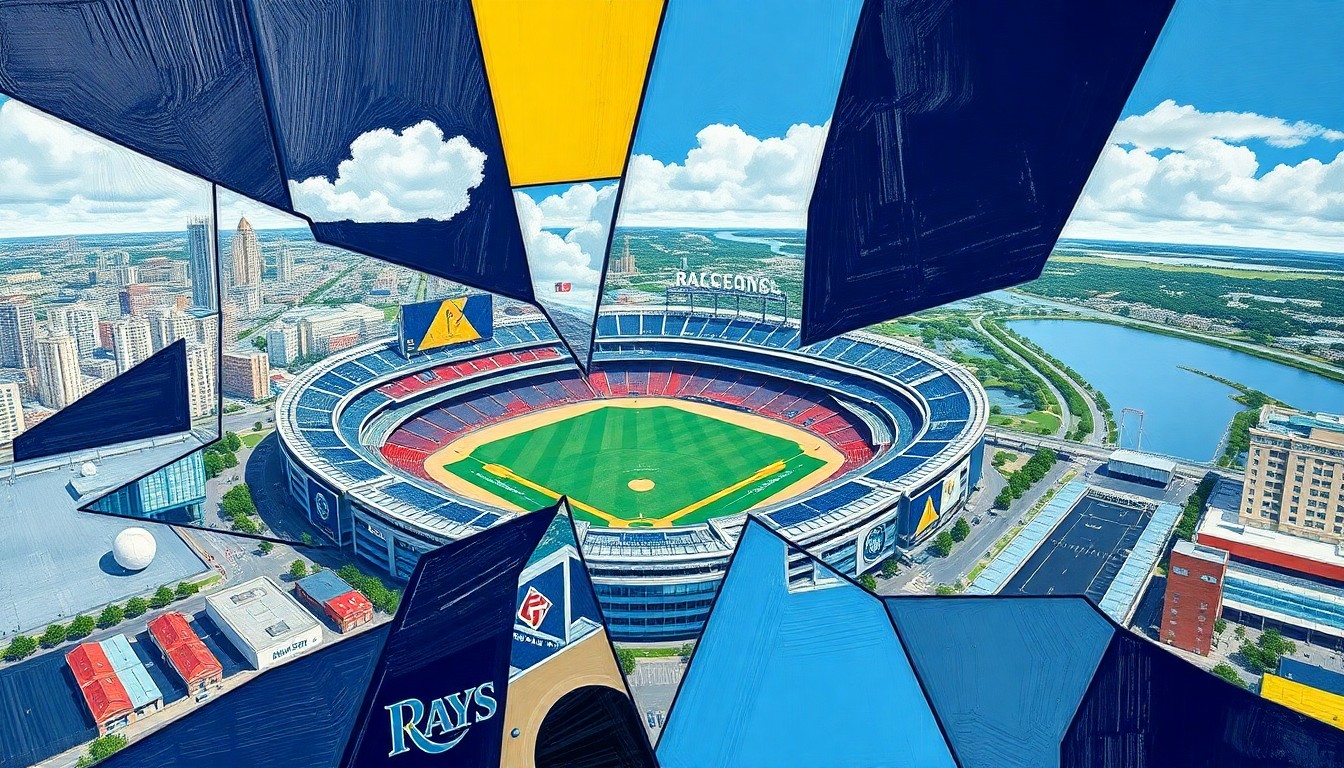 A cubist reimagining of the Rays' proposed stadium and mixed-use development, reflecting the complex negotiations and competing interests surrounding the team's future in Tampa Bay.St. Petersburg Today
The Tampa Bay Rays' pursuit of a new stadium has taken a significant turn under new ownership. The team has entered into a non-binding memorandum of understanding with Hillsborough College, eyeing the college's Dale Mabry campus as a potential site for a $2.3 billion mixed-use development that would include the future Rays' home. However, securing the necessary public funding remains a major hurdle, with local officials voicing concerns over the use of tax dollars for the project.
Why it matters
The Rays' stadium saga is crucial not only for the team but also for the broader context of Major League Baseball. MLB Commissioner Rob Manfred has expressed a desire to expand the league from 30 to 32 teams, but has made it clear that expansion cannot occur until both the Rays and the Oakland Athletics have resolved their respective stadium situations.
The details
The proposed development would cover 113 acres and include the stadium, as well as various other real estate components, drawing comparisons to The Battery in Atlanta. The Rays have indicated they would contribute roughly half of the $2.3 billion cost, while seeking public funding to cover the remaining expenses. The team would also be responsible for any budget overruns, as well as ongoing repairs and maintenance. The overall investment in the mixed-use area surrounding the stadium could range between $8 to $10 billion.
- The Rays did not play at Tropicana Field in 2025 due to hurricane damage, opting instead for a minor league park.
- Tropicana Field is expected to be operational again in time for Opening Day 2026, but the Rays' lease only extends until 2028.
- The Rays have a 180-day exclusive negotiating window with Hillsborough College regarding the potential stadium site.
The players
Tampa Bay Rays
The professional baseball team that currently plays in the American League East division of Major League Baseball.
Rob Manfred
The Commissioner of Major League Baseball, who has expressed a desire to expand the league from 30 to 32 teams.
Patrick Zalupski
The leader of the new ownership group that recently purchased the Tampa Bay Rays.
Jane Castor
The Mayor of Tampa, who has consistently opposed the use of city funds for a new Rays stadium.
Joshua Wostal
A Hillsborough County commissioner who voiced concerns about the use of the Community Investment Tax for stadium funding.
What they’re saying
“You know Orlando wants this.”
— Ron DeSantis, Florida Governor
“It's time to call the question here.”
— Rob Manfred, MLB Commissioner
“This agreement does not happen without the CIT. It just doesn't.”
— Ken Hagan, Hillsborough County Commissioner
“We promised everyone on the public record that the CIT (Community Investment Tax) numbers would be ineligible.”
— Joshua Wostal, Hillsborough County Commissioner
What’s next
The Rays have a 180-day exclusive negotiating window with Hillsborough College to finalize an agreement for the proposed stadium site. If no deal is reached by the end of this period, the team's future in Tampa Bay remains uncertain.
The takeaway
The Rays' pursuit of a new stadium highlights the ongoing challenges teams face in securing public funding for major sports facilities. With tight deadlines, concerns from local officials, and the broader implications for MLB expansion, the outcome of this saga will have significant ramifications for the team, the city of Tampa Bay, and the future of professional baseball in the region.