- Today
- Holidays
- Birthdays
- Reminders
- Cities
- Atlanta
- Austin
- Baltimore
- Berwyn
- Beverly Hills
- Birmingham
- Boston
- Brooklyn
- Buffalo
- Charlotte
- Chicago
- Cincinnati
- Cleveland
- Columbus
- Dallas
- Denver
- Detroit
- Fort Worth
- Houston
- Indianapolis
- Knoxville
- Las Vegas
- Los Angeles
- Louisville
- Madison
- Memphis
- Miami
- Milwaukee
- Minneapolis
- Nashville
- New Orleans
- New York
- Omaha
- Orlando
- Philadelphia
- Phoenix
- Pittsburgh
- Portland
- Raleigh
- Richmond
- Rutherford
- Sacramento
- Salt Lake City
- San Antonio
- San Diego
- San Francisco
- San Jose
- Seattle
- Tampa
- Tucson
- Washington
Iconic Key Marco Cat Artifact Returning to Smithsonian
Final days to see the pre-Columbian wood carving at Marco Island Historical Museum before it departs.
Mar. 29, 2026 at 9:09am
Got story updates? Submit your updates here. ›
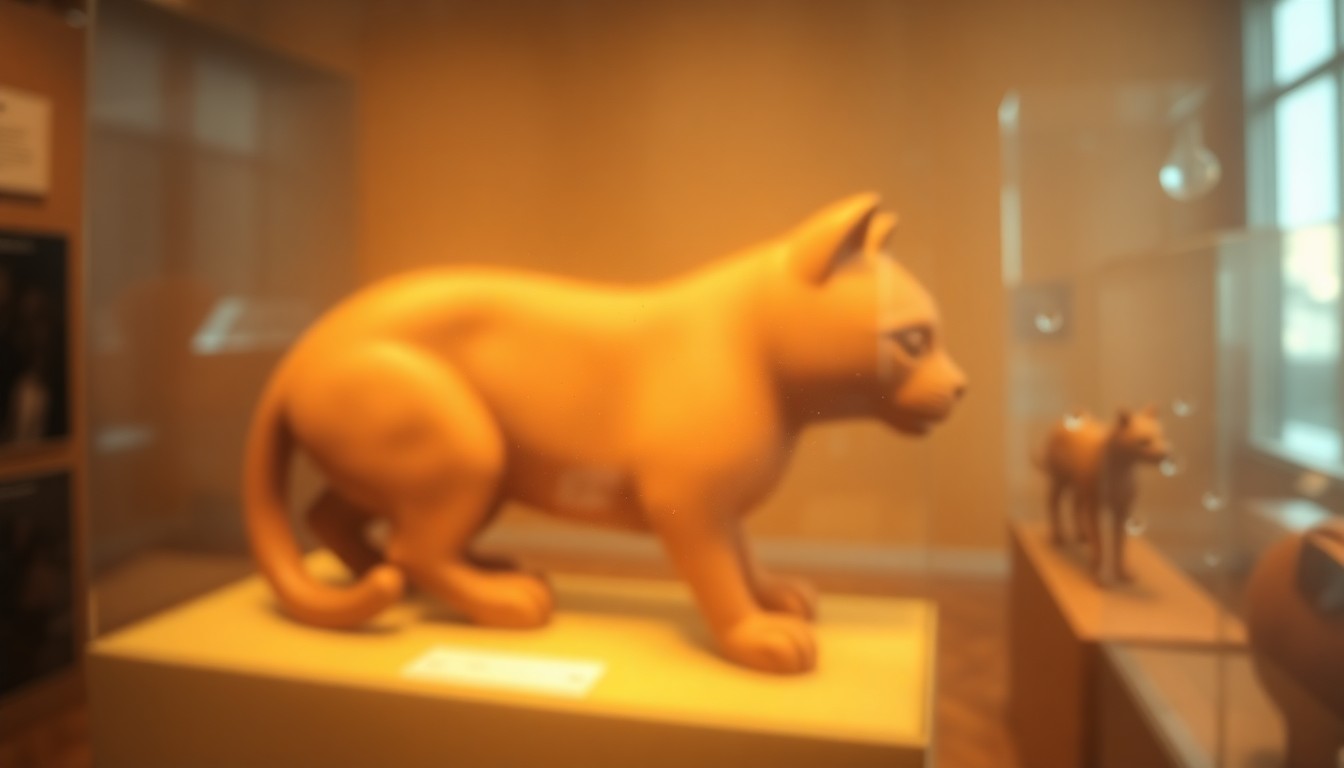 As the iconic Key Marco Cat prepares to depart Marco Island for the Smithsonian, the artifact's delicate features are captured in a dreamlike, impressionistic study of light and texture.Naples Today
The remarkable Key Marco Cat, a 500- to 1,500-year-old wood carving considered one of the finest examples of pre-Columbian Native American art, will be leaving the Marco Island Historical Museum on April 18 to return to the Smithsonian Institution's National Museum of Natural History in Washington, D.C. The six-inch tall artifact, discovered in 1896, has been a centerpiece of the museum's permanent exhibit since 2010, drawing thousands of visitors eager to learn about the history and culture of the Calusa people who created it.
Why it matters
The Key Marco Cat is a rare and invaluable piece of history that provides a window into the lives and artistry of the indigenous Calusa people who inhabited the Florida Gulf Coast for centuries. Its return to the Smithsonian marks the end of a community-driven effort to bring this priceless artifact back to its place of origin on Marco Island.
The details
The Key Marco Cat, a half-cat, half-human wood carving, was discovered in 1896 during a Smithsonian-sponsored archaeological expedition led by Frank Hamilton Cushing. Remarkably well-preserved, the artifact was created by the Calusa people or their Muspa ancestors and is considered one of the finest examples of pre-Columbian Native American art ever found in North America. Since 2010, the Key Marco Cat has been the centerpiece of the Marco Island Historical Museum's permanent exhibit, 'Paradise Found: 6,000 Years of People on Marco Island,' which also features a life-size Calusa village, over 300 pre-Columbian artifacts, and original artwork depicting the 1896 dig.
- The Key Marco Cat has been on display at the Marco Island Historical Museum since 2010.
- The final day to see the artifact at the museum is April 18, 2026.
- After April 18, the Key Marco Cat will return to the Smithsonian Institution's National Museum of Natural History in Washington, D.C.
The players
Torben Rick
Chairman of the Department of Anthropology at the Smithsonian Institution's National Museum of Natural History.
Pat Rutledge
CEO of the Marco Island Historical Society.
Frank Hamilton Cushing
Archaeologist and anthropologist who led the 1896 Smithsonian-sponsored expedition that discovered the Key Marco Cat.
Calusa
Indigenous people who inhabited the Florida Gulf Coast for centuries and created the Key Marco Cat.
Muspa
Ancestors of the Calusa people who may have created the Key Marco Cat.
What they’re saying
“The Key Marco Cat from the Smithsonian collections is an extraordinary object that attests to the unique archaeological record of Key Marco and the people and cultures who lived there for millennia.”
— Torben Rick, Chairman of the Department of Anthropology at the Smithsonian Institution's National Museum of Natural History
“Bringing home this amazing symbol of our island and the early peoples who populated it was an island-wide effort. We raised the funds to build a museum worthy of this irreplaceable artifact. Our members and supporters throughout the community joined with us with passion and financial support to bring this precious object back to its place of origin.”
— Pat Rutledge, CEO of the Marco Island Historical Society
What’s next
The Key Marco Cat will be on display at the Marco Island Historical Museum until April 18, 2026, when it will be returned to the Smithsonian Institution's National Museum of Natural History in Washington, D.C.
The takeaway
The return of the Key Marco Cat to the Smithsonian marks the end of a community-driven effort to bring this priceless pre-Columbian artifact back to its place of origin on Marco Island, where it has been a centerpiece of the local museum and a draw for thousands of visitors eager to learn about the rich history and culture of the Calusa people.