- Today
- Holidays
- Birthdays
- Reminders
- Cities
- Atlanta
- Austin
- Baltimore
- Berwyn
- Beverly Hills
- Birmingham
- Boston
- Brooklyn
- Buffalo
- Charlotte
- Chicago
- Cincinnati
- Cleveland
- Columbus
- Dallas
- Denver
- Detroit
- Fort Worth
- Houston
- Indianapolis
- Knoxville
- Las Vegas
- Los Angeles
- Louisville
- Madison
- Memphis
- Miami
- Milwaukee
- Minneapolis
- Nashville
- New Orleans
- New York
- Omaha
- Orlando
- Philadelphia
- Phoenix
- Pittsburgh
- Portland
- Raleigh
- Richmond
- Rutherford
- Sacramento
- Salt Lake City
- San Antonio
- San Diego
- San Francisco
- San Jose
- Seattle
- Tampa
- Tucson
- Washington
Red Bull Struggles to Find Balance Amid New F1 Regulations
Team's performance varies wildly across early 2026 races, raising questions about championship aspirations.
Apr. 12, 2026 at 12:18pm
Got story updates? Submit your updates here. ›
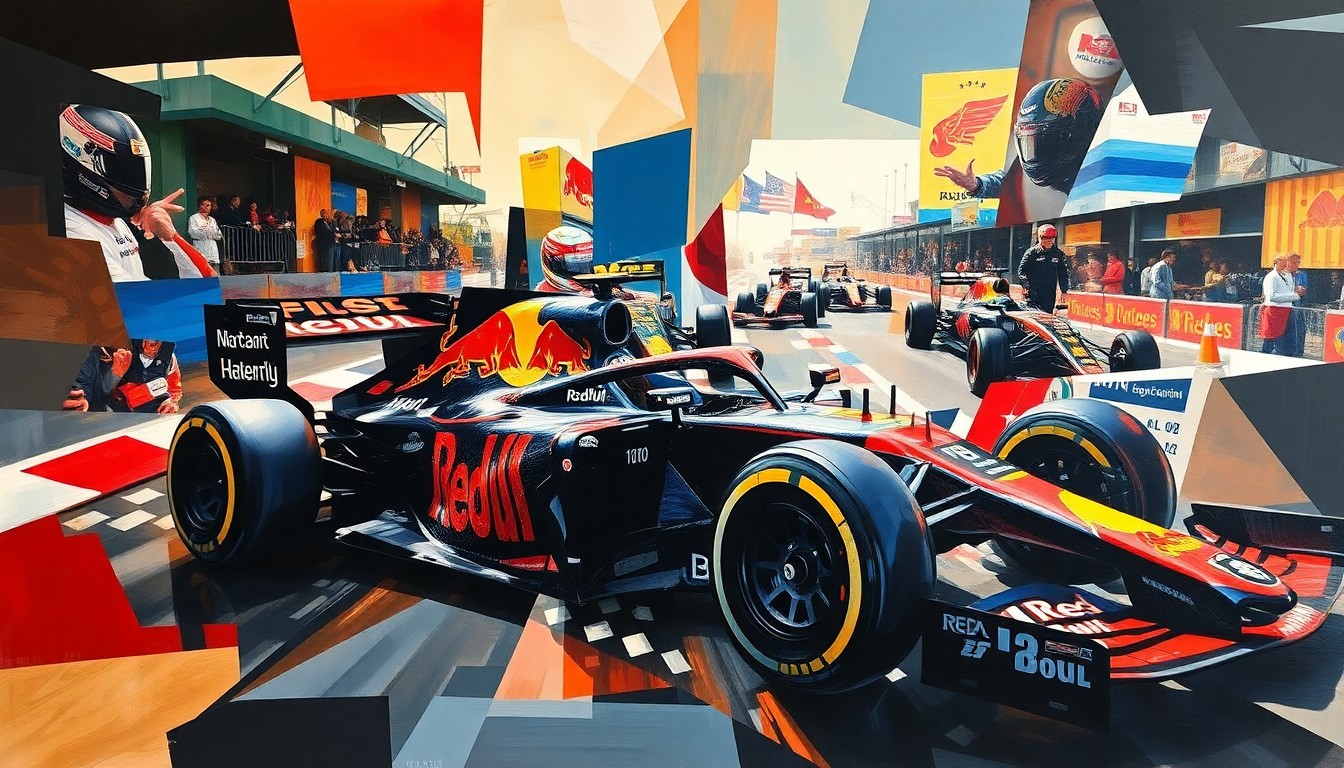 Red Bull's rollercoaster performance across the recent Formula 1 races is captured in a cubist, geometric painting that reflects the team's struggle to adapt to the new technical regulations.Today in Miami
The 2026 Formula 1 season has been a rollercoaster for Red Bull, with the team's performance fluctuating significantly across the first few races in Australia, China, and Japan. While initial concerns centered around the new power unit, the narrative has shifted to focus on the car's overall balance and setup issues, which have left drivers frustrated and the team scrambling to find solutions.
Why it matters
Red Bull's struggles to adapt to the new technical regulations could have major implications for their championship aspirations, as the team faces a significant performance deficit compared to rivals Mercedes and Ferrari. The team's ability to quickly identify and address the root causes of their balance issues will be crucial in determining their competitiveness throughout the season.
The details
In Australia, Red Bull showed signs of promise, with Max Verstappen's recovery drive suggesting the team might not be as far off the pace as initially thought. However, the qualifying numbers tell a different story, with the gap to pole position increasing, indicating a more significant performance deficit. In China and Japan, the team faced even more significant balance issues, with driver Isack Hadjar describing the car as 'undriveable' in Suzuka.
- The 2026 Formula 1 season began in March.
- The Australian Grand Prix took place in early April.
- The Chinese Grand Prix was held in mid-April.
- The Japanese Grand Prix was run in late April.
The players
Red Bull
A leading Formula 1 team that has won multiple championships in the past, but is now struggling to adapt to the new technical regulations.
Max Verstappen
The reigning Formula 1 world champion and Red Bull's star driver, who has acknowledged the team's engine is not their weakest link.
Isack Hadjar
A Red Bull junior driver who competed in the Japanese Grand Prix and described the team's car as 'undriveable'.
Toto Wolff
The team principal of Mercedes, who made a dramatic statement about Red Bull's 'Mount Everest' challenge with the new power unit, only to later praise the team's engine in Bahrain.
Laurent Mekies
A Red Bull engineer who emphasized the importance of understanding the data and simulating it to find solutions to the team's balance issues.
What they’re saying
“The car, once a responsive machine, seemed to defy all setup changes, leaving the drivers frustrated.”
— Isack Hadjar, Red Bull junior driver
“Understanding the data and simulating it is key.”
— Laurent Mekies, Red Bull engineer
What’s next
The upcoming races, starting with the Miami Grand Prix, will be crucial for Red Bull as they work to quickly identify and address the root causes of their balance issues. The team's ability to adapt to the new regulations and find the right setup will be a key factor in determining their championship aspirations.
The takeaway
Red Bull's struggles to adapt to the new technical regulations in the 2026 Formula 1 season highlight the fine line between success and struggle in the sport. The team's performance fluctuations across the early races have raised questions about their championship aspirations, and their ability to quickly identify and solve their balance issues will be a critical test of their resilience and innovation.
Miami top stories



Miami events

Apr. 15, 2026
Whiplash In Concert
Apr. 16, 2026
Improv Acting 1 - Improv Scenework
Apr. 17, 2026
Friday Night Live - Improv Comedy Miami Show