- Today
- Holidays
- Birthdays
- Reminders
- Cities
- Atlanta
- Austin
- Baltimore
- Berwyn
- Beverly Hills
- Birmingham
- Boston
- Brooklyn
- Buffalo
- Charlotte
- Chicago
- Cincinnati
- Cleveland
- Columbus
- Dallas
- Denver
- Detroit
- Fort Worth
- Houston
- Indianapolis
- Knoxville
- Las Vegas
- Los Angeles
- Louisville
- Madison
- Memphis
- Miami
- Milwaukee
- Minneapolis
- Nashville
- New Orleans
- New York
- Omaha
- Orlando
- Philadelphia
- Phoenix
- Pittsburgh
- Portland
- Raleigh
- Richmond
- Rutherford
- Sacramento
- Salt Lake City
- San Antonio
- San Diego
- San Francisco
- San Jose
- Seattle
- Tampa
- Tucson
- Washington
Ollie Bearman's 50G Crash Sparks Calls for F1 Safety Overhaul
Drivers demand changes to power unit rules after high-speed incident at Suzuka
Apr. 12, 2026 at 9:19pm
Got story updates? Submit your updates here. ›
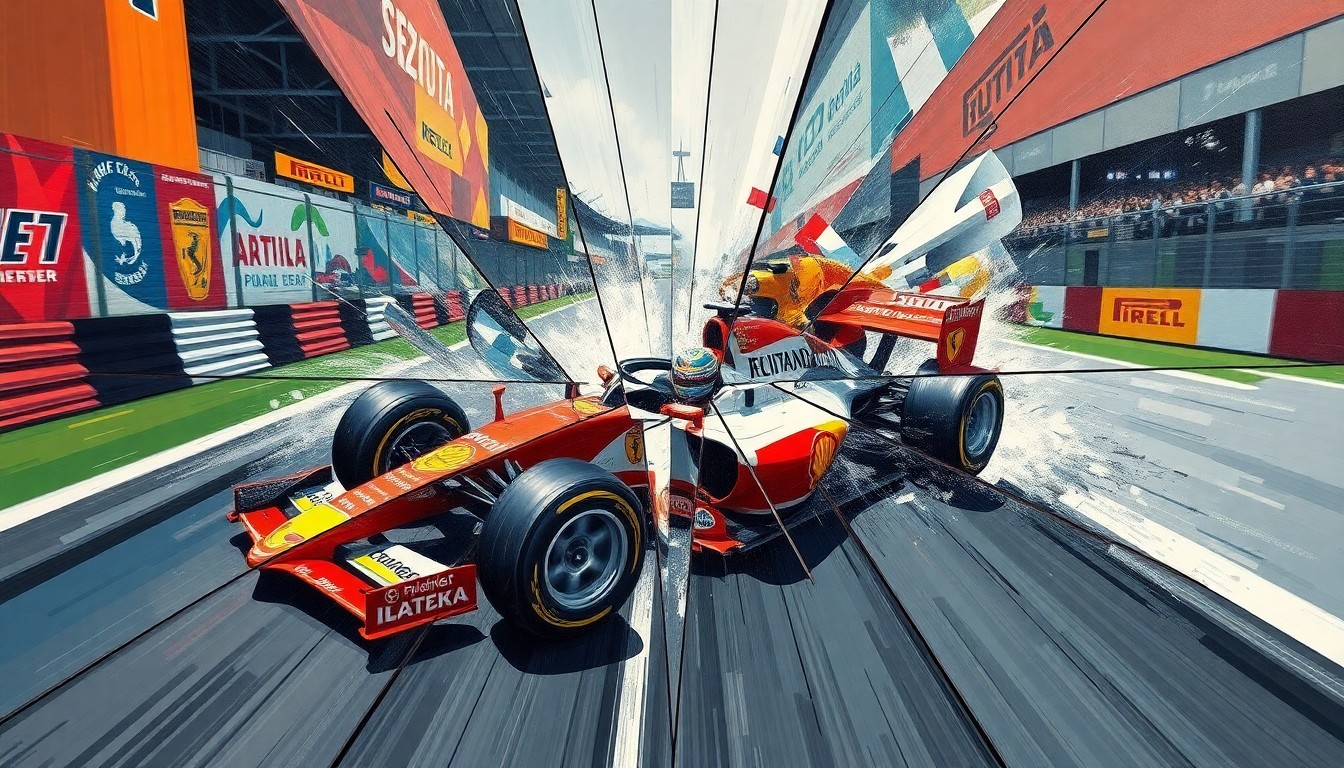 A cubist interpretation of the high-speed crash that has sparked calls for safety reforms in Formula 1's new hybrid era.Today in Miami
A high-speed crash involving Ollie Bearman at the Suzuka circuit in Japan has reignited concerns over the safety of Formula 1's new power unit regulations. The 50G impact has prompted calls from drivers for the governing body to urgently review how the increased energy harvesting and deployment capabilities of the hybrid cars are impacting on-track dynamics and overtaking maneuvers.
Why it matters
The 2026 season ushered in a tight integration of electric and internal-combustion power in F1, turning energy harvesting into a tension point between performance and safety. Bearman's crash has exposed a structural flaw in the new regime, where large, fast-changing speed differentials between cars can create dangerous situations, especially during overtaking moves.
The details
Bearman's mistake, or miscalibration, isn't just a single misstep; it's a symptom of a rule set that magnifies risk in real time. The moment he chose to pass with a Boost-enabled surge, the differential widened dramatically, as the Alpine's electrical system paused its energy harvesting, removing a cushion that would have softened the maneuver. This isn't 'driver error' versus 'machine'; it's a misalignment between what the car can do and what the track demands.
- Ollie Bearman's 50G crash occurred last weekend at the Suzuka circuit in Japan.
- The FIA and teams are planning a structured review after collecting more data, with potential adjustments around energy management and the 'super clipping' phenomenon.
The players
Ollie Bearman
A Formula 1 driver who was involved in a high-speed crash at the Suzuka circuit that registered 50G of impact.
Carlos Sainz
A top Formula 1 driver who has warned that the problem with the new power unit rules is not just in qualifying, but also in racing.
FIA
The governing body of Formula 1 that is responsible for setting the rules and regulations for the sport.
What’s next
The expected Miami GP data-and-regulation review will be a turning point. If the governing bodies respond with targeted tuning—adjusting energy flow, improving real-time energy management, and rethinking overtaking dynamics—it could calm nerves without sacrificing the engineering ambition that defines this era of F1.
The takeaway
This moment could be the catalyst for a more mature approach to tech-forward racing in Formula 1. The solution may lie less in blaming drivers and more in reengineering how energy is deployed and managed on track to preserve the thrill of cutting-edge power while ensuring competitors aren't pushed to the breaking point.
Miami top stories



Miami events

Apr. 15, 2026
Whiplash In Concert
Apr. 16, 2026
Improv Acting 1 - Improv Scenework
Apr. 17, 2026
Friday Night Live - Improv Comedy Miami Show