- Today
- Holidays
- Birthdays
- Reminders
- Cities
- Atlanta
- Austin
- Baltimore
- Berwyn
- Beverly Hills
- Birmingham
- Boston
- Brooklyn
- Buffalo
- Charlotte
- Chicago
- Cincinnati
- Cleveland
- Columbus
- Dallas
- Denver
- Detroit
- Fort Worth
- Houston
- Indianapolis
- Knoxville
- Las Vegas
- Los Angeles
- Louisville
- Madison
- Memphis
- Miami
- Milwaukee
- Minneapolis
- Nashville
- New Orleans
- New York
- Omaha
- Orlando
- Philadelphia
- Phoenix
- Pittsburgh
- Portland
- Raleigh
- Richmond
- Rutherford
- Sacramento
- Salt Lake City
- San Antonio
- San Diego
- San Francisco
- San Jose
- Seattle
- Tampa
- Tucson
- Washington
New LIGO Signal Sparks Primordial Black Hole and Dark Matter Debate
Researchers propose a groundbreaking theory that a recent gravitational wave detection could be the first evidence of primordial black holes colliding.
Apr. 11, 2026 at 1:18am
Got story updates? Submit your updates here. ›
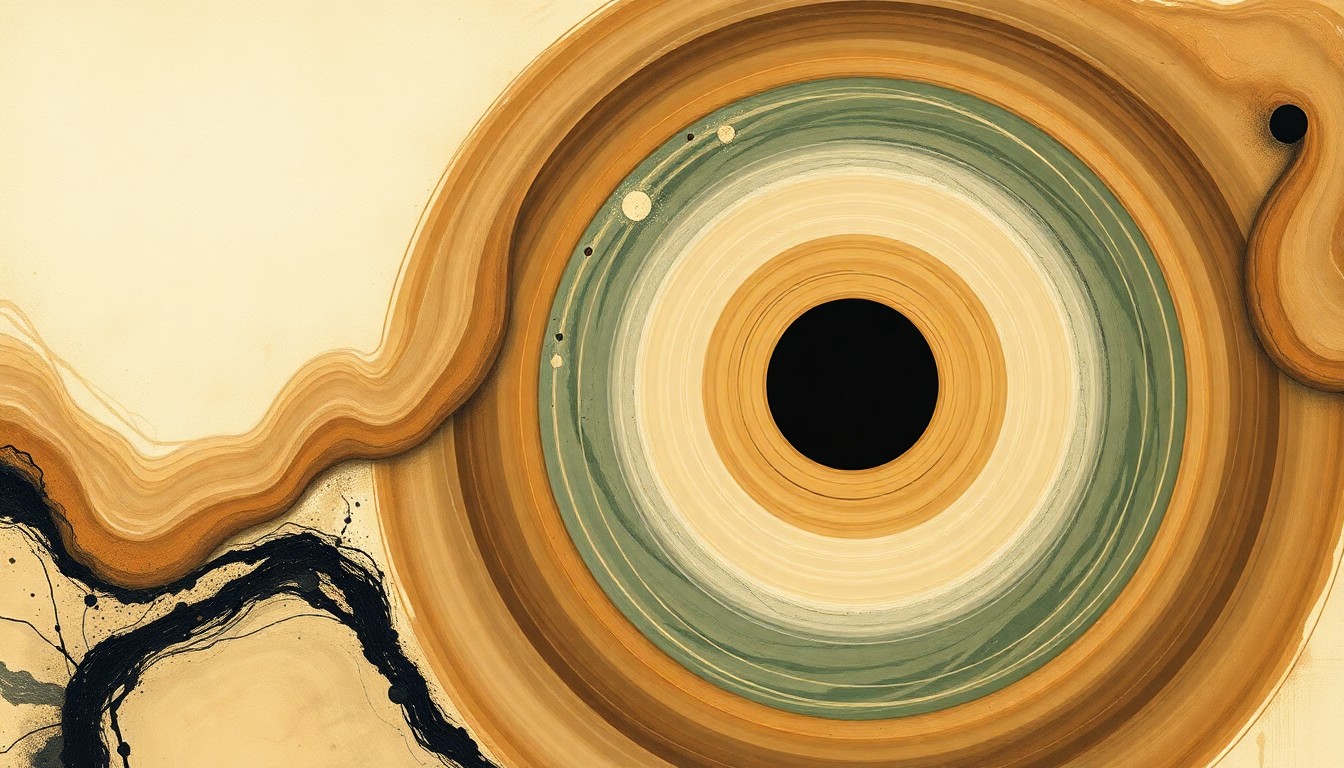 A conceptual illustration depicting the hypothetical collision of primordial black holes, a discovery that could unlock the secrets of dark matter and the early universe.Today in Miami
A team of researchers at the University of Miami has published a study proposing that a gravitational wave signal detected by LIGO in November 2025 could be the first direct evidence of primordial black holes colliding. This extraordinary discovery challenges conventional astrophysics and could potentially solve the longstanding mystery of dark matter.
Why it matters
The idea of primordial black holes, formed in the chaotic moments after the Big Bang, has intrigued scientists for decades. If confirmed, this discovery would not only rewrite our understanding of the early universe but also provide a potential explanation for dark matter without requiring new particles or exotic forms of matter.
The details
The gravitational wave signal, dubbed S251112cm, suggests a collision between two objects with masses far lighter than what is typically associated with black holes or neutron stars. The study, published on arXiv, proposes that these objects could be primordial black holes, a hypothetical type of black hole formed in the dense and turbulent conditions of the early universe, rather than the remnants of dying stars.
- In November 2025, LIGO detected the gravitational wave signal S251112cm.
- The study proposing that the signal could be evidence of primordial black holes was published on arXiv in 2026.
The players
University of Miami
The institution where the researchers who published the study are based.
Nico Cappelluti
The lead author of the study proposing that the LIGO signal could be evidence of primordial black holes.
Alberto Magaraggia
The lead author of the study who highlights the rarity of these events and the potential for LIGO to detect more of these collisions as its capabilities improve.
LIGO
The Laser Interferometer Gravitational-Wave Observatory, a large-scale physics experiment and observatory to detect gravitational waves.
What they’re saying
“If further observations confirm the existence of primordial black holes, it could open a new chapter in our exploration of the universe.”
— Alberto Magaraggia, Researcher
What’s next
As researchers continue to analyze and interpret the gravitational wave signals detected by LIGO, they hope to find more evidence that could confirm the existence of primordial black holes and their potential connection to dark matter.
The takeaway
This discovery could be a breakthrough in our understanding of the early universe and the nature of dark matter, potentially solving one of the most enigmatic puzzles in physics without requiring new particles or exotic forms of matter. If confirmed, it would rewrite our understanding of the cosmos and open a new chapter in our exploration of the universe.
Miami top stories



Miami events

Apr. 11, 2026
Nu Deco Ensemble - Ages: 14+
Apr. 11, 2026
The BIG Show Improv Comedy Miami
Apr. 12, 2026
Paloma San Basilio - "Gracias Tour"