- Today
- Holidays
- Birthdays
- Reminders
- Cities
- Atlanta
- Austin
- Baltimore
- Berwyn
- Beverly Hills
- Birmingham
- Boston
- Brooklyn
- Buffalo
- Charlotte
- Chicago
- Cincinnati
- Cleveland
- Columbus
- Dallas
- Denver
- Detroit
- Fort Worth
- Houston
- Indianapolis
- Knoxville
- Las Vegas
- Los Angeles
- Louisville
- Madison
- Memphis
- Miami
- Milwaukee
- Minneapolis
- Nashville
- New Orleans
- New York
- Omaha
- Orlando
- Philadelphia
- Phoenix
- Pittsburgh
- Portland
- Raleigh
- Richmond
- Rutherford
- Sacramento
- Salt Lake City
- San Antonio
- San Diego
- San Francisco
- San Jose
- Seattle
- Tampa
- Tucson
- Washington
F1 Grapples with Power Unit Rules Ahead of 2026 Season
Drivers, safety, and fan reactions as the sport balances engineering innovation and human drama
Apr. 10, 2026 at 4:14am
Got story updates? Submit your updates here. ›
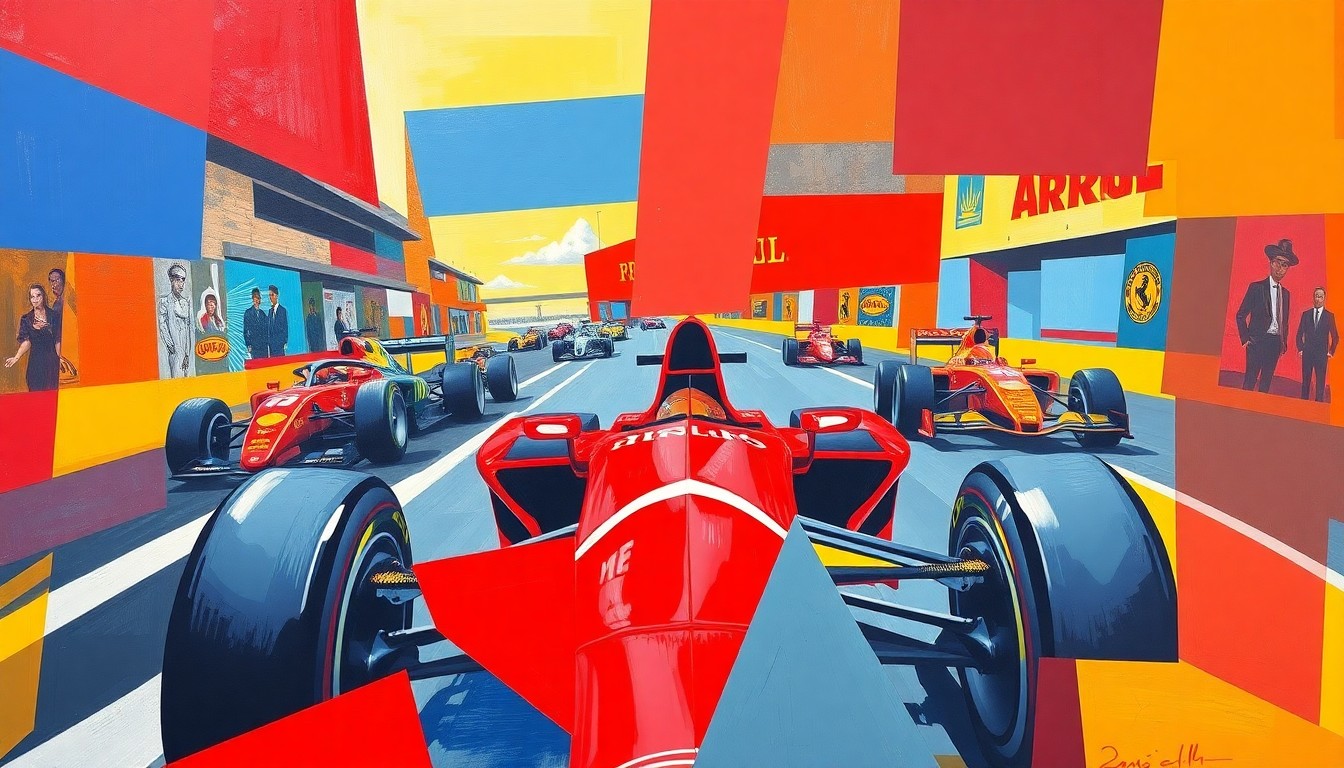 A cubist interpretation of the high-stakes battle between engineering efficiency and driver flair in modern Formula 1 racing.Today in Miami
As Formula 1 teams convene in London to discuss the 2026 power unit regulations, the sport faces a delicate balance between technical optimization and preserving the raw drama of driver skill. The core tension is between drivers wanting pedal-to-the-metal moments, fans craving thrilling overtakes, and engineers seeking to maximize energy efficiency. This has raised safety concerns and questions about whether F1 should reward algorithmic precision or unfiltered human passion.
Why it matters
The 2026 power unit rules are a referendum on the future identity of Formula 1 - will it prioritize the technical marvel of hybrid powertrains or the unfiltered drama of driver skill? The outcome will shape the sport's perception for years to come, as it navigates the line between smart engineering and engaging spectacle.
The details
The 2026 regulations have tilted the balance toward energy strategy, turning qualifying into a countdown where drivers appear to coast to save battery. This disguises driver talent behind a dashboard of numbers. Safety is also a growing concern, as sudden shifts in energy deployment can magnify risk. The FIA is taking a diplomatic, staged approach to potential rule changes, but risks the sport becoming hostage to incrementalism.
- The teams are convening in London this week to discuss the 2026 power unit regulations.
- The Miami Grand Prix in April will be a key trial window to test any potential rule changes.
- Further discussions and potential adjustments are expected in the April and May rounds leading up to the 2026 season.
The players
Formula 1
The premier open-wheel racing series that has seen a rapid shift toward data-driven engineering and energy efficiency in recent years.
FIA
The governing body of Formula 1 that holds the safety lever and can make unilateral rule changes if consensus among teams frays.
F1 Drivers
Seeking to preserve the raw, pedal-to-the-metal moments where driver skill is the decisive factor.
F1 Fans
Craving the jaw-dropping overtake battles and high-adrenaline laps that have defined the sport's most iconic moments.
F1 Engineers
Aiming to optimize energy management and turn qualifying into a chess match of battery state and hybrid consumption.
What’s next
The teams will continue discussions in the April and May rounds leading up to the 2026 season, with the Miami Grand Prix serving as a key trial window for potential rule changes.
The takeaway
Formula 1 is at a crossroads, balancing the technical marvel of hybrid powertrains and the unfiltered drama of driver skill. The outcome of these discussions will shape the sport's identity for years to come, as it navigates the line between smart engineering and engaging spectacle.
Miami top stories



Miami events

Apr. 15, 2026
Whiplash In Concert
Apr. 16, 2026
Improv Acting 1 - Improv Scenework
Apr. 17, 2026
Friday Night Live - Improv Comedy Miami Show