- Today
- Holidays
- Birthdays
- Reminders
- Cities
- Atlanta
- Austin
- Baltimore
- Berwyn
- Beverly Hills
- Birmingham
- Boston
- Brooklyn
- Buffalo
- Charlotte
- Chicago
- Cincinnati
- Cleveland
- Columbus
- Dallas
- Denver
- Detroit
- Fort Worth
- Houston
- Indianapolis
- Knoxville
- Las Vegas
- Los Angeles
- Louisville
- Madison
- Memphis
- Miami
- Milwaukee
- Minneapolis
- Nashville
- New Orleans
- New York
- Omaha
- Orlando
- Philadelphia
- Phoenix
- Pittsburgh
- Portland
- Raleigh
- Richmond
- Rutherford
- Sacramento
- Salt Lake City
- San Antonio
- San Diego
- San Francisco
- San Jose
- Seattle
- Tampa
- Tucson
- Washington
Federal Appeals Court Allows Trump White House Ballroom Construction to Resume
Judges pause lower court's injunction, sending case back for further review of security claims.
Apr. 12, 2026 at 8:26am
Got story updates? Submit your updates here. ›
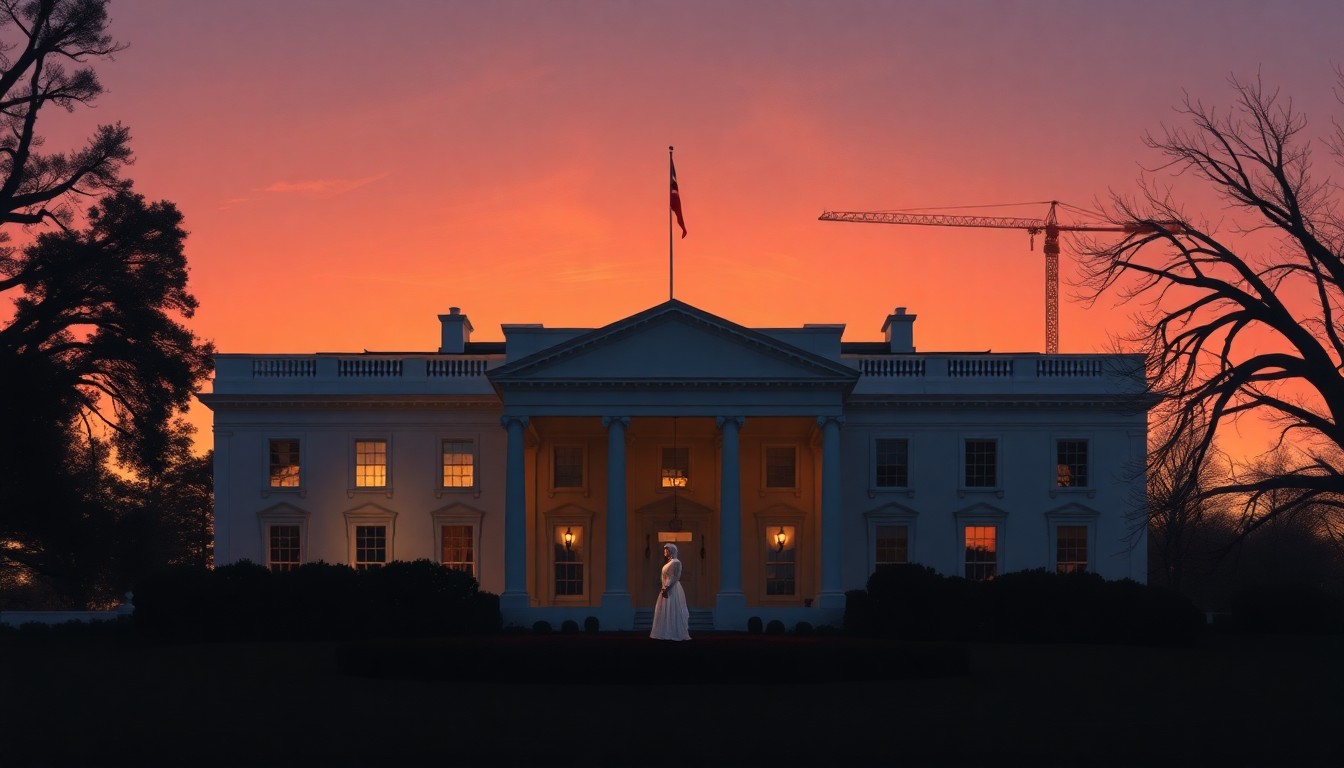 As the legal battle over the White House ballroom project continues, the historic building stands as a symbol of the ongoing power struggle between the executive and legislative branches.Washington Today
A federal appeals court has temporarily lifted an injunction that had halted the Trump administration's $400 million White House ballroom project, allowing construction to continue through April 17. The three-judge panel remanded the case back to the lower court, directing it to clarify how the injunction's 'safety and security' exception addresses the administration's claims of irreparable harm if the project remains unfinished.
Why it matters
The White House ballroom dispute centers on the longstanding question of whether a sitting president requires congressional approval for major structural changes to the historic building. This case could set an important precedent on the limits of executive authority over the White House.
The details
The Trump administration had appealed the initial injunction, arguing that leaving the ballroom unfinished would pose a security risk. One of the three judges, Trump appointee Neomi Rao, dissented, asserting that the National Trust for Historic Preservation's challenge lacked standing and that President Trump had the authority to proceed without congressional approval. The National Trust has countered that such approval is required before construction can continue.
- The appeals court ruling was issued on Saturday, April 12, 2026.
- The injunction is paused through April 17, 2026.
The players
U.S. Court of Appeals for the D.C. Circuit
The federal appeals court that issued the ruling temporarily lifting the injunction on the White House ballroom project.
Judge Richard Leon
The U.S. District Judge who initially issued the injunction halting the ballroom construction, an appointee of former President George W. Bush.
Judge Neomi Rao
A Trump appointee to the appeals court who dissented from the panel's decision, asserting the plaintiffs lacked standing and the president had authority to proceed without congressional approval.
National Trust for Historic Preservation
The organization that challenged the ballroom project, arguing that congressional approval is required for such major structural changes to the White House.
President Donald Trump
The former president who initiated the $400 million White House ballroom project, arguing that congressional approval was not required since it is being financed by private donors.
What they’re saying
“President Trump previously criticized Leon's ruling, arguing that congressional approval was not required, as the ballroom is being financed by private donors.”
— President Donald Trump
What’s next
The case will now return to U.S. District Judge Richard Leon, who must clarify how the 'safety and security' exception in his original injunction applies to the Trump administration's claims of irreparable harm if construction is halted.
The takeaway
This case highlights the ongoing tensions between the executive and legislative branches over the limits of presidential authority, particularly when it comes to major renovations or changes to the historic White House property. The federal courts will now play a key role in determining whether a sitting president can unilaterally approve such projects without congressional oversight.
Washington top stories


Washington events

Apr. 12, 2026
Washington Capitals VIP Tickets: 04/12/26
Apr. 12, 2026
Glen Hansard