- Today
- Holidays
- Birthdays
- Reminders
- Cities
- Atlanta
- Austin
- Baltimore
- Berwyn
- Beverly Hills
- Birmingham
- Boston
- Brooklyn
- Buffalo
- Charlotte
- Chicago
- Cincinnati
- Cleveland
- Columbus
- Dallas
- Denver
- Detroit
- Fort Worth
- Houston
- Indianapolis
- Knoxville
- Las Vegas
- Los Angeles
- Louisville
- Madison
- Memphis
- Miami
- Milwaukee
- Minneapolis
- Nashville
- New Orleans
- New York
- Omaha
- Orlando
- Philadelphia
- Phoenix
- Pittsburgh
- Portland
- Raleigh
- Richmond
- Rutherford
- Sacramento
- Salt Lake City
- San Antonio
- San Diego
- San Francisco
- San Jose
- Seattle
- Tampa
- Tucson
- Washington
Appeals Court Extends White House Ballroom Construction Halt
Judges cite lack of evidence on national security risks, raising questions about presidential authority and congressional oversight.
Apr. 12, 2026 at 7:45am
Got story updates? Submit your updates here. ›
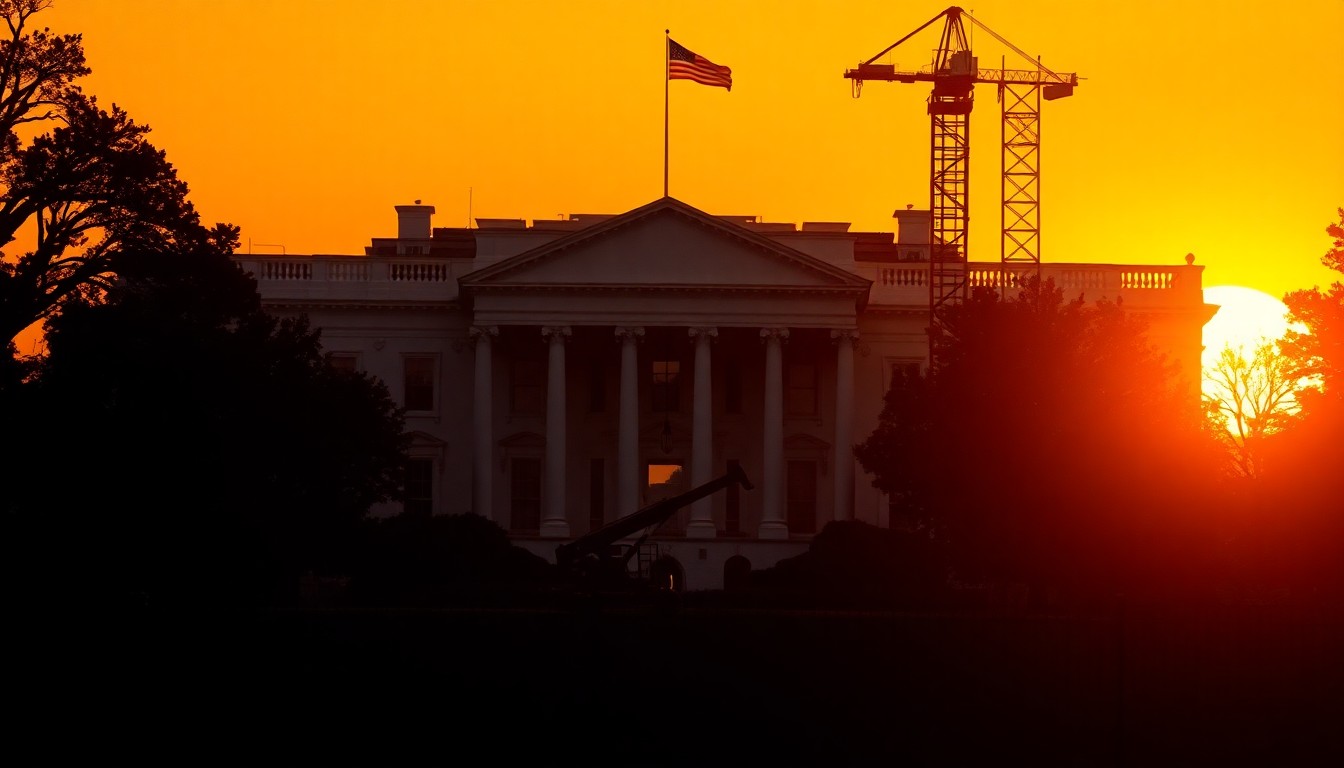 The White House, a symbol of American democracy, faces an uncertain future as legal battles over construction plans raise questions about presidential authority and congressional oversight.Washington Today
A federal appeals court has extended a halt on the White House's planned ballroom construction project until April 17, citing the Trump administration's failure to demonstrate how the project would directly impact national security. The ruling highlights the delicate balance between security concerns and the need for a thorough legal process, as well as the role of Congress in overseeing changes to the iconic building.
Why it matters
The White House ballroom saga raises critical questions about the limits of presidential authority, the balance of power between the executive and legislative branches, and the preservation of historical sites. The court's decision underscores the importance of transparency, accountability, and the rule of law in government decision-making.
The details
The appeals court's majority opinion, written by Judges Patricia Millett and Bradley Garcia, states that the Trump administration has not provided sufficient evidence to justify the security risks posed by pausing the ballroom construction. This ruling contradicts the administration's argument that halting the project would compromise White House security. The National Trust for Historic Preservation's lawsuit against the ballroom project has also brought to light the need for congressional authorization for such transformative projects on federal land.
- The appeals court extended the construction halt until April 17, 2026.
- In March 2026, Judge Leon emphasized the importance of congressional approval for major White House changes.
The players
Patricia Millett
A judge on the federal appeals court who wrote the majority opinion in the case.
Bradley Garcia
A judge on the federal appeals court who co-wrote the majority opinion in the case.
National Trust for Historic Preservation
A nonprofit organization that filed a lawsuit against the White House ballroom construction project, arguing that it requires congressional approval.
What they’re saying
“The Trump administration has yet to demonstrate how the construction would directly impact national security beyond the scope of the original order's exemptions.”
— Patricia Millett, Judge, Federal Appeals Court
What’s next
The judge in the case will decide on April 17 whether to allow the White House ballroom construction to proceed or to extend the halt further.
The takeaway
This case highlights the complex balance between security concerns, presidential authority, and the role of Congress in overseeing changes to the iconic White House. The court's decision underscores the need for the administration to provide concrete evidence to justify the project's impact on national security, as well as the importance of transparency and accountability in government decision-making.
Washington top stories



Washington events

Apr. 12, 2026
Washington Capitals VIP Tickets: 04/12/26
Apr. 12, 2026
Glen Hansard