- Today
- Holidays
- Birthdays
- Reminders
- Cities
- Atlanta
- Austin
- Baltimore
- Berwyn
- Beverly Hills
- Birmingham
- Boston
- Brooklyn
- Buffalo
- Charlotte
- Chicago
- Cincinnati
- Cleveland
- Columbus
- Dallas
- Denver
- Detroit
- Fort Worth
- Houston
- Indianapolis
- Knoxville
- Las Vegas
- Los Angeles
- Louisville
- Madison
- Memphis
- Miami
- Milwaukee
- Minneapolis
- Nashville
- New Orleans
- New York
- Omaha
- Orlando
- Philadelphia
- Phoenix
- Pittsburgh
- Portland
- Raleigh
- Richmond
- Rutherford
- Sacramento
- Salt Lake City
- San Antonio
- San Diego
- San Francisco
- San Jose
- Seattle
- Tampa
- Tucson
- Washington
Tornado Outbreaks Surge as Climate Shifts Weather Patterns
Experts warn that more frequent and intense tornado events are the new normal as global warming energizes the atmospheric engine.
Apr. 11, 2026 at 4:58am
Got story updates? Submit your updates here. ›
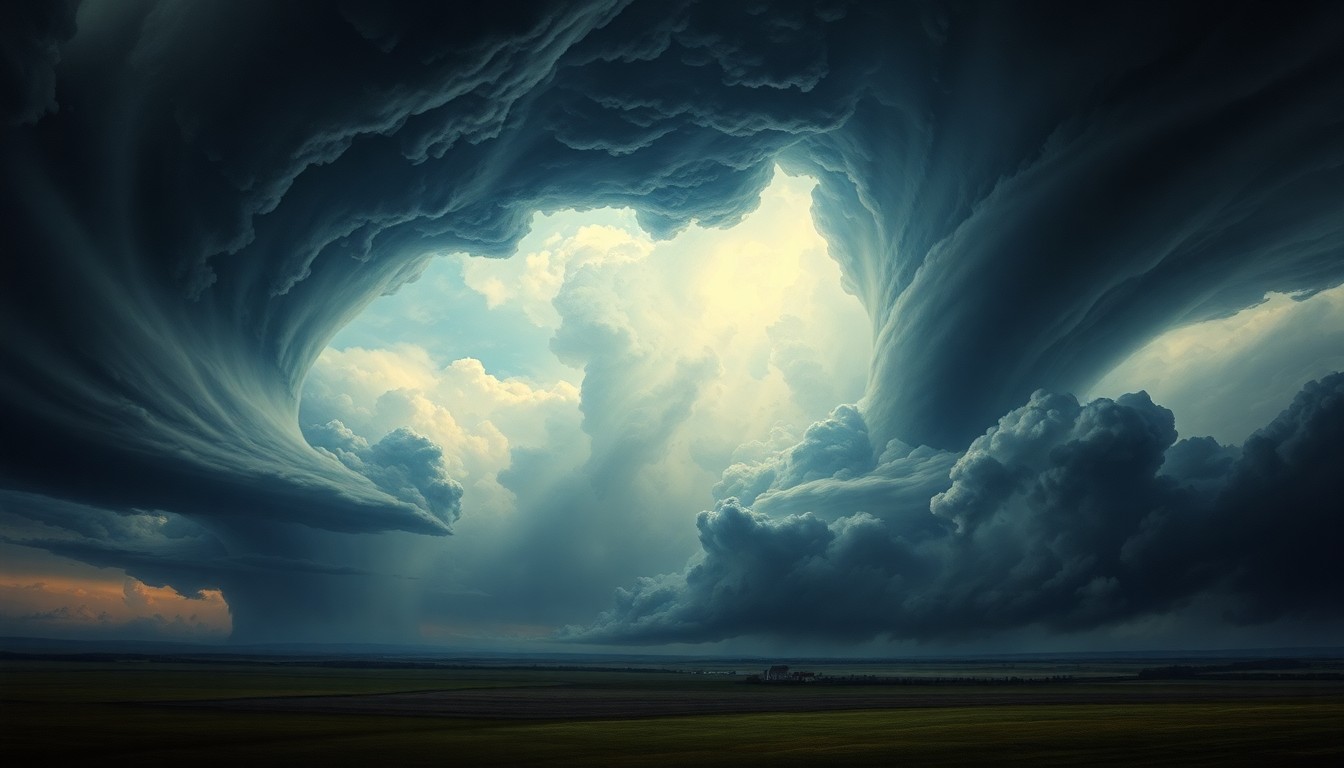 As tornado outbreaks become more common due to climate change, communities must adapt to the growing threat through proactive resilience efforts.Washington Today
Severe thunderstorms and tornado outbreaks have become more common in the Washington, D.C. region and across the eastern U.S. as climate change fuels more volatile weather patterns. Experts say the ingredients for tornado formation - moisture, instability, and dynamic wind fields - are becoming more prevalent, leading to an increase in 'outbreak days' where multiple twisters can form from a single powerful storm system. This shift in the severe weather landscape is forcing communities to rethink how they prepare for and respond to the growing tornado threat.
Why it matters
The rise in tornado outbreaks has significant implications for infrastructure, emergency management, and public safety. Communities must invest in more robust warning systems, accessible shelters, and flexible routines to protect vulnerable populations when forecasts indicate heightened tornado risk. Adapting to this new climate-driven normal requires a proactive, redundant approach rather than reactive measures.
The details
Warmer temperatures are energizing the atmospheric conditions needed for severe thunderstorms and tornado formation, including increased moisture, instability, and dynamic wind fields. This is leading to more 'outbreak days' where a single powerful storm system can spawn multiple tornadoes over a broad area, rather than isolated, seasonal twisters. Forecasters are improving their ability to predict these high-risk weather patterns further in advance, but uncertainty remains around the precise timing and severity, creating challenges for decision-makers on when to activate emergency protocols.
- In the last half-century, weather forecasting has evolved from a three-day proposition to being reliable at five days and still useful at seven to ten days.
- The Washington, D.C. region has recently experienced an increase in severe storm outbreaks that spawn multiple tornadoes in a single event.
The players
Climate Science Community
Experts across the climate science field have identified clear trends linking warmer global temperatures to the increasing frequency and intensity of severe weather events like tornado outbreaks.
What’s next
Communities must invest in more robust warning systems, accessible shelters, and flexible routines to protect vulnerable populations when forecasts indicate heightened tornado risk. Adapting to this new climate-driven normal requires a proactive, redundant approach rather than reactive measures.
The takeaway
The rise in tornado outbreaks is a clear signal that climate change is rewriting the rules of severe weather. Preparing for this new normal requires a cultural shift where weather is no longer an occasional disruptor, but a recurrent, structural factor shaping daily life and requiring coordinated, community-wide resilience efforts.
Washington top stories


Washington events

Apr. 11, 2026
The Neighbourhood: THE WOURLD TOUR

Apr. 11, 2026
The Taylor Party: Taylor Swift Night