- Today
- Holidays
- Birthdays
- Reminders
- Cities
- Atlanta
- Austin
- Baltimore
- Berwyn
- Beverly Hills
- Birmingham
- Boston
- Brooklyn
- Buffalo
- Charlotte
- Chicago
- Cincinnati
- Cleveland
- Columbus
- Dallas
- Denver
- Detroit
- Fort Worth
- Houston
- Indianapolis
- Knoxville
- Las Vegas
- Los Angeles
- Louisville
- Madison
- Memphis
- Miami
- Milwaukee
- Minneapolis
- Nashville
- New Orleans
- New York
- Omaha
- Orlando
- Philadelphia
- Phoenix
- Pittsburgh
- Portland
- Raleigh
- Richmond
- Rutherford
- Sacramento
- Salt Lake City
- San Antonio
- San Diego
- San Francisco
- San Jose
- Seattle
- Tampa
- Tucson
- Washington
Israeli Police Bar Private Mass at Jerusalem's Holy Sepulchre on Palm Sunday
Incident sparks criticism over balance between security and religious freedom amid ongoing regional tensions
Apr. 11, 2026 at 12:03am
Got story updates? Submit your updates here. ›
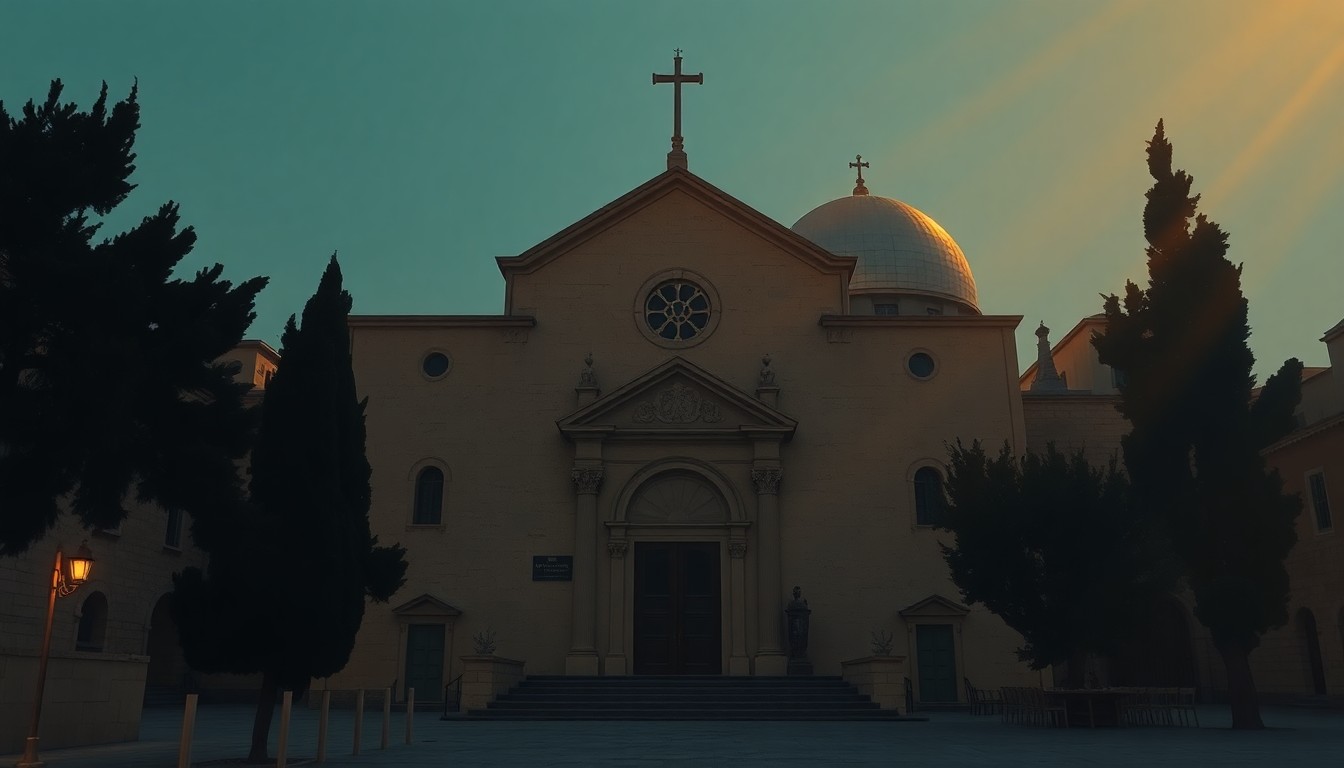 The closure of the Church of the Holy Sepulchre on a sacred Christian holiday like Palm Sunday exposes the delicate balance between security and religious freedom in Jerusalem.Washington Today
Israeli police have prevented Catholic leaders, including the Latin Patriarch and Custos of the Holy Land, from entering the Church of the Holy Sepulchre in Jerusalem for a private Palm Sunday Mass. This decision, made amid security concerns related to the ongoing Iran war and missile attacks on the city, has sparked a wave of international criticism and raised questions about the balance between public safety and the free exercise of religion.
Why it matters
The closure of the Church of the Holy Sepulchre on a sacred Christian holiday like Palm Sunday highlights the complex dynamics in Jerusalem, where maintaining the delicate status quo between different religious groups and upholding security measures is an ongoing challenge. The incident has drawn criticism from various countries, underscoring the potential impact on diplomatic relations and perceptions of Israel's commitment to religious freedom.
The details
Israeli authorities cited the lack of access for emergency vehicles and adequate shelter in the narrow alleys of the Old City as the reasons for restricting access to the Church of the Holy Sepulchre. However, the Latin Patriarchate had requested a private celebration with fewer than 50 worshippers, which they argue should have been permitted under the existing guidelines. The inconsistent treatment of religious sites in Jerusalem, with the Western Wall mostly closed for safety reasons while smaller churches, synagogues, and mosques are allowed to operate, has also raised questions about the application of security measures.
- On Palm Sunday, April 11, 2026, Israeli police prevented Catholic leaders from entering the Church of the Holy Sepulchre for a private Mass.
The players
Benjamin Netanyahu
The Prime Minister of Israel who acknowledged the safety concerns that led to the restriction on access to the Church of the Holy Sepulchre.
Farid Jubran
The spokesperson for the Latin Patriarchate, who emphasized the sacred nature of Palm Sunday and questioned the justification for denying access to the church.
Pierbattista Pizzaballa
The Latin Patriarch, who was denied access to the Church of the Holy Sepulchre along with the Custos of the Holy Land.
Mike Huckabee
The United States Ambassador who described the incident as an 'unfortunate overreach' and emphasized the proposed prayer's compliance with the 50-person limit.
Emmanuel Macron
The President of France who condemned the restriction and advocated for the free exercise of worship in Jerusalem.
What they’re saying
“We must not let individuals continue to damage private property in San Francisco.”
— Robert Jenkins, San Francisco resident
“Fifty years is such an accomplishment in San Francisco, especially with the way the city has changed over the years.”
— Gordon Edgar, grocery employee
What’s next
Israeli authorities have acknowledged the need for a balanced approach and are working towards allowing partial access to the Church of the Holy Sepulchre in the coming days. Cardinal Pizzaballa has expressed a willingness to clarify the situation and respect security concerns while upholding the right to prayer.
The takeaway
This incident highlights the delicate balance between security measures and the preservation of religious traditions in Jerusalem, a city that holds immense significance for various faiths. As Israel navigates the challenges of the Iran war and regional tensions, finding a harmonious solution that respects the rights of all stakeholders will be crucial for maintaining the city's sacred character and its role as a global pilgrimage site.
Washington top stories



Washington events
Apr. 11, 2026
The Neighbourhood: THE WOURLD TOUR
Apr. 11, 2026
The Taylor Party: Taylor Swift Night