- Today
- Holidays
- Birthdays
- Reminders
- Cities
- Atlanta
- Austin
- Baltimore
- Berwyn
- Beverly Hills
- Birmingham
- Boston
- Brooklyn
- Buffalo
- Charlotte
- Chicago
- Cincinnati
- Cleveland
- Columbus
- Dallas
- Denver
- Detroit
- Fort Worth
- Houston
- Indianapolis
- Knoxville
- Las Vegas
- Los Angeles
- Louisville
- Madison
- Memphis
- Miami
- Milwaukee
- Minneapolis
- Nashville
- New Orleans
- New York
- Omaha
- Orlando
- Philadelphia
- Phoenix
- Pittsburgh
- Portland
- Raleigh
- Richmond
- Rutherford
- Sacramento
- Salt Lake City
- San Antonio
- San Diego
- San Francisco
- San Jose
- Seattle
- Tampa
- Tucson
- Washington
White House and Vatican Feud Over Foreign Policy Visions
Tensions escalate as Pentagon challenges Pope's criticism of Trump's 'diplomacy of force'
Apr. 9, 2026 at 7:53pm
Got story updates? Submit your updates here. ›
 As tensions escalate between the White House and the Vatican, the historical precedents of papal-imperial conflicts loom large.Washington Today
Tensions have escalated between the White House and the Vatican after Pope Leo outlined a foreign policy vision in his inaugural 'state of the world' address that appeared to challenge President Trump's 'Donroe Doctrine' and promotion of military force over diplomacy. Pentagon officials summoned the Holy See's ambassador to the U.S. to the Pentagon, where they criticized the Pope's speech, leading to a diplomatic standoff with historical precedents dating back to the Avignon Papacy.
Why it matters
The feud between the White House and the Vatican represents a rare and potentially explosive power struggle between the U.S. government and the Catholic Church, with both sides invoking historical precedents of papal-imperial conflicts. The outcome could have significant geopolitical ramifications, as well as implications for the separation of church and state.
The details
In his January address, Pope Leo criticized nations that 'choose military force over peaceful diplomacy' and declared that the post-WWII international order had been 'completely undermined.' Pentagon officials, led by Under Secretary of War for Policy Elbridge Colby, summoned the Holy See's ambassador to the U.S., Cardinal Christophe Pierre, to the Pentagon. They accused the Pope of issuing a 'hostile message' that challenged Trump's 'Donroe Doctrine,' an update of the Monroe Doctrine asserting American dominion over the Western Hemisphere. One U.S. official even invoked the Avignon Papacy, when the French Crown leveraged its military power to dominate the papal authority in the 14th century.
- In January, Pope Leo outlined his foreign policy vision in his inaugural 'state of the world' address.
- Shortly after the speech, Pentagon officials summoned the Holy See's ambassador to the U.S. to the Pentagon.
The players
Pope Leo
The current Pope, who outlined a foreign policy vision critical of nations that 'choose military force over peaceful diplomacy' in his inaugural 'state of the world' address.
Elbridge Colby
The Under Secretary of War for Policy who led the Pentagon's criticism of Pope Leo's speech and summoned the Holy See's ambassador to the U.S.
Cardinal Christophe Pierre
The Holy See's ambassador to the U.S. who was summoned to the Pentagon to discuss Pope Leo's speech.
What they’re saying
“A diplomacy that promotes dialogue and seeks consensus among all parties is being replaced by a diplomacy based on force, by either individuals or groups of allies.”
— Pope Leo, Pope
“What particularly enraged the Pentagon, one Vatican official said, was the passage in which Leo appeared to challenge the Donroe Doctrine—Trump's update of the Monroe Doctrine, which asserts unchallenged American dominion over the Western Hemisphere.”
— Vatican Official
What’s next
The Vatican and the White House have not responded to requests for comment, and it remains unclear how the diplomatic standoff will unfold. However, the historical precedents, such as the Avignon Papacy, suggest the potential for a protracted and contentious power struggle between the two institutions.
The takeaway
This feud highlights the delicate balance between church and state, as well as the broader geopolitical tensions surrounding the use of military force versus diplomatic consensus-building. The outcome could have far-reaching implications for the global order and the relationship between the U.S. and the Catholic Church.
Washington top stories


Washington events

Apr. 14, 2026
Maisie Peters: Before The Bloom
Apr. 14, 2026
Whiskey & History: Lincoln Assassination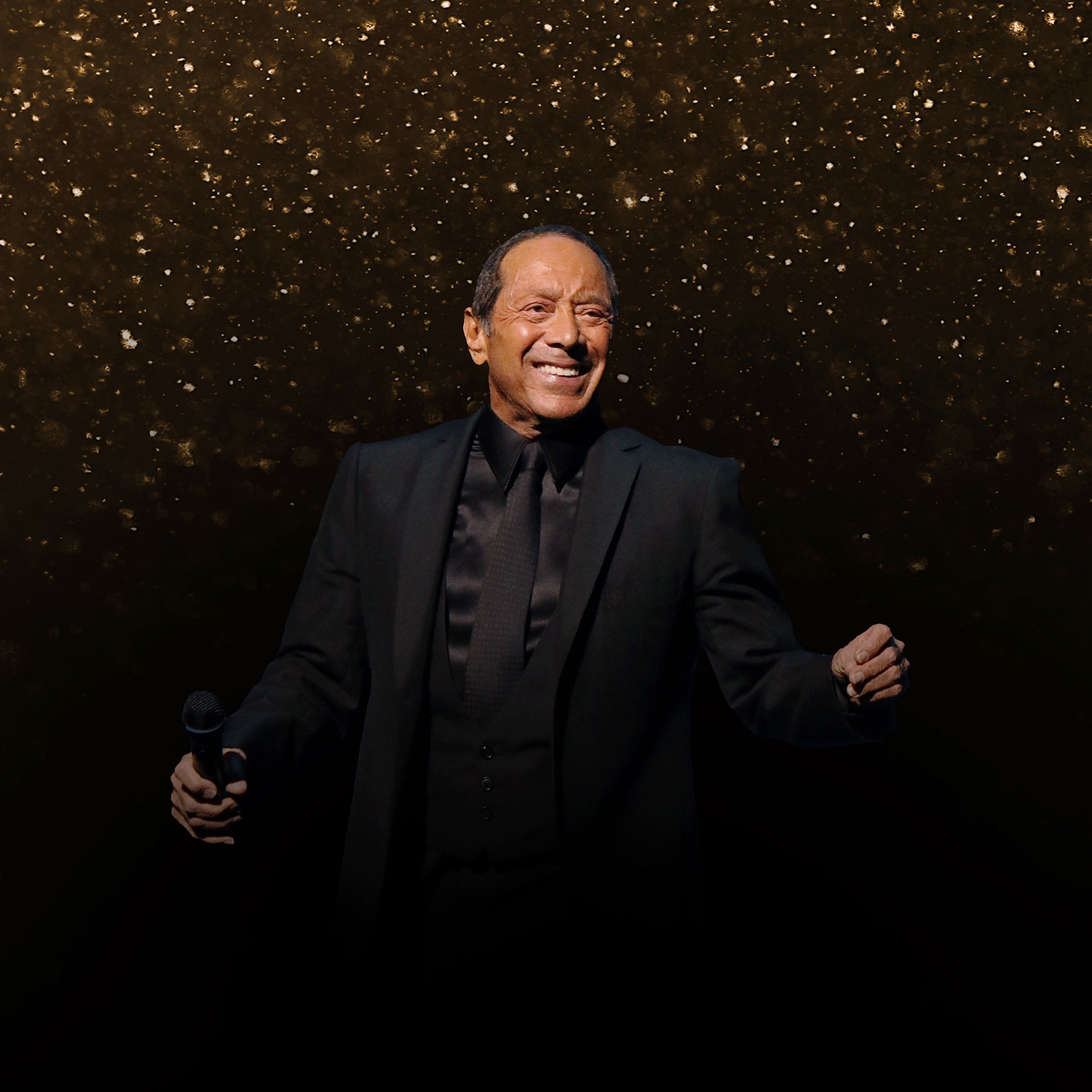
Apr. 14, 2026
Paul Anka