- Today
- Holidays
- Birthdays
- Reminders
- Cities
- Atlanta
- Austin
- Baltimore
- Berwyn
- Beverly Hills
- Birmingham
- Boston
- Brooklyn
- Buffalo
- Charlotte
- Chicago
- Cincinnati
- Cleveland
- Columbus
- Dallas
- Denver
- Detroit
- Fort Worth
- Houston
- Indianapolis
- Knoxville
- Las Vegas
- Los Angeles
- Louisville
- Madison
- Memphis
- Miami
- Milwaukee
- Minneapolis
- Nashville
- New Orleans
- New York
- Omaha
- Orlando
- Philadelphia
- Phoenix
- Pittsburgh
- Portland
- Raleigh
- Richmond
- Rutherford
- Sacramento
- Salt Lake City
- San Antonio
- San Diego
- San Francisco
- San Jose
- Seattle
- Tampa
- Tucson
- Washington
Supreme Court Appears Poised to Uphold Birthright Citizenship
Justices sharply question government's arguments to end 14th Amendment guarantee
Apr. 2, 2026 at 1:31am
Got story updates? Submit your updates here. ›
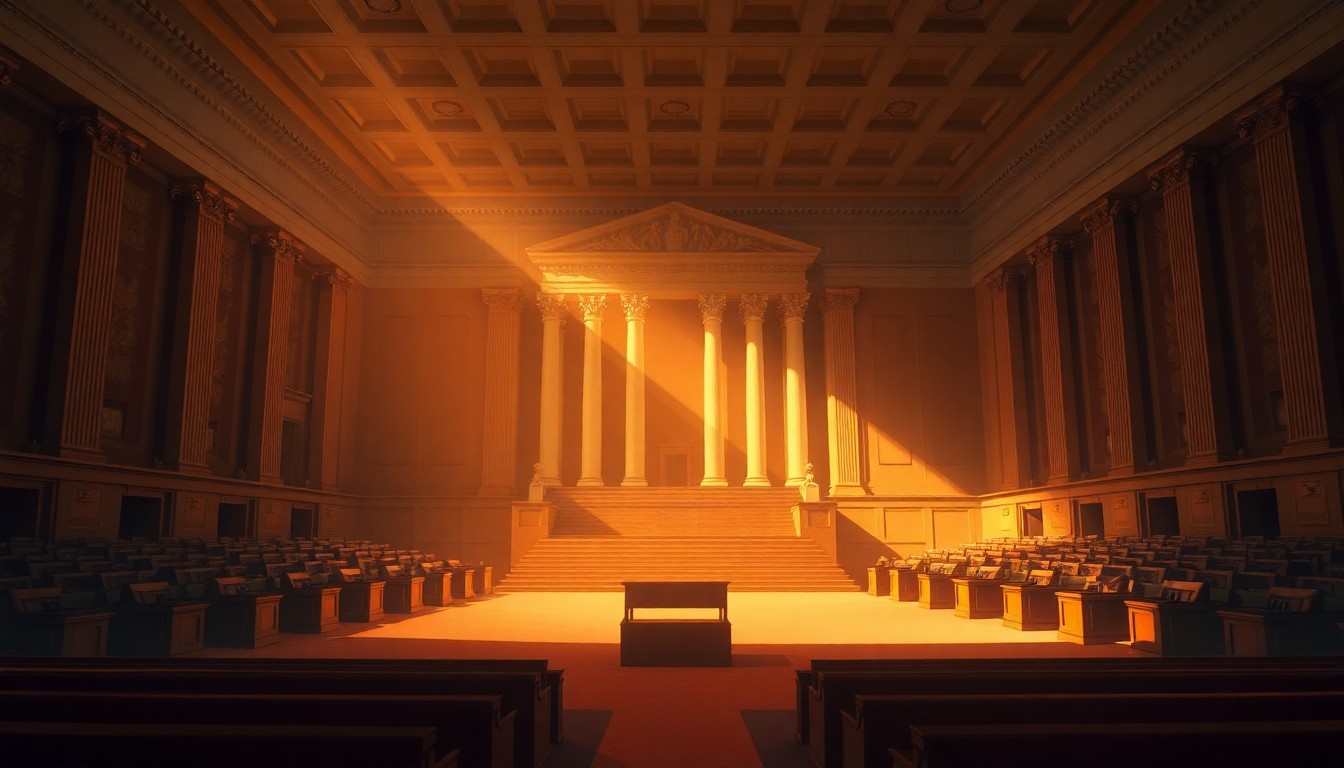 The Supreme Court chamber stands empty after hearing arguments that could upend over a century of precedent on birthright citizenship.Washington Today
The Supreme Court heard arguments in a case challenging the constitutionality of President Trump's executive order to eliminate birthright citizenship, with the justices across the ideological spectrum appearing skeptical of the government's position. The case, Trump v. Barbara, seeks to overturn the 14th Amendment's guarantee of citizenship for anyone born in the United States, a ruling that could leave millions stateless.
Why it matters
A ruling against birthright citizenship would mark a major reversal of over a century of legal precedent and could have far-reaching implications, potentially stripping citizenship from millions of Americans, including many who have known no other country. The case has drawn comparisons to the infamous Dred Scott decision, which denied citizenship to enslaved people and their descendants.
The details
Solicitor General D. John Sauer argued the 14th Amendment's guarantee of birthright citizenship only applied to the children of newly emancipated slaves, and that non-citizens temporarily in the U.S. do not have the required 'domicile' for their children to gain citizenship. However, the justices, including conservative members like Chief Justice John Roberts, sharply questioned this interpretation, with Roberts declaring Sauer's argument 'very quirky' and noting the Constitution has not changed even as the world has.
- The Supreme Court heard arguments in the case on April 2, 2026.
The players
Clarence Thomas
A Supreme Court justice who invoked the infamous Dred Scott decision during questioning, drawing parallels between that case and the current challenge to birthright citizenship.
D. John Sauer
The Solicitor General representing the government in defending President Trump's executive order to end birthright citizenship.
Cecillia Wang
An ACLU lawyer arguing in defense of birthright citizenship, who is herself a beneficiary of the 14th Amendment's guarantee.
John Roberts
The Chief Justice, who sharply questioned the government's arguments and declared their interpretation of the 14th Amendment 'very quirky.'
Donald Trump
The former president who issued the executive order to end birthright citizenship, the first sitting president to attend a Supreme Court session.
What they’re saying
“It is difficult at this day to realize the state of public opinion in relation to that unfortunate race, which prevailed in the civilized and enlightened portions of the world at the time of the Declaration of Independence, and when the Constitution of the United States was framed and adopted.”
— Roger Taney, Former Chief Justice
“We're in a new world now, as Justice [Samuel] Alito pointed out, where 8 billion people are one plane ride away from having a child who's a U.S. citizen.”
— D. John Sauer, Solicitor General
“Well, it's a new world. It's the same Constitution.”
— John Roberts, Chief Justice
“I walked into the room today with all of you. I felt your emanations. Also, with all of our ancestors, whether you are an indigenous American, or you are descended from African-Americans who were enslaved and freed, or whether you are the descendant of someone who came on the Mayflower, or someone who arrived just before your birth, we are all Americans.”
— Cecillia Wang, ACLU Lawyer
What’s next
The Supreme Court is expected to issue a ruling in the case by the end of its current term in June 2026.
The takeaway
This case highlights the ongoing battle over the meaning and scope of the 14th Amendment's guarantee of birthright citizenship, with the Supreme Court appearing poised to uphold a core constitutional protection that has stood for over a century. A ruling against birthright citizenship could have profound implications, potentially stripping citizenship from millions of Americans.