- Today
- Holidays
- Birthdays
- Reminders
- Cities
- Atlanta
- Austin
- Baltimore
- Berwyn
- Beverly Hills
- Birmingham
- Boston
- Brooklyn
- Buffalo
- Charlotte
- Chicago
- Cincinnati
- Cleveland
- Columbus
- Dallas
- Denver
- Detroit
- Fort Worth
- Houston
- Indianapolis
- Knoxville
- Las Vegas
- Los Angeles
- Louisville
- Madison
- Memphis
- Miami
- Milwaukee
- Minneapolis
- Nashville
- New Orleans
- New York
- Omaha
- Orlando
- Philadelphia
- Phoenix
- Pittsburgh
- Portland
- Raleigh
- Richmond
- Rutherford
- Sacramento
- Salt Lake City
- San Antonio
- San Diego
- San Francisco
- San Jose
- Seattle
- Tampa
- Tucson
- Washington
Groundbreaking Study Reveals Molecular Triggers of Cerebral Small Vessel Disease
Researchers discover key gene and signaling pathway, develop promising drug treatment
Apr. 12, 2026 at 3:56am
Got story updates? Submit your updates here. ›
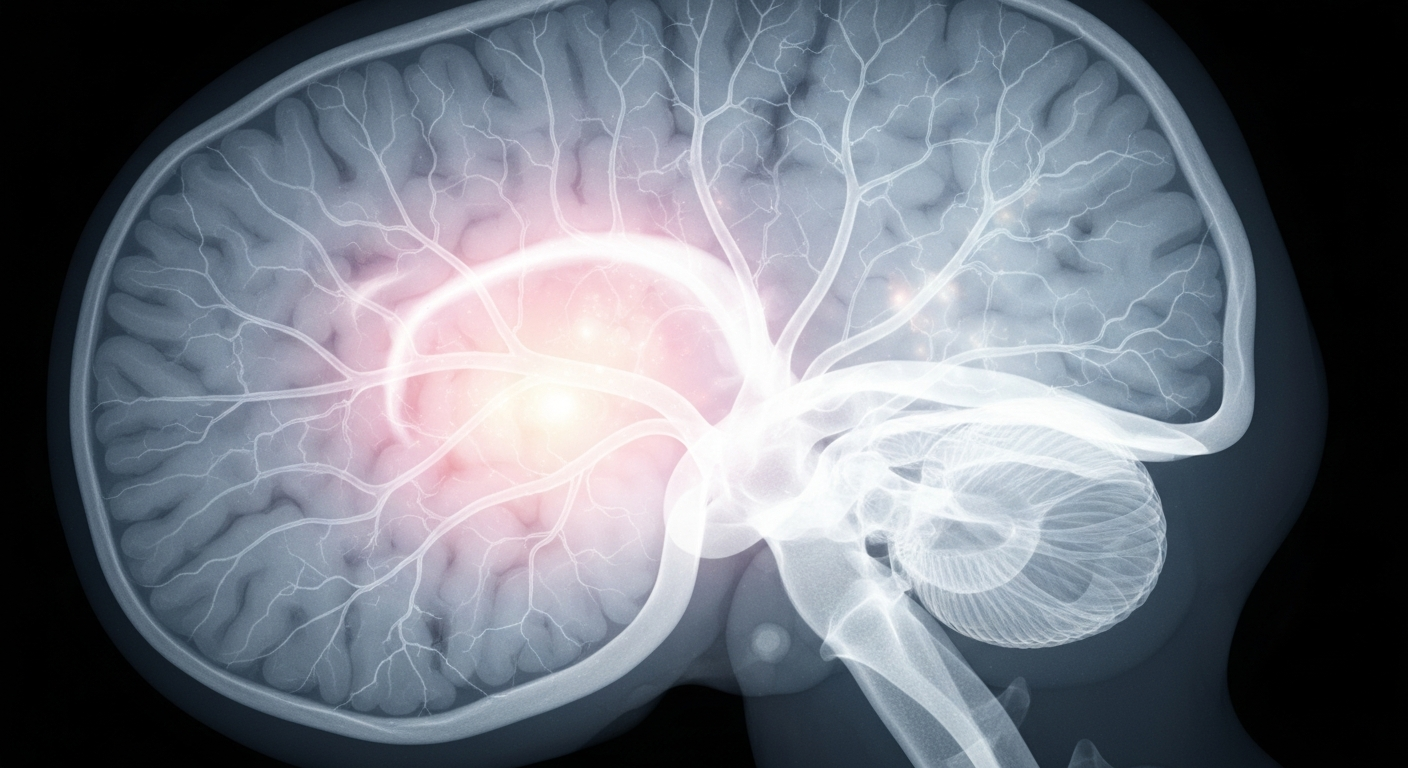 An X-ray view of the brain's delicate vascular system, exposing the molecular triggers behind the devastating impacts of cerebral small vessel disease.Denver Today
A groundbreaking study led by researchers at LMU University Hospital in Munich has made significant strides in understanding the molecular mechanisms behind cerebral small vessel disease, a major contributor to strokes and dementia. The team identified the Foxf2 gene as a key factor and found that disrupting the Tie2 signaling pathway leads to dysfunction in the small blood vessels of the brain. Importantly, they also tested a drug candidate that was able to restore the impaired vascular function, opening the door for potential new treatments.
Why it matters
Cerebral small vessel disease is a serious condition that poses major risks, including reduced blood flow, bleeding, and strokes - the leading cause of long-term disability and second most common cause of death. Despite its prevalence, little has been known about the underlying cellular and molecular mechanisms. This breakthrough research provides critical insights that could lead to much-needed therapies for this debilitating illness.
The details
The researchers were able to genetically modify mice to selectively disable the Foxf2 gene in endothelial cells, which line blood vessels. This resulted in dysfunction of the small cerebral vessels, particularly affecting the blood-brain barrier. Further investigation revealed that Foxf2 helps activate the Tie2 gene and its associated signaling pathway, which are vital for maintaining healthy blood vessels. When this pathway is compromised, it can increase inflammation and the risk of conditions like atherosclerosis, stroke, and dementia.
- The study's findings have been published in the journal Nature Neuroscience in 2026.
- The research team is currently working to prepare a clinical study to evaluate a drug candidate known as AKB-9778, which targets the Tie2 signaling pathway.
The players
Professor Martin Dichgans
Director of the Institute for Stroke and Dementia Research (ISD) at LMU University Hospital Munich and an incoming spokesperson for the SyNergy Cluster of Excellence.
Professor Dominik Paquet
A senior author of the study and collaborator on the experiments involving human cells.
What they’re saying
“This indicates that the lack of Foxf2 is undoubtedly one of the key factors contributing to cerebral small vessel disease.”
— Professor Martin Dichgans, Director, Institute for Stroke and Dementia Research
“Thanks to this treatment, we were able not only to normalize the Tie2 signaling pathway but also to restore the impaired function of the blood vessels. This therapy holds the potential to reduce the risks for both stroke and dementia.”
— Professor Martin Dichgans, Director, Institute for Stroke and Dementia Research
What’s next
The research team is actively pursuing related compounds that may be suitable for clinical trials focused on small vessel disease, as accessing the current drug candidate, AKB-9778, is challenging due to its ongoing evaluations for other conditions.
The takeaway
This groundbreaking study provides critical insights into the molecular mechanisms underlying cerebral small vessel disease, a major contributor to strokes and dementia. The discovery of the Foxf2 gene and Tie2 signaling pathway as key factors, along with the promising results of a targeted drug treatment, offer hope for developing much-needed therapies to address this debilitating condition.
Denver top stories



Denver events

Apr. 12, 2026
Mamma Mia Drag Brunch
Apr. 12, 2026
Dancing With The Stars: Live! - 2026 Tour
Apr. 12, 2026
Dancing With The Stars: Live! - 2026 Tour