- Today
- Holidays
- Birthdays
- Reminders
- Cities
- Atlanta
- Austin
- Baltimore
- Berwyn
- Beverly Hills
- Birmingham
- Boston
- Brooklyn
- Buffalo
- Charlotte
- Chicago
- Cincinnati
- Cleveland
- Columbus
- Dallas
- Denver
- Detroit
- Fort Worth
- Houston
- Indianapolis
- Knoxville
- Las Vegas
- Los Angeles
- Louisville
- Madison
- Memphis
- Miami
- Milwaukee
- Minneapolis
- Nashville
- New Orleans
- New York
- Omaha
- Orlando
- Philadelphia
- Phoenix
- Pittsburgh
- Portland
- Raleigh
- Richmond
- Rutherford
- Sacramento
- Salt Lake City
- San Antonio
- San Diego
- San Francisco
- San Jose
- Seattle
- Tampa
- Tucson
- Washington
Washington Today
By the People, for the People
Gas Prices Soar Across US as Iran Conflict Strains Oil Flows
Nationwide average price per gallon jumps over $4 as certain states see sharper increases
Apr. 6, 2026 at 9:35am
Got story updates? Submit your updates here. ›
Nationwide gas prices have surged past $4 per gallon on average since the start of the U.S.-Iran conflict on February 28, according to AAA data, with some states like California and Hawaii seeing prices climb over $5. The conflict has strained global oil supplies, particularly through Iran's blockade of the critical Strait of Hormuz, leading to fears of broader economic consequences.
Why it matters
Prior to the conflict, declining domestic gas prices had been touted by the Trump administration as evidence of the success of its energy and economic policies. However, the disruption to global oil flows has now led to sharp price increases that are squeezing American consumers and raising recession risks, according to economists.
The details
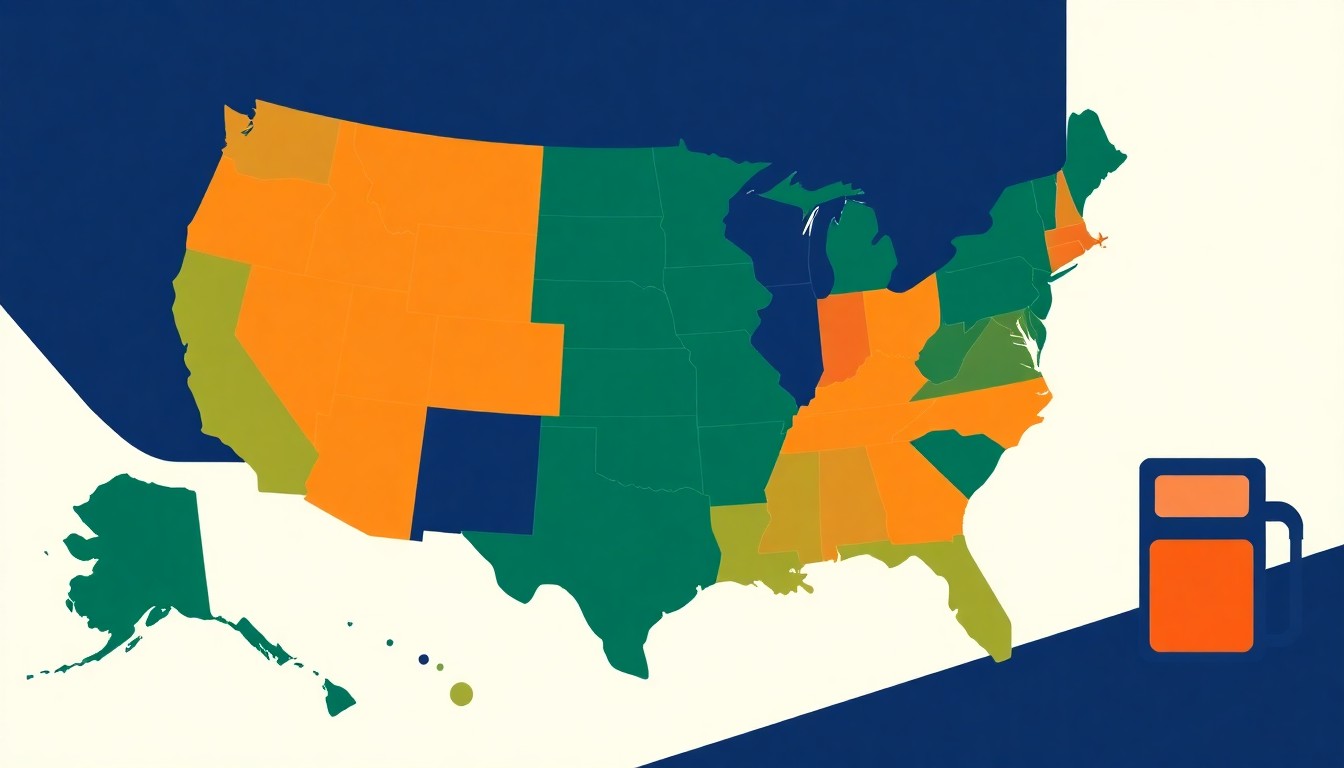
Gas prices have risen in every U.S. state over the past month, with those in the West seeing some of the sharpest increases. California currently has the highest prices, with a gallon of regular gas costing $5.929 on average, followed by Hawaii ($5.595), Washington ($5.386), Nevada ($5.005) and Oregon ($4.988). In contrast, Oklahomans are paying the least at $3.272 per gallon. Utah has seen the greatest price rise, with a $1.173 increase over the last four weeks.
- The U.S.-Israeli strikes on Iran began on February 28, 2026.
- Gas prices surged past the $4 per gallon national average last week.
- Experts estimate that the final Gulf oil shipments could reach the U.S. by mid-April.
The players
AAA
The American Automobile Association, which provides data on nationwide gas prices.
Donald Trump
The former U.S. president who had previously touted declining gas prices as evidence of his administration's energy and economic policies.
Mark Zandi
The chief economist at Moody's Analytics, who warned that rising gas and inflation prices could push the U.S. economy into recession.
Iran
The country that has effectively blockaded the Strait of Hormuz, a critical global oil chokepoint, in response to the U.S.-Israeli strikes.
What they’re saying
“American consumers are suffering a significant financial blow, paying much more at the pump, and will soon face even greater costs as inflation broadly accelerates, undermining their purchasing power. Recession odds were already high prior to the conflict, given the struggling job market, and will likely cross the key 50 percent threshold unless the conflict ends in the next few weeks, if not days.”
— Mark Zandi, Chief Economist, Moody's Analytics
What’s next
President Trump has pressured Iran to reopen the Strait of Hormuz, warning of 'devastating' retaliation if Tehran does not comply by Tuesday evening. However, Iran has vowed 'devastating' retaliation of its own if the U.S. follows through on threats to target civilian infrastructure.
The takeaway
The conflict with Iran has exposed the vulnerability of the U.S. economy to disruptions in global oil supplies, with certain states bearing the brunt of sharply higher gas prices. This underscores the need for greater energy independence and resilience, as well as the potential economic consequences if the conflict escalates further.